Encyclopedia of Life · EOL (see source)
Farlowella
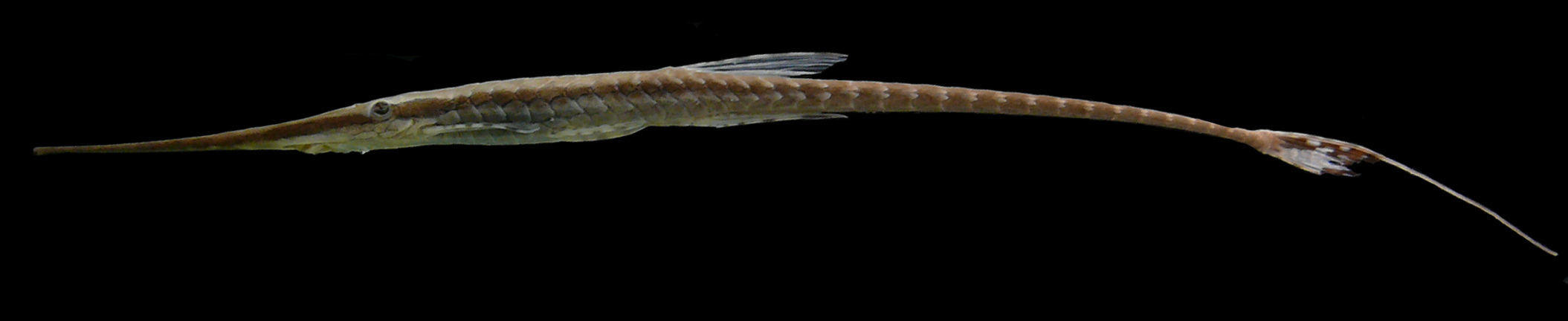
Sign in to saveFarlowella is a genus of freshwater ray-finned fishes belonging to the family Loricariidae, the suckermouth armored catfishes, and the subfamily Loricariinae, the mailed catfishes. The catfishes in this genus are found in South America. It is broadly distributed in the Amazon, Orinoco and Paraná rivers as well as coastal rivers of the Guyana Shield, but absent from the Pacific slope of the Andes and from the coastal rivers of the Brazilian Shield. Species of this genus have an extremely slender and elongated body resembling a thin stick of wood. There is a pronounced rostrum and the body is br
Species
GENUS
- KingdomAnimalia
- PhylumChordata
- ClassTeleostei
- OrderSiluriformes
- FamilyLoricariidae
ファロウェラ (farlowella) は、ナマズ目ロリカリア科ロリカリア亜科ファロウェラ属に分類される魚の総称。ヒモナマズという和名がある。細長い棒状の体をしており、ヒレは小さく目立たない。この姿は枯れ枝に擬態して身を守るためのものである。また、広義のファロウェラはハルッティア族のストリソマ属やラモンティクティス属に分類されるロイヤルファロウェラなど、ファロウェラの名前のついた他の属の種類を含む。プレコやオトシンクルスのようにコケを食べるが、静かな環境でないと長期の飼育は難しい。そのため、アクアリウムにおいてはプレコやオトシンクルスのようにコケを掃除させるために飼育されることは少ない。
via GBIF
Museum specimens
- Specimen records
- 407
- With media
- 10
- Family
- Loricariidae
- Collections
- TCWC, INHS, CUMV, AUM, USNM, FMNH
- Recorded in
- Venezuela, Peru, Brazil, Suriname, Bolivia
Wikidata facts
- Instance of
- taxon
- Parent taxon
- Loricariinae
- Image
- Farlowella arcus 3.jpg
Show 5 more facts
- taxon rank
- genus
- taxon name
- Farlowella
- Commons category
- Farlowella
- topic's main category
- Category:Farlowella
- taxon common name
- Jotoxi
Sources (1)
via Wikidata · CC0
~1 min read
Encyclopedic overview
3 sectionsContents
- Taxonomy
- Species
- References
Farlowella is a genus of freshwater ray-finned fishes belonging to the family Loricariidae, the suckermouth armored catfishes, and the subfamily Loricariinae, the mailed catfishes. The catfishes in this genus are found in South America. It is broadly distributed in the Amazon, Orinoco and Paraná rivers as well as coastal rivers of the Guyana Shield, but absent from the Pacific slope of the Andes and from the coastal rivers of the Brazilian Shield. Species of this genus have an extremely slender and elongated body resembling a thin stick of wood. There is a pronounced rostrum and the body is brownish with two dark stripes beginning at the tip of the rostrum, passing over the eyes and ending at the caudal fin, which are periodically interrupted on the caudal peduncle. Many species are kept in aquariums.
==Taxonomy== The genus has been placed within the tribe Harttiini of the subfamily Loricariinae by some authorities. Morphological, molecular and phylogenetic studies have recovered Farlowella as sister to Sturisoma. The genus is named in honor of William Gilson Farlow, a famous American botanist of Harvard University whose main work concerned algae, the favorite food of species in the genus.
Excerpted from Wikipedia’s “Farlowella” article, available under the CC BY-SA 4.0 licence.