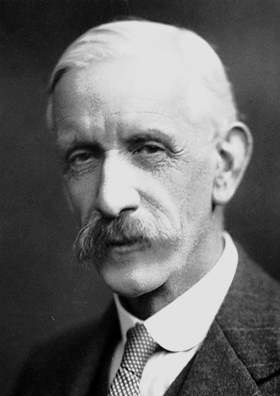
File:Frederick_Gowland_Hopkins_nobel.jpg · Wikimedia Commons · See Wikimedia Commons
Frederick Hopkins
Sign in to saveAlso known as Frederick Gowland Hopkins, Sir Frederick Hopkins, Sir Frederick Gowland Hopkins, F. G. Hopkins
English biochemist
OverviewAI-generated
Frederick Gowland Hopkins was a British biochemist, physician, and university teacher. He was educated at King's College London, Guy's Hospital, Trinity College, and the University of London. His professional career included positions at King's College London and the University of Cambridge. He worked in the field of biochemistry and was an agnostic.
Hopkins received several awards, including the Nobel Prize in Physiology or Medicine, the Copley Medal, and the Royal Medal. He was a Fellow of the Royal Society and a member of the German Academy of Sciences Leopoldina, the Russian Academy of Sciences, and the Royal Academy of Medicine of Belgium. He was nominated for the Nobel Prize in Chemistry and the Nobel Prize in Physiology or Medicine.
His notable work includes Functional muscular contractures. He had doctoral students Malcolm Dixon and J.B.S. Haldane, and also taught Luis Federico Leloir, Ernst Chain, and Rudolph Peters. He was born in Eastbourne and died in Cambridge in 1947. He spoke English.
Synthesized by Vinony from 31 facts across 4 sources: Wikidata, Open Library, Nobel Prize, Vinony collections. Generated from structured data (not the Wikipedia text) and checked against those facts — may still contain errors.
Person · Open Library
- Works
- 1
Top works
- Functional muscular contractures
via Open Library + Wikidata
Nobel Prize
- The Nobel Prize in Physiology or Medicine1929
“for his discovery of the growth-stimulating vitamins”
Shared · 1/2 portion
Wikidata facts
- Instance of
- human
- Given name
- Frederick
- Family name
- Hopkins
- Gender
- male
- Citizenship
- United Kingdom
- Place of birth
- Eastbourne
- Place of death
- Cambridge
- Occupation
- chemist
- Educated at
- Imperial College School of Medicine
- Employer
- University of Cambridge
- Languages spoken
- English language
- Religion
- agnosticism
- Academic degree
- professor
- Doctoral advisor
- Thomas Stevenson
- Doctoral student
- J.B.S. Haldane
- Field of work
- biochemistry
- Image
- Frederick Gowland Hopkins nobel.jpg
Show 10 more facts
- date of death
- 1947-05-16
- date of birth
- 1861-06-20
- member of
- Accademia Nazionale dei Lincei
- Commons category
- Frederick Gowland Hopkins
- nominated for
- Nobel Prize in Physiology or Medicine
- name in native language
- Frederick Gowland Hopkins
- student
- Rudolph Peters
- maintained by WikiProject
- WikiProject Mathematics
- interested in
- biochemistry
Sources (6)
via Wikidata · CC0
~5 min read
Encyclopedic overview
Sir Frederick Gowland Hopkins OM FRS (20 June 1861 – 16 May 1947) was an English biochemist who was awarded the Nobel Prize in Physiology or Medicine in 1929, with Christiaan Eijkman, for the discovery of vitamins. He also discovered the amino acid tryptophan, in 1901. He was President of the Royal Society from 1930 to 1935.
Education and early life
Excerpted from Wikipedia’s “Frederick Hopkins” article, available under the CC BY-SA 4.0 licence.
Gallery (2)
Available in 64 languages
- Español
- Français
- Deutsch
- 中文
- 日本語
- Русский
- Português
- Italiano
- العربية
- Armenian
- azb
- Bahasa Indonesia
- Bangla
- Basque
- Belarusian
- Catalan
- Central Kurdish
- Croatian
Show 45 more
- Czech
- Danish
- Egyptian Arabic
- Estonian
- Filipino
- Finnish
- Galician
- Georgian
- Greek
- Hebrew
- Hungarian
- Ido
- Irish
- Kazakh
- Latin
- Low German
- Malay
- Mazanderani
- Mingrelian
- Nederlands
- Norwegian
- Occitan
- Polski
- Quechua
- Romanian
- Scots
- Serbian
- simple
- Slovak
- Slovenian
- Svenska
- Swahili
- Tamil
- Tiếng Việt
- Türkçe
- Ukrainian
- Urdu
- Uzbek
- Welsh
- Western Panjabi
- Wu Chinese
- Yoruba
- فارسی
- ไทย
- 한국어
via Wikidata sitelinks · CC0