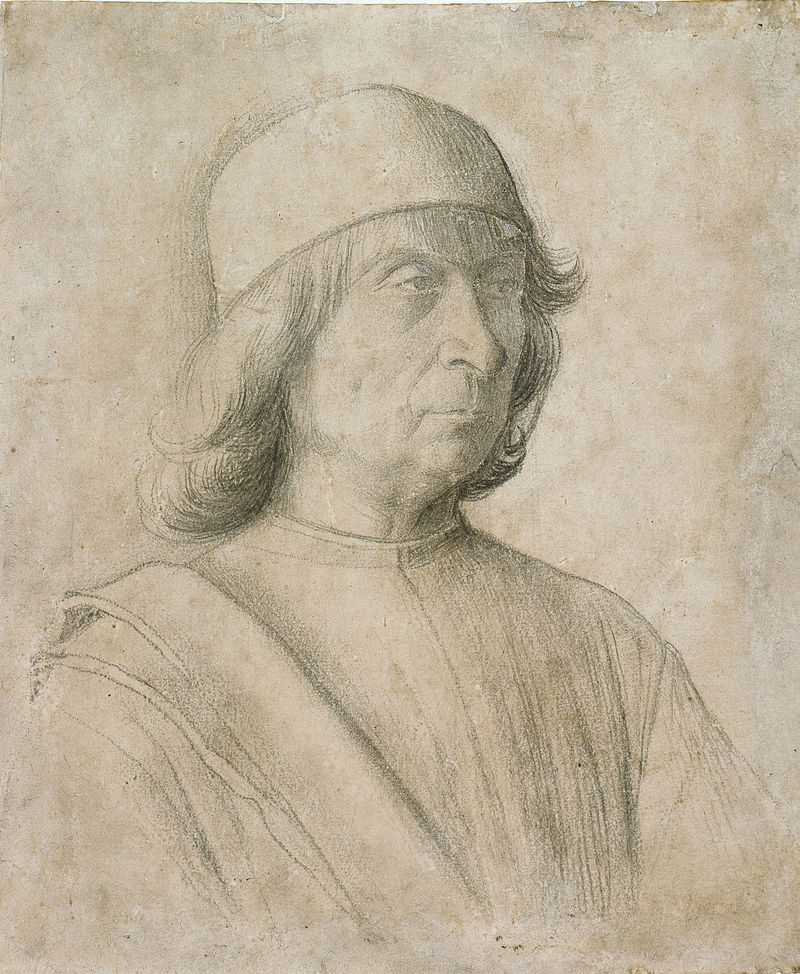
File:Bellini_selfportrait.jpg · Wikimedia Commons · See Wikimedia Commons
Gentile Bellini
Sign in to saveAlso known as Gentilis Bellini, Gentile Bellini Pittore Antico Veneziano, Bellin Gentil, Bellini, Gentilè Bellino, Gen. Bellini, Gentil Bellino, Gentil`e Bellino
Italian painter of the renaissance (1429–1507)
Key facts
- Born
- c. 1429, Venice , Republic of Venice
- Died
- 23 February 1507, Venice , Republic of Venice
- Resting place
- Basilica di San Giovanni e Paolo
- Known for
- Painter, noted for portraits and paintings of Middle Eastern scenes
- Notable work
- Sultan Mehmed II and others
via Wikipedia infobox
Wikidata facts
- Instance of
- human
- Gender
- male
- Citizenship
- Republic of Venice
- Place of birth
- Venice
- Place of death
- Venice
- Father
- Jacopo Bellini
- Occupation
- medalist
- Languages spoken
- Italian
- Family
- Bellini family
- Student of
- Jacopo Bellini
- Genre
- portrait
- Image
- Bellini selfportrait.jpg
Show 7 more facts
- Commons category
- Gentile Bellini
- date of death
- 1507-02-23
- date of birth
- 1429-01-01
- Commons Creator page
- Gentile Bellini
- relative
- Andrea Mantegna
- student
- Titian
- name
- Gentile
Sources (2)
via Wikidata · CC0
Works in European collections
12 objects attributed to Gentile Bellini, held across European museums, libraries & archives · via Europeana

~9 min read
Encyclopedic overview
Gentile Bellini (c. 1429 – 23 February 1507) was a Venetian painter of the school of Venice. He came from Venice's leading family of painters, and, at least in the early part of his career, was more highly regarded than his younger brother Giovanni Bellini - a reversal of the situation today. From 1474, he was the official portrait artist for the Doges of Venice. In addition to his portraits, he painted a number of very large works with multitudes of figures, especially for the Scuole Grandi of Venice, wealthy confraternities that were very important in Venetian patrician social life.
In 1479, he was sent to Constantinople by the Venetian government when the Ottoman Sultan Mehmed II requested an artist; he returned the next year. Thereafter, a number of his subjects were set in the East, and he is one of the founders of the Orientalist tradition in European painting. His portrait of the Sultan was also copied in paintings and prints and became known all over Europe.
Excerpted from Wikipedia’s “Gentile Bellini” article, available under the CC BY-SA 4.0 licence.