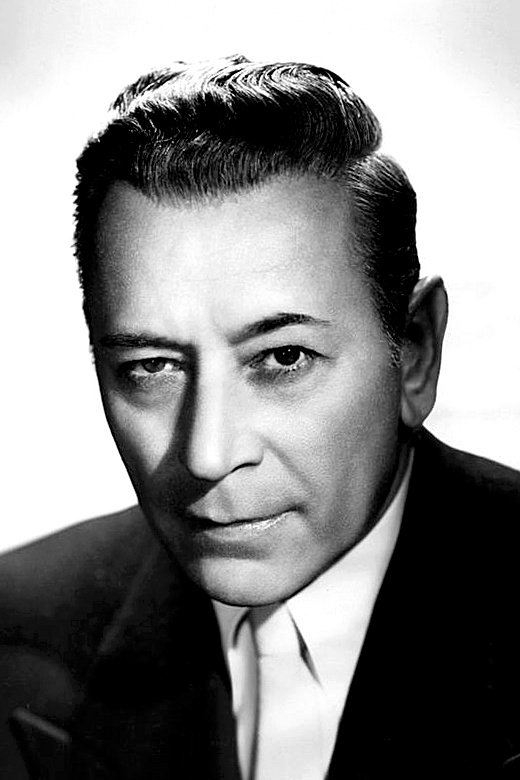
Profile via TMDB · Courtesy of TMDB
OverviewAI-generated
George Raft was an American actor born George Ranft on September 26, 1901. He was educated at Stuyvesant High School and began his work period in 1929. Raft performed in gangster films and worked for Warner Bros. Entertainment. His roles included film, television, and stage acting. He spoke and wrote in English.
Raft died of leukemia in Los Angeles on November 24, 1980, due to natural causes. He is buried at Forest Lawn Memorial Park. He received a star on the Hollywood Walk of Fame, which is recognized in the Hollywood Walk Of Fame collection.
Synthesized by Vinony from 27 facts across 3 sources: Wikidata, TMDb, Vinony collections. Generated from structured data (not the Wikipedia text) and checked against those facts — may still contain errors.
Film & TV
Los Angeles, California, USA
George Raft (born George Ranft; September 26, 1901 – November 24, 1980) was an American film actor and dancer identified with portrayals of gangsters in crime melodramas of the 1930s and 1940s. A stylish leading man in dozens of movies, today Raft is mostly known for his gangster roles in the original Scarface (1932), Each Dawn I Die (1939), and Billy Wilder's 1959 comedy Some Like It Hot, as a…
Known for
- Fragments: Surviving Pieces of Lost Films — Himself (archive footage)2011
- Public Enemies: The Golden Age of the Gangster Film — Self (archive footage)2008
- Rogues Gallery — Self (archive footage)1997
- Mae West and the Men Who Knew Her — Self (archive footage)1994
- Murderers, Mobsters, & Madmen: Volume 6: Hollywood Police Files — (archive footage) (uncredited)1992
- Hollywood Out-takes and Rare Footage — Self (archive footage) (uncredited)1983
- The Man with Bogart's Face — Petey Cane1980
- Gay, Gay Hollywood — Self1980
- Sextette — Self1978
- Brother, Can You Spare a Dime? — Self (archive footage)1975
via TMDB
Key facts
- Born
- George Ranft , ( 1901-09-26 ) September 26, 1901, Hell's Kitchen, New York City, U.S.
- Died
- November 24, 1980 (1980-11-24) (aged 79), Los Angeles, California, U.S.
- Occupations
- Actor dancer film producer
- Years active
- 1924–1980
- Spouse
- Grace Mulrooney ( married</span>"}]]}'>m. 1923 ; died 1970 )
via Wikipedia infobox
Wikidata facts
- Instance of
- human
- Given name
- George
- Gender
- male
- Citizenship
- United States
- Place of birth
- New York City
- Place of death
- Los Angeles
- Occupation
- dancer
- Educated at
- Stuyvesant High School
- Employer
- Warner Bros. Entertainment
- Languages spoken
- English language
- Native language
- English language
- Genre
- gangster film
- Image
- George Raft by A. L. Whitey Schafer.jpg
- Height
- 170
Show 11 more facts
- place of burial
- Forest Lawn Memorial Park
- cause of death
- leukemia
- Commons category
- George Raft
- date of death
- 1980-11-24
- manner of death
- natural causes
- Commons gallery
- George Raft
- name in native language
- George Raft
- start of work period
- 1929-00-00
- birth name
- George Ranft
- writing language
- English language
- date of birth
- 1901-09-26
Sources (6)
via Wikidata · CC0
~40 min read
Encyclopedic overview
George Raft (né Ranft; September 26, 1901 – November 24, 1980) was an American film actor and dancer identified with portrayals of gangsters in crime melodramas of the 1930s and the 1940s. A stylish leading man in dozens of movies, Raft is remembered for his gangster roles in Quick Millions (1931) with Spencer Tracy, Scarface (1932) with Paul Muni, Each Dawn I Die (1939) with James Cagney, Invisible Stripes (1939) with Humphrey Bogart, and Billy Wilder's comedy Some Like It Hot (1959) with Marilyn Monroe and Jack Lemmon; and as a dancer in Bolero (1934) with Carole Lombard and a truck driver in They Drive by Night (1940) with Ann Sheridan, Ida Lupino and again with Bogart.
Raft's association with organized crime figures resulted in controversy throughout his life, and led to a ban from Great Britain in 1967.
Excerpted from Wikipedia’s “George Raft” article, available under the CC BY-SA 4.0 licence.