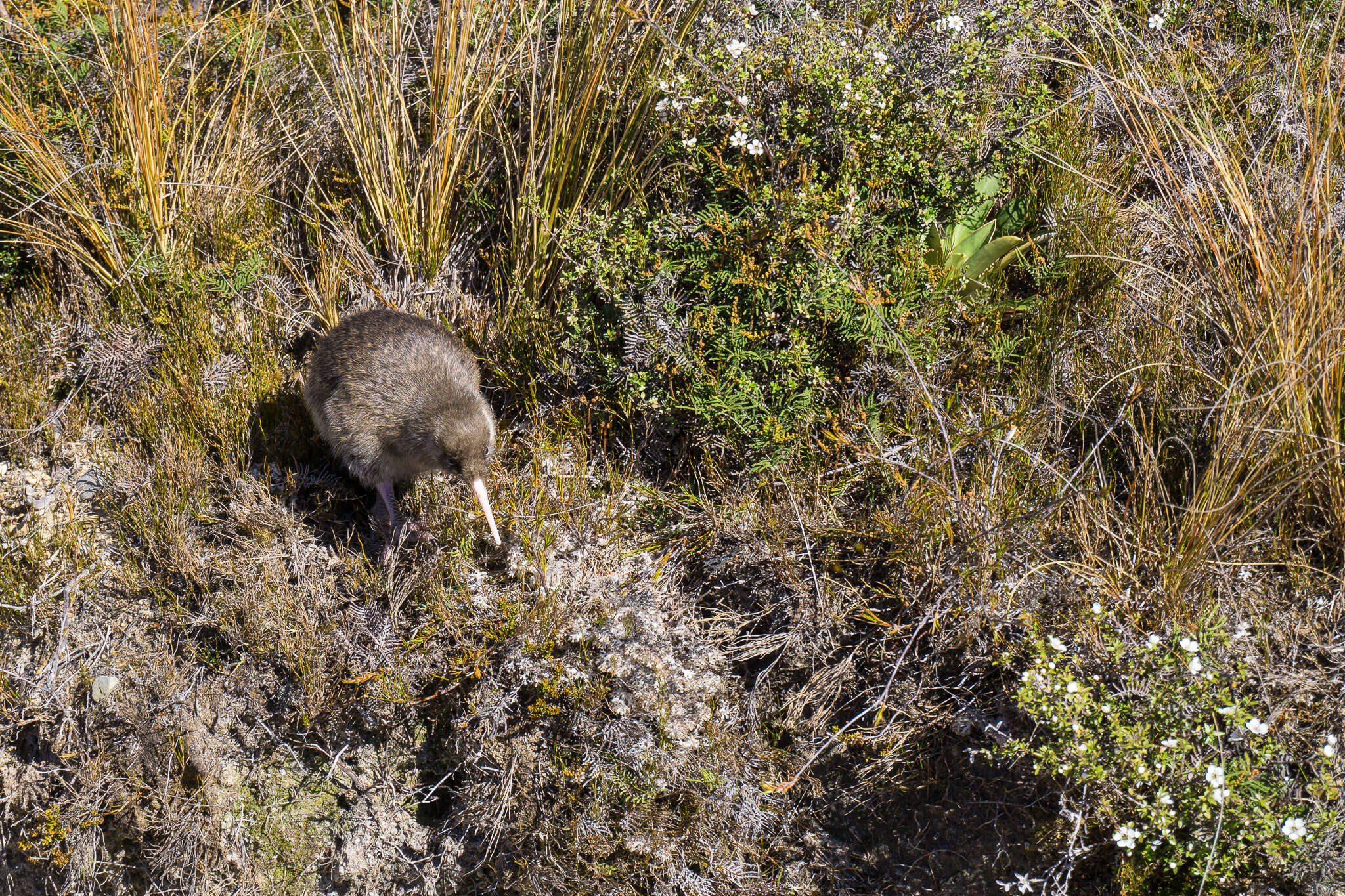
Encyclopedia of Life · EOL (see source)
Species
VulnerableЦарство: Животные Подцарство: Эуметазои Без ранга: Двусторонне-симметричные Без ранга: Вторичноротые Тип: Хордовые Подтип: Позвоночные Инфратип: Челюстноротые Надкласс: Четвероногие Класс: Птицы Подкласс: Настоящие птицы Инфракласс: Бескилевые Отряд: Кивиобразные (Apterygiformes Haeckel, 1866) Семейство: Киви (Apterygidae G. R. Gray, 1840) Род: Киви Вид: Большой серый киви Международное научное название Apteryx haastii (Potts, 1872) Ареал Охранный статус Уязвимые видыIUCN 3.1 Vulnerable: 22678132 Систематикана ВикивидахИзображенияна Викискладе ITIS 553790NCBI 8823EOL 1178365 Большо́й се́рый ки́ви[2][3], или большой пятнистый киви[3] (лат. Apteryx haastii), — новозеландская эндемичная птица. Самый крупный из видов, относящихся к единственному роду лат. Apteryx и семейству Apterygidae в отряде кивиобразных (Apterygiformes). Маорийское название этой птицы — ророа. Содержание 1 Общая характеристика 2 Степень угрозы существованию 3 Происхождение научного названия 4 Генетика 5 Примечания 6 Литература 7 Ссылки Общая характеристика Высота большого серого киви достигает 45 см, а вес — 3,3 кг. Днём прячется в вырытой норе, которая представляет собой настоящий лабиринт с несколькими выходами.
via IUCN
Wikidata facts
Show 9 more facts
- taxon rank
- species
- IUCN conservation status
- Vulnerable
- taxon name
- Apteryx haastii
- Commons category
- Apteryx haastii
- Commons gallery
- Apteryx haastii
- taxon common name
- quiuí-malhado-grande
- endemic to
- New Zealand
- sequenced genome URL
- www.ensembl.org/Apteryx_haastii
- short name
- A. haastii
Sources (3)
via Wikidata · CC0
~13 min read
Encyclopedic overview
The great spotted kiwi, great grey kiwi or roroa (Apteryx maxima) is a species of kiwi endemic to the South Island of New Zealand. The great spotted kiwi, as a member of the ratites, is flightless. It is the largest of the kiwi. The rugged topography and harsh climate of the high altitude alpine part of its habitat render it inhospitable to a number of introduced mammalian predators, which include dogs, ferrets, cats, and stoats. Because of this, populations of this species have been less seriously affected by the predations of these invasive species compared to other kiwi. Nonetheless, there has been a 43% decline in population in the past 45 years due to these predators and habitat destruction. This has led it to be classified as vulnerable. There are fewer than 16,000 great spotted kiwis in total, almost all in the more mountainous parts of northwest Nelson, the northwest coast, and the Southern Alps. A minority live on island reserves.
This kiwi is highly aggressive, and pairs will defend their large territories against other kiwi. Great spotted kiwi are nocturnal, and will sleep during the day in burrows. At night, they feed on invertebrates and will also eat plants. Great spotted kiwi breed between June and March. The egg is the largest of all birds in proportion to the size of the bird. Chicks take 75 to 85 days to hatch, and after hatching, they are abandoned by their parents.
Excerpted from Wikipedia’s “Great Spotted Kiwi” article, available under the CC BY-SA 4.0 licence.