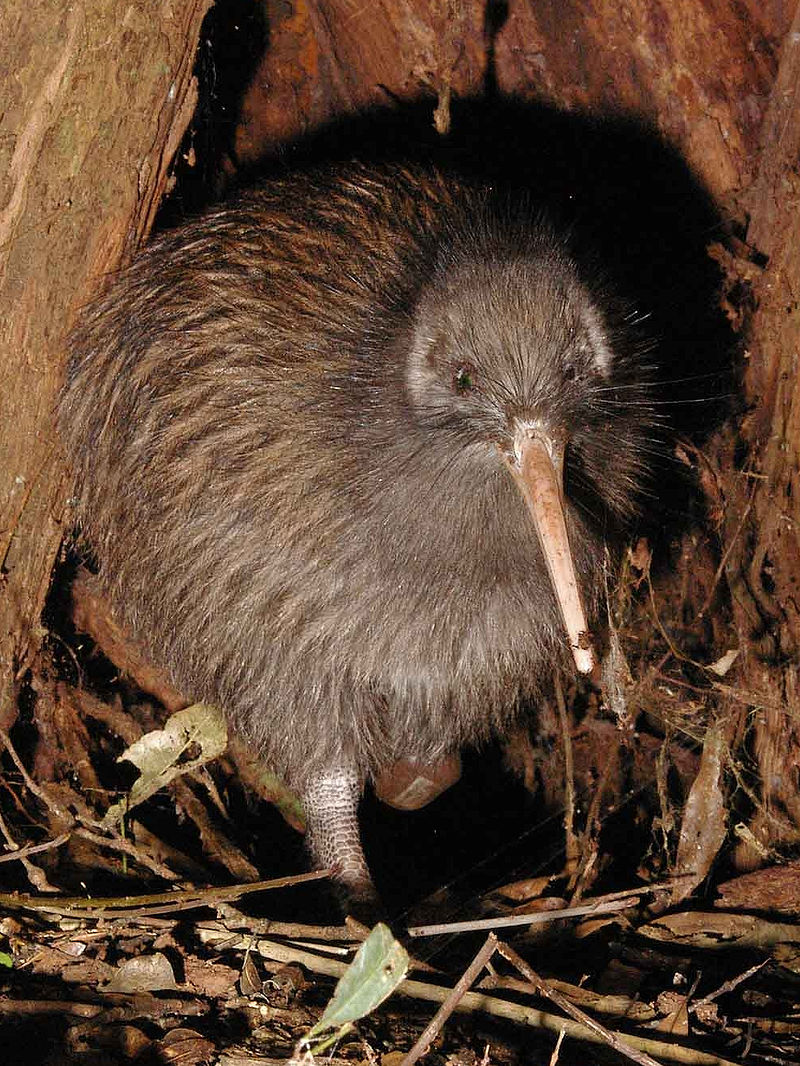
File:TeTuatahianui.jpg · Wikimedia Commons · See Wikimedia Commons
OverviewAI-generated
Apteryx is a genus within the animal kingdom, classified under the phylum Chordata and class Aves. It belongs to the order Apterygiformes and the family Apterygidae. The scientific name for this taxon is Apteryx Shaw, 1813.
Records associated with this genus have been documented in the United States and New Zealand. Various institutions hold related materials, including CUMV, RBINS-SCIENTIFIC HERITAGE, UCM, UCMP, and USNM. The genus is referenced by 646 other encyclopedia articles.
Synthesized by Vinony from 19 facts across 5 sources: Wikidata, GBIF, Gbif Occ, iDigBio, Vinony graph. Generated from structured data (not the Wikipedia text) and checked against those facts — may still contain errors.
Species
Apteryx
GENUS
- KingdomAnimalia
- PhylumChordata
- ClassAves
- OrderApterygiformes
- FamilyApterygidae
via GBIF
Museum specimens
- Specimen records
- 91
- With media
- 14
- Family
- Apterygidae
- Collections
- CUMV, RBINS-SCIENTIFIC HERITAGE, UCM, UCMP, USNM, DMNS
- Recorded in
- United States, New Zealand
Wikidata facts
- Instance of
- taxon
- Parent taxon
- Apterygidae
- Image
- Kiwifugl.jpg
Show 9 more facts
- endemic to
- New Zealand
- taxon rank
- genus
- taxon name
- Apteryx
- Commons category
- Apteryx
- topic's main category
- Category:Apteryx
- Commons gallery
- Apteryx
- means of locomotion
- bipedalism
- on focus list of Wikimedia project
- Wikipedia:Vital articles/Level/4
- taxon common name
- kivi
via Wikidata · CC0
~20 min read
Encyclopedic overview
Kiwi are flightless birds endemic to New Zealand of the order Apterygiformes. The five extant species fall into the family Apterygidae and genus Apteryx. Approximately the size of a domestic chicken, kiwi are the smallest ratites (which also include ostriches, emus, rheas, cassowaries and the extinct elephant birds and moa).
DNA sequence comparisons have yielded the conclusion that kiwi are much more closely related to the extinct Malagasy elephant birds than to the moa with which they shared New Zealand. There are five recognised species, four of which are currently listed as vulnerable, and one of which is near threatened. All species have been negatively affected by historic deforestation, but their remaining habitat is well protected in large forest reserves and national parks. At present, the greatest threat to their survival is predation by invasive mammalian predators.
Excerpted from Wikipedia’s “Apteryx” article, available under the CC BY-SA 4.0 licence.
Gallery (13)
Available in 93 languages
- Español
- Français
- Deutsch
- 中文
- 日本語
- Русский
- Português
- Italiano
- العربية
- हिन्दी
- Aragonese
- Armenian
- Asturian
- azb
- Azerbaijani
- Bahasa Indonesia
- Balinese
- Bangla
Show 74 more
- Basque
- be_x_old
- Belarusian
- Bikol
- Breton
- Bulgarian
- Burmese
- Catalan
- Cebuano
- Cherokee
- Croatian
- Czech
- Danish
- Egyptian Arabic
- eml
- Esperanto
- Estonian
- Filipino
- Finnish
- Galician
- Georgian
- Greek
- Hebrew
- Hungarian
- Icelandic
- Irish
- Javanese
- Kannada
- Kazakh
- Kotava
- Kyrgyz
- Latin
- Latvian
- Lithuanian
- Malay
- Malayalam
- Māori
- Navajo
- Nederlands
- Northern Frisian
- Norwegian
- Norwegian Nynorsk
- Occitan
- Old English
- Polski
- Punjabi
- Quechua
- Romanian
- Samoan
- Serbian
- Serbian (Latin)
- simple
- Slovenian
- Sundanese
- Svenska
- Tamil
- Tiếng Việt
- Toki Pona
- Türkçe
- Ukrainian
- Urdu
- Uzbek
- Veps
- Walloon
- Waray
- Western Mari
- Western Panjabi
- Wu Chinese
- Yiddish
- Zeelandic
- zh_yue
- فارسی
- ไทย
- 한국어
via Wikidata sitelinks · CC0