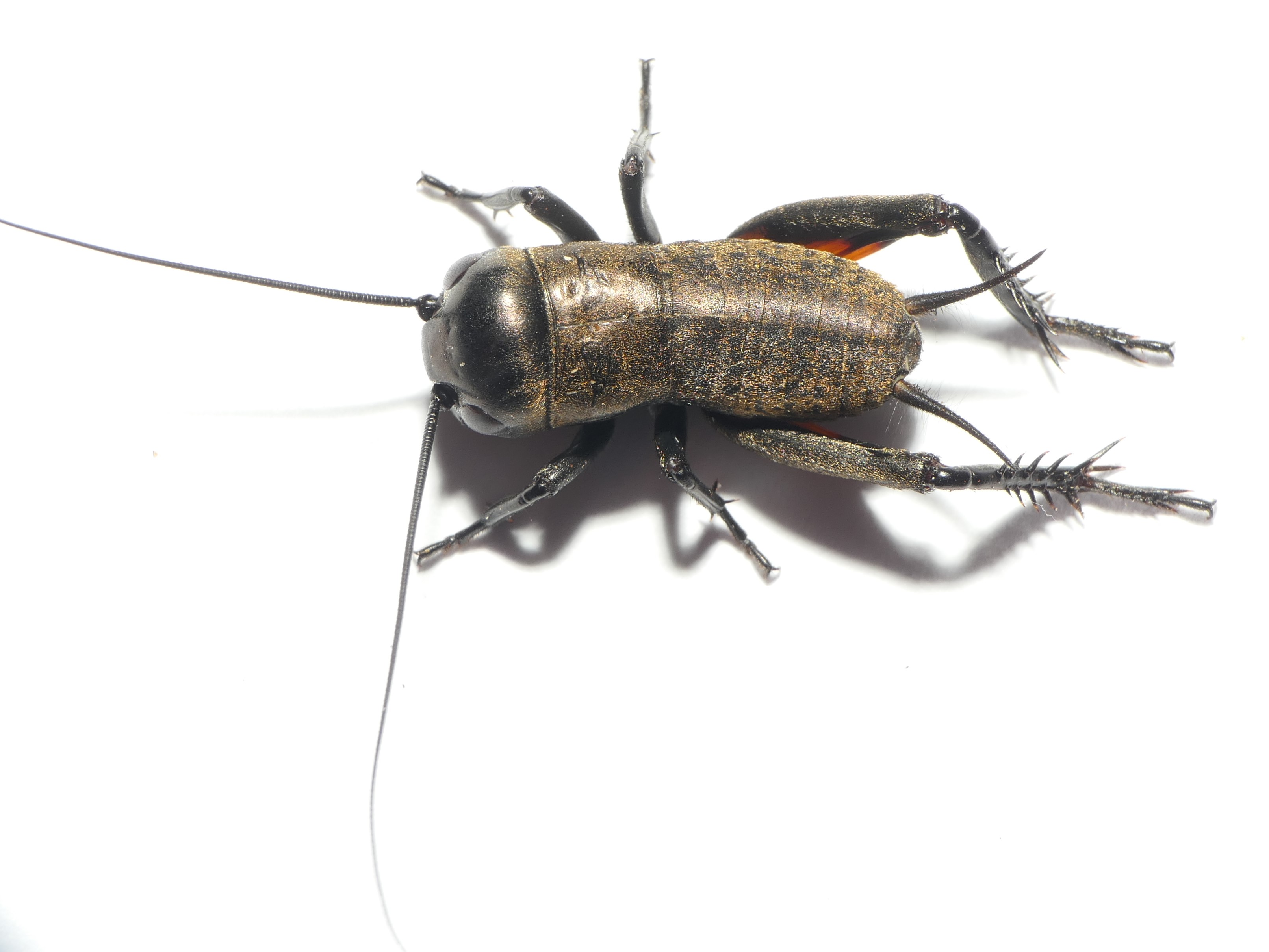
Image from GBIF · CC BY
Gryllus campestris
Sign in to saveAlso known as Field cricket, European field cricket
species of insect
OverviewAI-generated
Gryllus campestris, commonly known as the field cricket, is a species within the genus Gryllus. It belongs to the family Gryllidae in the order Orthoptera, class Insecta, phylum Arthropoda, and kingdom Animalia. The species has been documented in various countries, including France, Montenegro, Iraq, Austria, and Poland.
Records of this organism are held by institutions such as RBINS-SCIENTIFIC HERITAGE, MNHN, NRM, UPS, and BYU. The taxon range includes Cuba. A total of 226,361 occurrences have been recorded, with 34 specific records noted in one database. The species is referenced by 25 other encyclopedia articles.
Synthesized by Vinony from 24 facts across 5 sources: Wikidata, GBIF, Gbif Occ, iDigBio, Vinony graph. Generated from structured data (not the Wikipedia text) and checked against those facts — may still contain errors.
Species
SPECIES
- KingdomAnimalia
- PhylumArthropoda
- ClassInsecta
- OrderOrthoptera
- FamilyGryllidae
Die Feldgrille (Gryllus campestris) ist eine Art aus der Familie der Echten Grillen (Gryllidae) innerhalb der Ordnung der Heuschrecken (Orthoptera). Sie war 2003 das Insekt des Jahres in Deutschland und 2014 das Tier des Jahres in der Schweiz. Inhaltsverzeichnis 1 Merkmale 2 Vorkommen 3 Ernährung 4 Stridulation und akustische Kommunikation 4.1 Stridulationsorgan 4.2 Gesänge 4.3 Gehörorgan 4.4 Paarung 4.5 Entwicklung 5 Gefährdung und Schutz 6 Weblinks 7 Quellen 7.1 Literatur 7.2 Einzelnachweise Merkmale Männliche Feldgrillen sind 18 bis 26 mm lang, Weibchen erreichen 19 bis 27 mm[1] und deren nach hinten ragende Legeröhre (Ovipositor) erreicht zusätzlich noch eine Länge von 8 bis 12 mm. Diese Grillenart ist glänzend schwarz gefärbt und von gedrungener, zylindrischer Gestalt mit kräftigen Beinen. Der Kopf ist kugelförmig, breiter als der Halsschild und trägt kräftige Beißwerkzeuge, etwa 20 mm lange, dünne Antennen und drei helle Punktaugen (Ocelli) auf der Stirn; der Halsschild ist von oben betrachtet rechteckig. Die bräunlichen bis tiefschwarzen, an der Basis gelben Vorderflügel sind gut ausgebildet und zu Tegmina verhärtet. Sie sind schwarz geädert und werden von den Männchen zur S
via GBIF
Museum specimens
- Specimen records
- 34
- Family
- Gryllidae
- Collections
- RBINS-SCIENTIFIC HERITAGE, MNHN, NRM, UPS, BYU, MZLU
- Recorded in
- France, Montenegro, Iraq, Austria, Poland, Spain, Portugal, Serbia
Bird sounds
- calling song· Spain· quality A
- calling song· Spain· quality A
- calling song· Spain· quality A
- calling song· Spain· quality A
via Xeno-canto
Wikidata facts
Show 8 more facts
- taxon rank
- species
- taxon name
- Gryllus campestris
- Commons category
- Gryllus campestris
- Commons gallery
- Gryllus campestris
- taxon common name
- poljski muren
- short name
- G. campestris
- taxon range
- Cuba
- external data available at URL
- www.gbif.org/dataset/691854de-aaa2-4c01-a226-96579848d824
via Wikidata · CC0
~4 min read
Encyclopedic overview
Field recording in the Netherlands 32s
G. campestris and its burrow Late instar nymph Close-up of a Gryllus campestris Gryllus campestris, the European field cricket or simply the field cricket in the British Isles, is the type species of crickets in its genus and tribe Gryllini. These flightless dark colored insects are comparatively large; the males range from 19 to 23 mm and the females from 17 to 22 mm.
Excerpted from Wikipedia’s “Gryllus campestris” article, available under the CC BY-SA 4.0 licence.