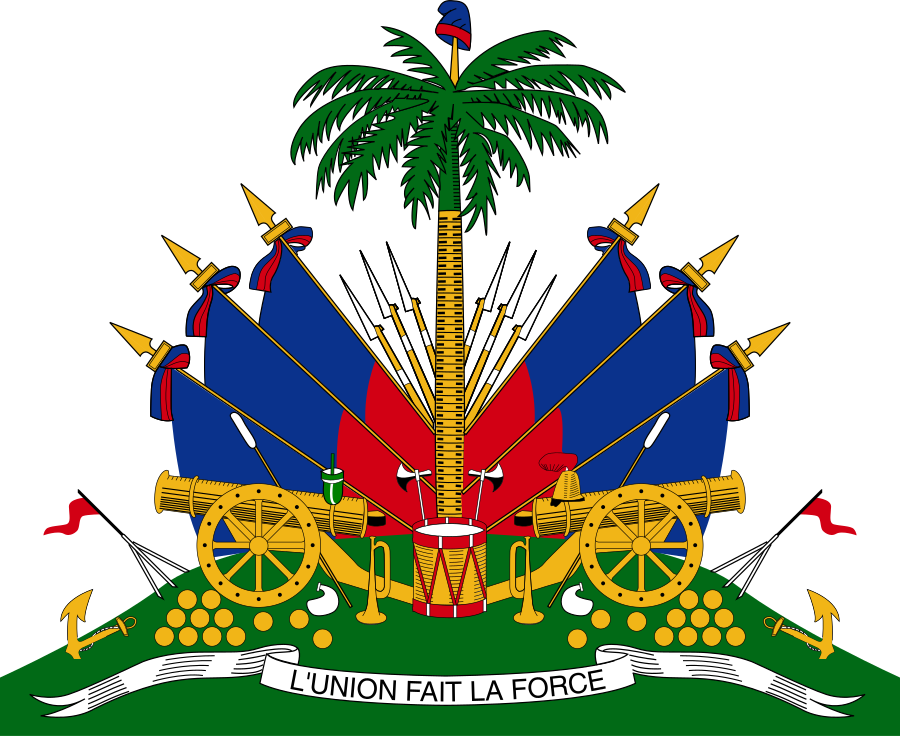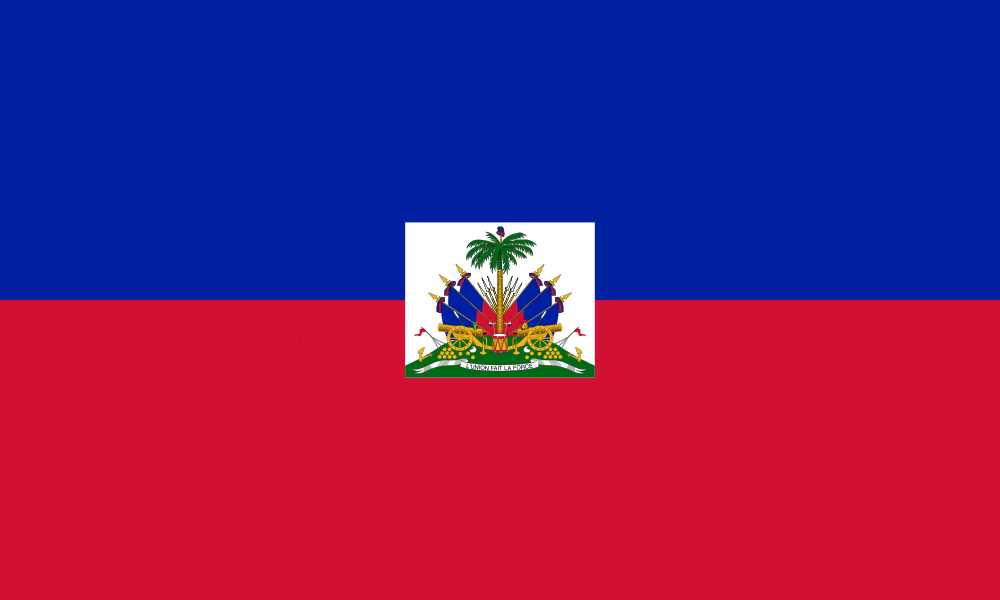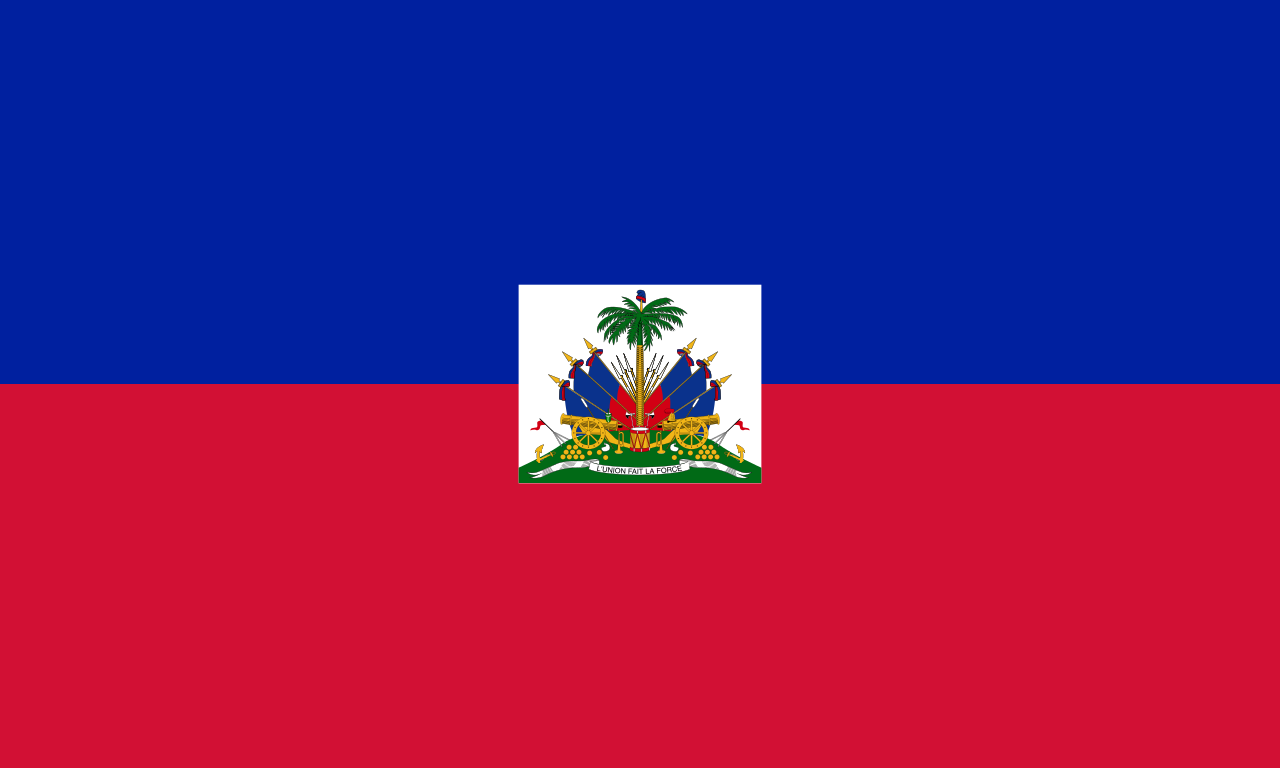
Also known as Republic of Haiti, ht, Hayti, HT, Haitian Republic, Ayiti, HAI
中美洲国家
Haiti is a Caribbean country located on the western part of the island of Hispaniola, sharing the island with the Dominican Republic and situated east of Cuba and Jamaica. With approximately 11.4 million people, it is the most populous country in the Caribbean, and its capital is Port-au-Prince.
AI-generated from the Wikipedia summary — may contain errors.
via Open-Meteo
It is extremely helpful when traveling in Haiti to have a local contact, through a church, a hotel, or just through making friends with someone. Experiences like dining locally, riding on a tap-tap, or strolling through one of the insanely crowded outdoor markets are great fun and very worth doing but are much safer and easier if you have a trusted Haitian to go along as a guide and interpreter.
Much of Haiti is struggling. It is the poorest country in the Western hemisphere, long beset by government corruption, and now imperiled by violent criminal gangs. Hurricanes are fairly frequent and there are some earthquakes.
thumb|450px|Visa policy of Haiti
thumb|300px|Ruins of Sans Souci Palace Port-au-Prince has some landmarks, structures and statues, such as a large pair of hands holding the earth. Many of these are close to the airport. This city is the largest in Haiti and was the most affected by the earthquake. You will still see evidence of the disaster, such as crumbling buildings, but much reconstruction has taken place. When you go a short distance outside of the city, you will have a better idea of the devastation. There are still people living in the "tent village," which extends for about two miles and is made up of small tarps draped over sticks stuck in the ground. As you go on, you may pass one of the mass graves dug after the earthquake, but you probably will not realize it is a grave. It's on the side of a small mountain, and the grass has grown over the turned earth. There are no markings but you will sometimes see people there or flowers placed in memory.
Haiti has beautiful scenery if you know where to find it. If you are travelling or staying with someone who knows the area well, ask if there are any nice beaches or mountainous areas nearby. St. Marc, along with some other cities, has a beautiful mountain range that can be hiked. At the top of these mountains are some historical artifacts, structures and incredible views of the ocean.
The severe impact of earthquakes in 2010 left Haiti's economy in ruin. However, there are several erected memorials in memory of the thousands of victims who lost their liv…
Champs-de-Mars was once the most beautiful park in Haiti but is now covered in tents housing people made homeless by the earthquake. It was a public place where people went to relax, before the quake. It is located near the National Palace.
海地共和国(法語:République d'Haïti;海地克里奧爾語:Repiblik d Ayiti),通称海地(法語:Haïti;海地克里奧爾語:Ayiti),是位于加勒比海的島國。全境位於加勒比海第二大岛伊斯帕尼奥拉岛(又稱海地島)西半部,東与多明尼加共和国接壤。 海地人的原生種族為印第安土著民族—阿拉瓦克人。自西班牙入侵並屠殺土著居民後,當地的阿拉瓦克人便急速減少到完全滅絕。而西班牙的白人殖民主為了補充勞力並自非洲引進大量黑奴,海地從此變成黑人國家,開展農業經濟。 海地为世上第一個非裔黑人主導、奴隸起義建國的國家,美洲在被殖民地化後第二個獨立的國家,和加勒比地區第一個獨立的地區(也是世界上第三個共和國和第一個黑人共和國)。在2012年,海地更宣布其有意尋求在非洲聯盟的準會員地位。 海地是美洲黑人人口比例最大(95%以上)的獨立共和國。然而,該國與人口以拉丁裔為主的邻国多明尼加發展上卻有著天壤之別,海地是美洲最貧窮國家,2021年人均年收入1943美元、處於低人類發展指數,是世界上最不发达国家之一。2019年,海地的人均预期寿命为64岁。
Abstract from DBpedia / Wikipedia · CC BY-SA
6 mapped locations
Discovered by embedding cosine similarity (sentence-transformers MiniLM, 384-dim).
via REST Countries
via World Bank Open Data · CC BY 4.0
via OpenStreetMap · GeoNames
via Wikimedia Pageviews API
via Wikipedia infobox
via PubMed
via Wikidata · CC0
thumb|Haitian dishes; rice and beans (diri kole ak pwa), pink salad (with potato and beets), baked macaroni, fried plantains, fried chicken and pork (griot), green salad, sauce and piklis (similar to coleslaw) Haitian cuisine is typical of Caribbean métissage, a wonderful mix of French and African culinary traditions. It is similar to its Spanish Caribbean neighbors yet unique in its strong presence of spices. Roast goat called 'kabrit', morsels of fried pork 'griot', poultry with a Creole sauce 'poulet creole', rice with wild mushroom 'du riz jonjon' are all wonderful and tasty dishes.
Along the coast, fish, lobster and conch are readily available. Haiti has a very fine collection of fruit including guava, pineapple, mango (Haiti's most prized fruit), banana, melons, breadfruit, as well as mouthwatering sugarcane cut and peeled to order on the streets. Restaurants in the bigger cities provide safe and delicious meals, and precautions are taken with the food and water to keep things safe.
However, even in resorts with purified water, it is not always safe to assume that raw vegetables (such as lettuce and tomatoes) have been properly washed. In smaller or more humble venues make sure to eat fruit and vegetables that can be skinned or peeled, drink bottled drinks only, make sure any ice is from a clean water source, and make sure any meat is well-cooked.
When bottled water or boiled water is not available, a freshly opened coconut provides water and electrolytes with minima…
Haitian rum is well-known. Barbancourt 5 star is a top drawer drink. Clairin is the local firewater made from sugarcane that can be bought on the street, often flavored with various herbs that can be seen stuffed into the bottle. Prestige is the national beer, and is of good quality and excellent taste. Also be sure to try the Papye drink, a sort of papaya milkshake that is deliciously refreshing beyond words on a hot day. Cremas is a tasty, creamy alcoholic beverage that is derived from coconut milk.
There are many guest houses throughout Haiti. However, these are quite hard to find while overseas. Many of these guest houses cost about 25 to 35 dollars a night and include 2 to 3 meals a day. Sometimes these houses are associated with orphanages (such as Saint Joseph's Home for Boys).
Saint Joseph's Home for Boys is in Delmas 91, near Petionville. Fondwa Guest House is at the bottom of the hill from Anbatonèl (a small village halfway between Léogâne and Jacmel).
Camping is a high-risk activity in certain parts of Haiti and is not recommended.
Since the assassination of its president in 2021, Haiti has once again devolved into complete lawlessness. Several governments advise against all travel to Haiti. Violent crime and civil unrest are serious problems. Kidnapping is also a risk. In case of trouble, help from the outside world will be extremely limited.
Do not unnecessarily carry valuables or more cash than needed, or walk late at night in dark streets. Women should not walk alone. The number of people that fled the country after the 2010 earthquake is unknown, but the atmosphere has changed some people. Even when women walk with other men, Haitian men may still utter remarks. They are not afraid to maintain eye contact, and their stares may make one uneasy. It is best to be polite, but be engaged in your immediate group.
Sanitary conditions in Haiti are poor and medical care is woefully inadequate. If you get ill or injured whilst in Haiti, you may need to leave or be evacuated.
Tap water should be avoided. Drink bottled water only. Washing oneself with water from places such as creeks or lakes is not recommended due to the risk of water-borne diseases. Several diseases can cause dehydration, as can sweating a lot because of the hot climate. Hydration requirements can be fulfilled by preparing one of the many water purifying systems as if one were going camping, or by buying bottled water once in Haiti; it is widely available and inexpensive by western standards.
Various mosquito-borne diseases are a concern in Haiti, and precautions against mosquitoes are strongly recommended. Malaria is common and most travellers will need anti-malarial drugs. Dengue fever is also fairly common. Zika fever is also a concern, especially for women who are or may become pregnant. Check with your doctor, a tropical medicine specialist, or a local hospital or clinic, preferably at least 6 weeks before your trip, to find out what immunizations and anti-malarial prophylaxis they would suggest. There is now an oral cholera vaccine which also gives partial immunity to various causes of travellers' diarrhea; that may be a good idea for Haiti, although cholera does not typically affect tourists. The US government Center for Disease Control (CDC) has a page with advice for travellers to Haiti.
Depending on your itin…
thumb|Street view in the capital One thing visitors to Haiti learn very quickly is that Haitians are a very friendly and down-to-earth people, despite all they have had to endure. There are some beggars and peddlars in the cities, but they are the exception not the rule. Expect no kow-towing. Impoverished Haitians will always accept gifts, but they will almost always stand straight, look you in the eye, and repay you with a sincere "Mesi" (thanks).
Haiti is a nation of fairly conservative norms. Modest dress when exploring Haiti's cities is advised, especially for women. The smart visitor should look people in the eye, wave hello, and treat them with friendship and respect, as equals, no matter how poor or desperate their living conditions may seem.
Try to learn some basic words of Haitian Creole.
Ask permission before taking pictures of locals (they often ask you for money). Never walk about sticking your camera in people's faces or taking pictures randomly. Do not solely take pictures of the piles of trash you may see in some of the bigger cities (such as Cap-Haïtien or Port-au-Prince) or anything else that Haitians are not proud of as it is offensive. However, people have no problem with foreigners taking pictures of beautiful scenery, cultural events or historical sites.
Carry a few gourdes in your pockets for the kids who carry your luggage/shine your shoes/hail your tap-tap at the airport (but be alert for pickpockets).
Sometimes visitors to Haiti walk about handin…
Travel guide from Wikivoyage (CC BY-SA 4.0)
via Wikidata sitelinks · CC0