
Hall Overton · Spotify · Courtesy of Spotify
Hall Overton
Sign in to savemusician, composer, music teacher (1920–1972)
Listeners · Last.fm
- Listeners
- 55
- Total plays
- 199
Tags
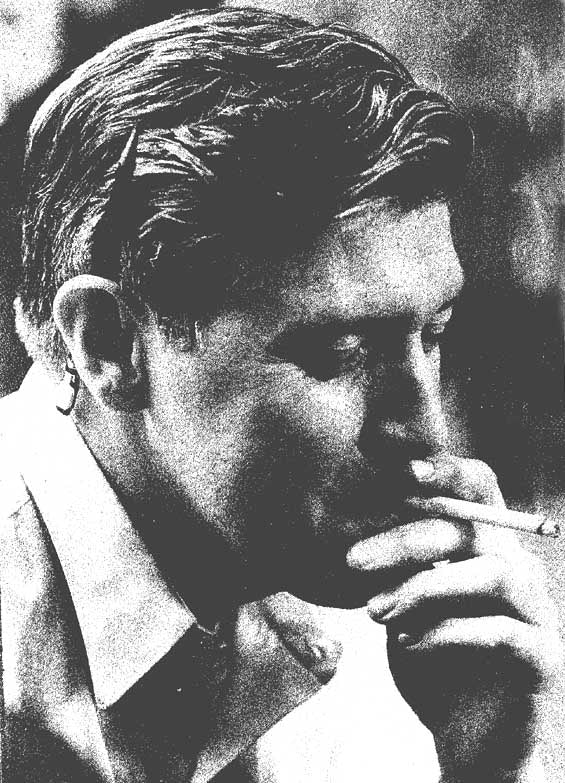
Hall Franklin Overton | American jazz pianist, composer and music teacher. Born : February 23, 1920 in Bangor, Michigan. Died : November 24, 1972 in New York City, New York. Hall played (and recorded) with Stan Getz, Duke Jordan, Jimmy Raney, Teddy Charles and others. <a href="https://www.last.fm/music/Hall+Overton">Read more on Last.fm</a>
Described at
Overton, Hall – American Composers Alliance
Explore and purchase sheet music for musical works by composer Hall Franklin Overton.
composers.com →Hall Franklin Overton was born in Bangor, Michigan, on February 23, 1920. He was the first of three sons born to Stanford and Ruth (Barnes) Overton and grew up in Grand Rapids, Michigan. As a youngster in this small mid-western town, he found that his few piano lessons didn't satisfy his longing for that elusive "something" he was seeking in music. He was fortunate in having a high school music teacher who recognized his gift, and urged him to study at The Chicago Musical College. It was there that he studied theory and composition from 1940 to 1942. The latter year marked his entry into the armed services, and from 1942 until 1945 he served in overseas combat duty with the U.S. 3rd Armored Division. It was during that time that he learned to play jazz. In 1963 Monk recorded a second live album with orchestra arrangements by Overton at the New York Philharmonic Hall titled Big Band And Quartet In Concert. His opera, Huckleberry Finn, commissioned by the Barney Jaffin Foundation, was presented by The Juilliard Opera Company just months before he died on November 24, 1972. He married Nancy Swain in 1949, and they had two sons: Richard Adair (Rick) Overton and Steven Swain Overton. Rick is a comedian/actor/writer now living in California, and Steve is in New Mexico pursuing both music and advanced math. He is also survived by his brothers Harvey and Richard Overton. About his music, Hall Overton said: Hall Overton was a player, composer, arranger and perhaps most importantly... a teacher. (Article information provided by Nancy Overton. From post by Jack Reilly) Review of Opera "Huckleberry Finn" The New York Times, May 16, 1971 This 'Huck Finn' Is Not for Children By RAYMOND ERICSON The Juilliard Opera Center's last premiere, given in late March, was Harold Farberman's "The Losers." It was about today's youth, specifically a gang like Hell's Angels. The company's next premiere, due this Thursday and Saturday, is about the youth of another and more innocent era, the characters in Mark Twain's "Huckleberry Finn." The opera is by Hall Overton, a 51-year-old composer on the Juilliard faculty. He collaborated on the libretto with Judah Stampfer. Overton was commissioned to write an opera dealing with youth, which would hopefully appeal to young people and relate to the way they feel today. The composer thought the Twain novel would fill the bill. "Huck," he says, "was concerned over issues of conscience, over moral issues. He rejected civilization as he saw it. He ran away from it. His main goal was to run to some place where he could be free. His strongest relationship was with a black man." Overton says that the libretto will not please everybody, because they had to leave so much out. "We have concentrated on three main areas: the characters and relationship of Huck and Jim; crowd scenes -- it was important that they be represented because Twain uses them as a foil for the closed world of Huck and Jim; and the symbolic forces of the river and the raft and the freedom that seems to be there wherever the river takes you. "We have tried to preserve Huck intact as much as possible. He is what he is in the novel except that we have advanced his age from 13 to 16. Jim's character is altered somewhat. He represents an older, wiser man who instructs in his own way. Towards the end, we have made a real change, Jim is freed, as in the novel, by his former owner, but instead of going back with Huck and Tom Sawyer, he takes off on his own to continue his original mission to free his immediate family."
Excerpt from a page describing this subject · 17,797 chars · not written by Vinony
Wikidata facts
- Instance of
- human
- Given name
- Franklin
- Gender
- male
- Citizenship
- United States
- Place of birth
- Bangor
- Place of death
- New York City
- Child
- Rick Overton
- Occupation
- jazz musician
- Educated at
- Chicago Musical College
- Employer
- The New School
- Student of
- Darius Milhaud
- Genre
- jazz
- Instrument
- piano
- Record label
- Savoy Records
- Conflict
- World War II
- Residence
- New York City
Show 5 more facts
- date of birth
- 1920-02-29
- date of death
- 1972-11-24
- cause of death
- liver cirrhosis
- manner of death
- natural causes
- described at URL
- composers.com/hall-overton
via Wikidata · CC0