File:Handcuffs01_2003-06-02.jpg · Wikimedia Commons · See Wikimedia Commons
handcuffs
Sign in to saveAlso known as manacle, handcuff, handcuff restraint, cuff restraint
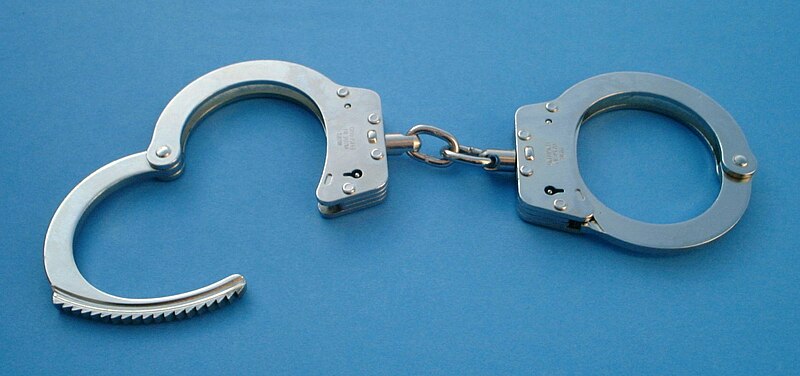
right|thumb|Hiatt type 2010 handcuffs. . thumb|A person handcuffed behind their back. Handcuffs are restraint devices designed to secure an individual's wrists in proximity to each other. They comprise two parts, linked together by a chain, a hinge, or rigid bar. Each cuff has a rotating arm which engages with a ratchet that prevents it from being opened once closed around a person's wrist. Without a key, handcuffs cannot be removed without specialist knowledge, and a handcuffed person cannot move their wrists more than a few centimetres or inches apart, making many tasks difficult or impossib
Handcuffs are restraint devices that secure a person's wrists together using two metal cuffs connected by a chain, hinge, or rigid bar, with a ratcheting mechanism that prevents removal without a key. They are significant because they severely limit wrist movement and mobility, making them effective for restraining individuals in law enforcement and correctional contexts.
AI-generated from the Wikipedia summary — may contain errors.
Wikidata facts
- Material used
- metal
- Image
- Handcuffs icon.svg
- Has use
- physical restraint
Show 5 more facts
- Commons category
- Handcuffs
- Commons gallery
- Handcuffs
- uses
- key
- described by source
- Encyclopædia Britannica 11th edition
- worn on
- wrist
Sources (1)
via Wikidata · CC0
~17 min read
Encyclopedic overview
18 sectionsContents
- Styles
- Metal handcuffs
- Plastic handcuffs
- Legcuffs
- Combinations
- Security
- Double locks
- Keys
- Hinged and Rigid Handcuffs
- Hand positioning
- Escaping
- National regulations regarding depiction of handcuffed suspects
- Use in BDSM
- Metaphorical uses
- Handcuffs gesture
- See also
- References
- External links
right|thumb|Hiatt type 2010 handcuffs. . thumb|A person handcuffed behind their back. Handcuffs are restraint devices designed to secure an individual's wrists in proximity to each other. They comprise two parts, linked together by a chain, a hinge, or rigid bar. Each cuff has a rotating arm which engages with a ratchet that prevents it from being opened once closed around a person's wrist. Without a key, handcuffs cannot be removed without specialist knowledge, and a handcuffed person cannot move their wrists more than a few centimetres or inches apart, making many tasks difficult or impossible.
Handcuffs are frequently used by law enforcement agencies worldwide to prevent suspected criminals from escaping from police custody.
Excerpted from Wikipedia’s “handcuffs” article, available under the CC BY-SA 4.0 licence.