Hannibal Directive
Sign in to saveAlso known as Hannibal Procedure, Hannibal Protocol, Hannibal code
military protocol of the Israeli Defense Forces
Described at
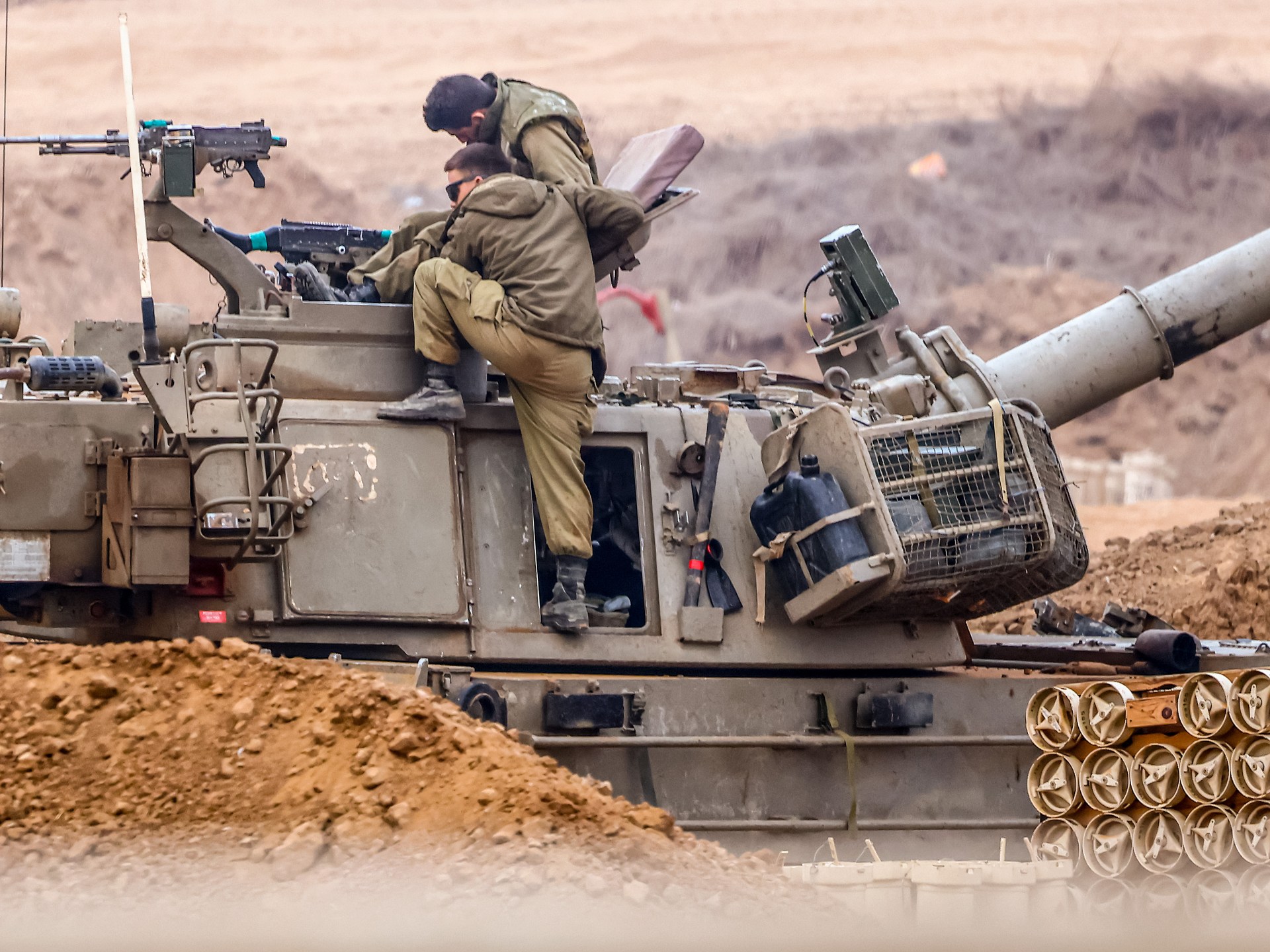
What’s Israel’s Hannibal Directive? A former Israeli soldier tells all | Israel-Palestine conflict | Al Jazeera
The controversial policy to avoid capture of Israeli soldiers isn’t formally in place now. But echoes persist in Gaza.
aljazeera.com →Yehuda Shaul describes his three years of service with the Israeli military, from 2001 to 2004, as the “most violent period” of the Israeli-Palestinian conflict up to that point. The second Intifada (2000-05), or Palestinian uprising, was at its crescendo and then-18-year-old Shaul was an infantry combat soldier; later, he was promoted to commander. The Jerusalem-born and bred paratrooper served in the occupied West Bank for two years, and for a third year was stationed at Israel’s border with Lebanon. Now 41, Shaul is a co-founder of the Israeli NGO Breaking the Silence, the first such organisation of Israeli military veterans calling for an end to the Israeli occupation of the West Bank, East Jerusalem and the Gaza Strip. It was during his time stationed at the border with Lebanon that Shaul was first told about the Hannibal Directive , a former controversial Israeli military policy aimed at preventing the capture of Israeli soldiers by enemy forces – at any cost. Israel last invoked it in 2014 during the war on Gaza that year, according to leaked military audio recordings, though the army denied it had used the doctrine. Dozens of Palestinians were killed in the Israeli bombardment that followed, sparking accusations of war crimes against the Israeli army. The directive, also known as the Hannibal Procedure or Hannibal Protocol, is an Israeli military policy that stipulates the use of maximum force in the event of a soldier being kidnapped, said Shaul. “You will open fire without constraints, in order to prevent the abduction,” he said, adding that the use of force is carried out even at the risk of killing a captive soldier. Get real-time breaking news alerts and stay up-to-date with the most important headlines from around the globe. In addition to firing at the abductors, soldiers can fire at junctions, roads, highways and other pathways opponents may take a kidnapped soldier through, Shaul said. Shaul said that the directive was shared with him and other commanders orally. “I’ve never seen any written text of the rules of engagement,” he said. The aspect of the directive which risks killing a soldier is controversial under international law given that states must respect their citizens’ right to life, which is not a right lost even if they are captured by other states, she explained. Israeli military officials, however, have said that a computer randomly generated the name. In 1986, Israeli army commanders drew up the doctrine after three soldiers from the Givati Brigade, an Israeli infantry brigade, were captured by the armed Lebanese group Hezbollah . At that time, Israel occupied a southern region of the Levantine country in an area it created and called a security zone after its invasion of Lebanon in 1982 . Hezbollah captured soldiers patrolling this zone, which would remain under Israeli occupation until 2000. Members of the brigade saw a vehicle getting away with their captive fellow soldiers but did not open fire. The directive was created in response to ensure that never happened again. The remains of the captured soldiers were returned to Israel 10 years later in 1996, in exchange for Israel returning the bodies of 123 Hezbollah fighters, according to the Israeli government. Israel’s hardline stance since then is due to the fact that a soldier’s abduction is a strategic move for an enemy, Shaul said, giving them negotiating power, as well as the ability to affect both national morale and public support for a conflict. In 2006 Israeli soldier Gilad Shalit was seized by Hamas. After five years in captivity, he was eventually released in exchange for more than 1,000 Palestinian prisoners, the highest number of prisoners Israel released for one of its soldiers. “All of this reinforces the perception that the life of one of the colonisers is worth a thousand times more than the lives of the colonised,” Weizman wrote. On August 1, 2014, during Israel’s 50-day bombardment of the Gaza Strip, which t
Excerpt from a page describing this subject · 15,457 chars · not written by Vinony
Wikidata facts
Show 7 more facts
- used by
- Israel Defense Forces
- end time
- 2016-00-00
- start time
- 1986-00-00
- discoverer or inventor
- Yaakov Amidror
- has goal
- prevention
- significant person
- Gadi Eisenkot
via Wikidata · CC0