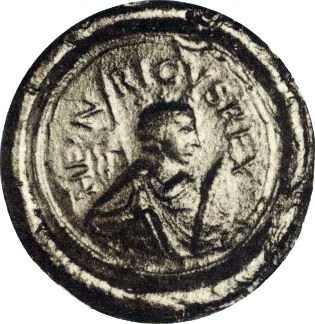
Henry I the Fowler
Also known as Henry the Fowler, Henry I
King of East Francia (919–936); Duke of Saxony (912–936)
AI overview
Henry I, known as "the Fowler," was a German king who ruled East Francia from 919 to 936 and is remembered as an early unifier of what would become the Holy Roman Empire. He matters historically because he consolidated power in the German territories during a period of instability and established a stronger foundation for his successors, particularly his son Otto I.
AI-generated from the Wikipedia summary — may contain errors.
Recent publications · Crossref
5 total works indexed
- The empirical mode decomposition and the Hilbert spectrum for nonlinear and non-stationary time series analysis
· 1998 · cited 19,507x
- Welcome to the Tidyverse
· 2019 · cited 19,414x
- Global burden of 369 diseases and injuries in 204 countries and territories, 1990–2019: a systematic analysis for the Global Burden of Disease Study 2019
· 2020 · cited 15,391x
- ROBINS-I: a tool for assessing risk of bias in non-randomised studies of interventions
Article
Henry the Fowler (German: Heinrich der Vogler or Heinrich der Finkler; Latin: Henricus Auceps; c. 876 – 2 July 936) was the duke of Saxony from 912 and the king of East Francia from 919 until his death in 936. As the first non-Frankish king of East Francia, he established the Ottonian dynasty of kings and emperors, and he is generally considered to be the founder of the medieval German state, known until then as East Francia. An avid hunter, he obtained the epithet "the Fowler" because he was allegedly fixing his birding nets when messengers arrived to inform him that he was to be king.
He was born into the Liudolfing line of Saxon dukes. He succeeded to the dukedom when his father Otto I of Saxony died in 912. The new duke launched a rebellion against the king of East Francia, Conrad I, over the rights to lands in the Duchy of Thuringia. They reconciled in 915 and on his deathbed in 918, Conrad recommended Henry as the next king, considering the duke the only one who could hold the kingdom together in the face of internal revolts and external Magyar raids.