Profile via TMDB · Courtesy of TMDB
Hevia
Sign in to saveAlso known as José Ángel Hevia Velasco, Jose Angel Hevia Velasci
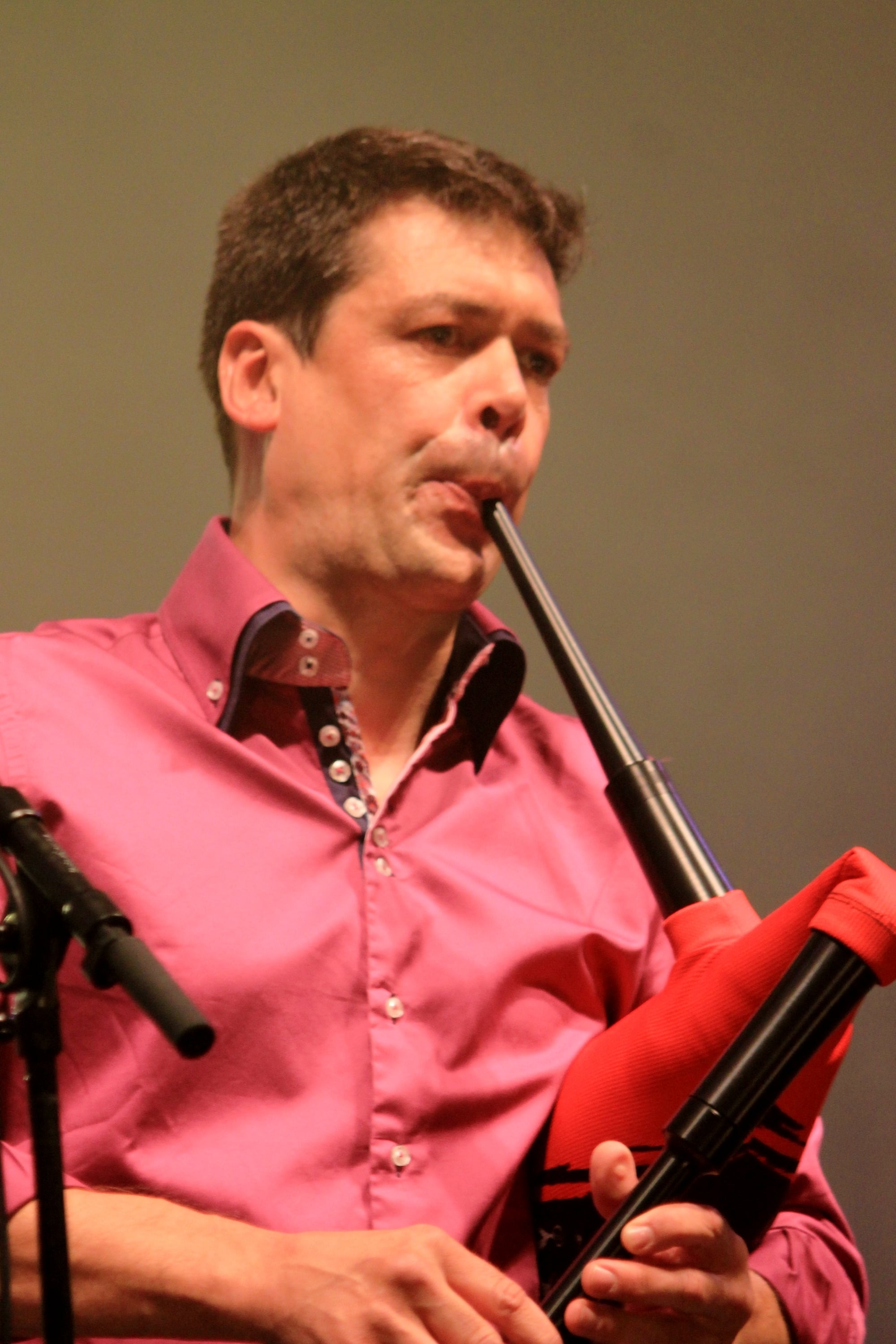
right|thumb|upright|Hevia's concert at Festival Interceltique Lorient 2013 José Ángel Hevia Velasco, known professionally as Hevia (born October 11, 1967 in Villaviciosa, Asturias), is an Asturian bagpiper – specifically, an Asturian gaita player. He commonly performs with his sister, María José, on drums. In 1992 he was awarded first prize for solo bagpipes at the Festival Interceltique de Lorient, Brittany.
In the Vinony graph
Vinony's link graph records 35 inbound references to Hevia, and connects out to Wayback Machine, Brittany and family name.
It sits within the topics 1967 births, Bagpipe players and BLP articles lacking sources from October 2010.
Vinony links it to 17 Wikipedia language editions.
Person · Open Library
- Works
- 14
Top works
- Club Edition Espagnol Methode Express
- Espagnol Methode Express BOOK ONLY
- Beginner's Spanish
- Beginner's Spanish
- Teach Yourself - Beginner's Spanish
via Open Library + Wikidata
Film & TV
Known for
- Sunday Light — Bagpiper (uncredited)2007
via TMDB
Music · MusicBrainz
- Type
- Person
- Gender
- Male
- Origin
- Spain
- Active from
- 1967-10-11
Discography
- Hevia1991
- Busindre Reel (Remixes)1998
- Tierra de nadie1998
- Busindre reel1999
- Busindre Reel1999
- The Other Side2000
- Étnico ma non troppo2003
- Obsessión2007
via MusicBrainz · CC0
Listeners · Last.fm
- Listeners
- 125,520
- Total plays
- 1,316,524
Tags
José Ángel Hevia Velasco was born in Villaviciosa, Asturias (Spain) in 1967. He first came into contact with the bagpipes when he was four years old during a procession in Amandi when he was with his grandfather. It was there that the image of a man and his bagpipes had an impact on the very young José Ángel. The unity between the pipe player, his music and the instrument seemed magical to him. Hevia then began bagpipe classes three times a week after school. <a href="https://www.last.fm/music/H
via Last.fm · Hevia
Wikidata facts
- Instance of
- human
- Gender
- male
- Citizenship
- Spain
- Place of birth
- Villaviciosa
- Occupation
- musician
- Languages spoken
- Asturian
- Instrument
- bagpipe
- Official website
- www.hevia.es
- Image
- FIL 2013 - Hevia Trio - 7863.JPG
Show 8 more facts
- ethnic group
- Asturian people
- date of birth
- 1967-10-11
- second family name in Spanish name
- Velasco
- pseudonym
- Hevia
- birth name
- José Ángel Hevia Velasco
- Commons gallery
- José Angel Hevia
- Commons category
- José Angel Hevia
- social media followers
- 12800
via Wikidata · CC0
~2 min read
Encyclopedic overview
5 sectionsContents
- Early years
- Discography
- See also
- References
- External links
right|thumb|upright|Hevia's concert at Festival Interceltique Lorient 2013 José Ángel Hevia Velasco, known professionally as Hevia (born October 11, 1967 in Villaviciosa, Asturias), is an Asturian bagpiper – specifically, an Asturian gaita player. He commonly performs with his sister, María José, on drums. In 1992 he was awarded first prize for solo bagpipes at the Festival Interceltique de Lorient, Brittany.
Possibly his most recognisable composition is the 1998 piece Busindre Reel, from his first album Tierra de Nadie. Hevia is known for helping invent a special brand of MIDI electronic bagpipes, which he is often seen playing live. The instrument was developed with Alberto Arias (pupil and computer programmer) and the electronic technician Miguel Dopico.
Excerpted from Wikipedia’s “Hevia” article, available under the CC BY-SA 4.0 licence.