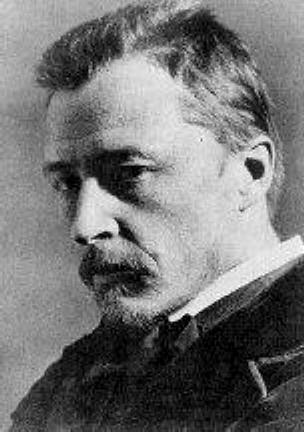
File:Hugo_Wolf.jpg · Wikimedia Commons · See Wikimedia Commons
Listeners · Last.fm
- Listeners
- 16,966
- Total plays
- 167,494
Tags
Hugo Wolf (March 13, 1860 – February 22, 1903) was an Austrian composer of Slovene origin, particularly noted for his art songs, or Lieder. He brought to this form a concentrated expressive intensity which was unique in late Romantic music, somewhat related to that of the Second Viennese School in concision but utterly unrelated in technique. Though he had several bursts of extraordinary productivity, particularly in 1888 and 1889, depression frequently interrupted his creative periods <a href=
Key facts
- Born
- Hugo Philipp Jacob Wolf , ( 1860-03-13 ) 13 March 1860, Windischgrätz , Duchy of Styria (today Slovenj Gradec, Slovenia )
- Died
- 22 February 1903 (1903-02-22) (aged 42), Vienna , Austria-Hungary
via Wikipedia infobox
Wikidata facts
- Instance of
- human
- Given name
- Hugo
- Family name
- Wolf
- Gender
- male
- Citizenship
- Austrian Empire
- Place of birth
- Slovenj Gradec
- Place of death
- Vienna
- Occupation
- musicologist
- Languages spoken
- German
- Student of
- Robert Fuchs
- Field of work
- music criticism
- Genre
- opera
- Instrument
- piano
- Image
- Postcard-1910 Hugo Wolf.jpg
Show 12 more facts
- place of burial
- Vienna Central Cemetery
- Commons category
- Hugo Wolf
- date of birth
- 1860-03-13
- date of death
- 1903-03-22
- Commons gallery
- Hugo Wolf
- cause of death
- cerebral infarction
- name in native language
- Hugo Wolf
- manner of death
- natural causes
- Commons Creator page
- Hugo Wolf
- birth name
- Hugo Philipp Jacob Wolf
- P12749
- Argyresthia trifasciata
via Wikidata · CC0
Works in European collections
36 objects attributed to Hugo Wolf, held across European museums, libraries & archives · via Europeana

Mignon III: That’s how I shine/music: Hugo Wolf. Text: Goethe
![Limits of humanity: (Part 1)/(Goethe - Hugo Wolf). [Publisher:] The Hugo Wolf Society](https://api.europeana.eu/thumbnail/v2/url.json?uri=http%3A%2F%2Fmedia.slub-dresden.de%2Ffon%2Fsnp%2Fa%2F008943%2Ffon_snp_a_008943_01.jpg&type=IMAGE)
Limits of humanity: (Part 1)/(Goethe - Hugo Wolf). [Publisher:] The Hugo Wolf Society

Still/music: H. Wolf, text: v. Eichendorff

Think it, O soul/(Hugo Wolf - Mörike)

Benedeit the Blessed Mother/Hugo Wolf - Paul Heyse
![Now, 're Maria/(Heyse and Geibel - Hugo Wolf). [Publisher:] The Hugo Wolf Society](https://api.europeana.eu/thumbnail/v2/url.json?uri=http%3A%2F%2Fmedia.slub-dresden.de%2Ffon%2Fsnp%2Fa%2F008877%2Ffon_snp_a_008877_02.jpg&type=IMAGE)
Now, 're Maria/(Heyse and Geibel - Hugo Wolf). [Publisher:] The Hugo Wolf Society
![Genial bustle; The Pied Piper/(Goethe - Hugo Wolf). [Publisher:] The Hugo Wolf Society](https://api.europeana.eu/thumbnail/v2/url.json?uri=http%3A%2F%2Fmedia.slub-dresden.de%2Ffon%2Fsnp%2Fa%2F008313%2Ffon_snp_a_008313_02.jpg&type=IMAGE)
Genial bustle; The Pied Piper/(Goethe - Hugo Wolf). [Publisher:] The Hugo Wolf Society

Mignon I: Don’t talk to me/Music: Hugo Wolf. Text: Goethe

Oh, the Maien was' s: from the “Spanish Liederbuch” (Hugo Wolf) - (P. Heyse et E. Geibel)

Ganymed/Hugo Wolf. Goethe
![Epiphanias/(Goethe - Hugo Wolf). [Publisher:] The Hugo Wolf Society](https://api.europeana.eu/thumbnail/v2/url.json?uri=http%3A%2F%2Fmedia.slub-dresden.de%2Ffon%2Fsnp%2Fa%2F008313%2Ffon_snp_a_008313_01.jpg&type=IMAGE)
Epiphanias/(Goethe - Hugo Wolf). [Publisher:] The Hugo Wolf Society

On an old picture/music: Hugo Wolf, text: Mörike

Foot Trip/by Hugo Wolf

On a hike/Hugo Wolf - Eduard Mörike

Sleeping/music: Hugo Wolf; text: Mörike

Foot Trip/(Hugo Wolf)

“Der Ratten”": (I am the well-known singer)/(Hugo Wolf)
![Let o world/v. Wolf. [Text: E. Mörike]](https://api.europeana.eu/thumbnail/v2/url.json?uri=http%3A%2F%2Fmedia.slub-dresden.de%2Ffon%2Fsnp%2Fa%2F017942%2Ffon_snp_a_017942_01.jpg&type=IMAGE)
Let o world/v. Wolf. [Text: E. Mörike]
![Meeting: [What a storm this night]/(Mörike - Hugo Wolf). [Publisher:] The Hugo Wolf Society](https://api.europeana.eu/thumbnail/v2/url.json?uri=http%3A%2F%2Fmedia.slub-dresden.de%2Ffon%2Fsnp%2Fa%2F008875%2Ffon_snp_a_008875_01.jpg&type=IMAGE)
Meeting: [What a storm this night]/(Mörike - Hugo Wolf). [Publisher:] The Hugo Wolf Society

Happy Embassy/Music: Hugo Wolf. Text: Reinick

To the Ruh “, to the Ruh”/(Kerner - Wolf)

The Pied Piper/Hugo Wolf. Goethe
![Ganymed/(Goethe - Hugo Wolf). [Publisher:] The Hugo Wolf Society](https://api.europeana.eu/thumbnail/v2/url.json?uri=http%3A%2F%2Fmedia.slub-dresden.de%2Ffon%2Fsnp%2Fa%2F009295%2Ffon_snp_a_009295_02.jpg&type=IMAGE)
Ganymed/(Goethe - Hugo Wolf). [Publisher:] The Hugo Wolf Society

(a) That painted all would be your charms; (b) And do you want to see your loved one die/(Paul Heyse - Hugo Wolf)

To the mistress/(Hugo Wolf)
![If you go to the flowers/(Heyse and Geibel - Hugo Wolf) [editor:] The Hugo Wolf Society](https://api.europeana.eu/thumbnail/v2/url.json?uri=http%3A%2F%2Fmedia.slub-dresden.de%2Ffon%2Fsnp%2Fa%2F008879%2Ffon_snp_a_008879_02.jpg&type=IMAGE)
If you go to the flowers/(Heyse and Geibel - Hugo Wolf) [editor:] The Hugo Wolf Society

Farewell/(Wolf - Mörike)

Epiphanias (The Holy Three Kings)/(Wolf - Goethe)
![Her Schwebet/(Heyse and Geibel - Hugo Wolf) [editor:] The Hugo Wolf Society](https://api.europeana.eu/thumbnail/v2/url.json?uri=http%3A%2F%2Fmedia.slub-dresden.de%2Ffon%2Fsnp%2Fa%2F008877%2Ffon_snp_a_008877_01.jpg&type=IMAGE)
Her Schwebet/(Heyse and Geibel - Hugo Wolf) [editor:] The Hugo Wolf Society

The Schreckenberger (Hugo Wolf)

New Love/Music: Hugo Wolf. Text: Mörike

The little one, Hugo Wolf, Eichendorff

Come on, O Death/Music: Hugo Wolf. Text: Heyse and Geibel

Story message/music: H. Wolf, text: E. Mörike
![Prayer/[Music: Wolf] Hugo](https://api.europeana.eu/thumbnail/v2/url.json?uri=http%3A%2F%2Fmedia.slub-dresden.de%2Ffon%2Fsnp%2Fa%2F003340%2Ffon_snp_a_003340_02.jpg&type=IMAGE)
Prayer/[Music: Wolf] Hugo

a) My lover sings at the house in the moonbill; (b) O was' your house transparent like a glass; c) Blessed be the green/(Paul Heyse - Hugo Wolf)
~22 min read
Encyclopedic overview
Star on Musik Meile Vienna
Hugo Philipp Jacob Wolf (/vɔːlf/; German: [vɔlf]; 13 March 1860 – 22 February 1903) was an Austrian composer, particularly noted for his art songs, or Lieder. He brought to this form a concentrated expressive intensity which was unique in late Romantic music, somewhat related to that of the Second Viennese School in concision but diverging greatly in technique.
Excerpted from Wikipedia’s “Hugo Wolf” article, available under the CC BY-SA 4.0 licence.