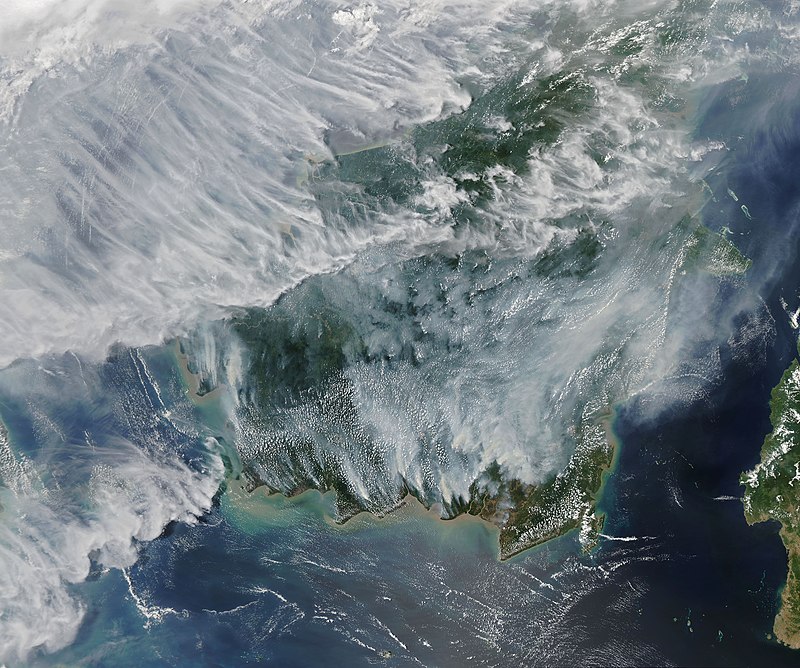
File:Satellite_image_of_2019_Southeast_Asian_haze_in_Borneo_-_20190915.jpg · Wikimedia Commons · See Wikimedia Commons
human impact on the environment
Sign in to saveAlso known as human impact, anthropogenic effect, anthropogenic effects, human activities effects, environmental effect of humans, anthropogenic environmental impact
observed or potential changes to biophysical environments and ecosystems caused directly or indirectly by humans, including global warming, environmental degradation, mass extinction and biodiversity loss, ecological crisis and collapse
Wikidata facts
- Has part
- ecological collapse
Show 7 more facts
- Commons category
- Environmental impact
- topic has template
- Template:Anthropogenic effects on the environment
- topic's main category
- Category:Human impact on the environment
- handled, mitigated, or managed by
- environmental mitigation
- facet of
- environment
- has cause
- human behavior
- has contributing factor
- deforestation
Sources (3)
via Wikidata · CC0
~40 min read
Encyclopedic overview
The impact of human expansion on ecosystems, highlighting how industrialization and deforestation for urban development lead to significant habitat loss and a severe decline in bird populations. Human impact on the environment (or anthropogenic environmental impact) refers to changes to biophysical environments and to ecosystems, biodiversity, and natural resources caused directly or indirectly by humans. Modifying the environment to fit the needs of society (as in the built environment) is causing severe effects including global warming, environmental degradation (such as ocean acidification), mass extinction and biodiversity loss, ecological crisis, and ecological collapse. Some human activities that cause damage (either directly or indirectly) to the environment on a global scale include population growth, neoliberal economic policies and rapid economic growth, overconsumption, overexploitation, pollution, and deforestation. Some of the problems, including global warming and biodiversity loss, have been proposed as representing catastrophic risks to the survival of the human species.
The term anthropogenic designates an effect or object resulting from human activity. The term was first used in the technical sense by Russian geologist Alexey Pavlov, and it was first used in English by British ecologist Arthur Tansley in reference to human influences on climax plant communities. The atmospheric scientist Paul Crutzen introduced the term "Anthropocene" in the mid-1970s. The term is sometimes used in the context of pollution produced from human activity since the start of the Agricultural Revolution but also applies broadly to all major human impacts on the environment. Many of the actions taken by humans that contribute to a heated environment stem from the burning of fossil fuel from a variety of sources, such as electricity, cars, planes, space heating, manufacturing, or the destruction of forests.
Excerpted from Wikipedia’s “human impact on the environment” article, available under the CC BY-SA 4.0 licence.