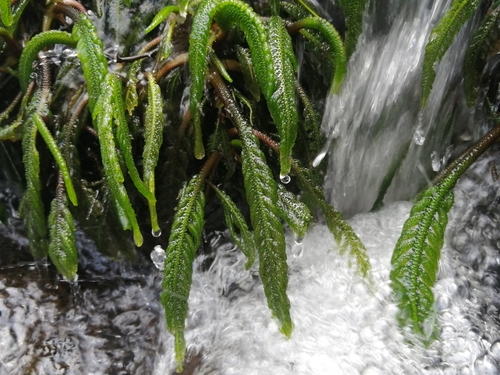
(c) samisha, some rights reserved (CC BY-NC), uploaded by samisha · cc-by-nc
Hydrostachys
Sign in to saveHydrostachys is a genus of about 22 species of flowering plants native to Madagascar and southern and central Africa. It is the only genus in the family Hydrostachyaceae. All species of Hydrostachys are aquatic, growing on rocks in fast-moving water. They have tuberous roots, usually pinnately compound leaves, and highly reduced flowers borne on dense spikes.
Species
GENUS
- KingdomPlantae
- PhylumTracheophyta
- ClassMagnoliopsida
- OrderCornales
- FamilyHydrostachyaceae
Гидростахис (лат. Hydrostachys) — род цветковых растений, единственный в семействе Гидростахиевые (лат. Hydrostachyaceae). Содержит 9 видов (по другим источникам, около 20).
via GBIF · Kew POWO
Museum specimens
- Specimen records
- 101
- With media
- 111
- Family
- Hydrostachyaceae
- Collections
- CAS, MO
- Recorded in
- Madagascar, Tanzania
Wikidata facts
- Instance of
- taxon
- Parent taxon
- Hydrostachyaceae
- Image
- Hydrostachys imbricata.jpg
Show 6 more facts
- taxonomic type
- Hydrostachys verruculosa
- topic's main category
- Category:Hydrostachys
- taxon rank
- genus
- taxon name
- Hydrostachys
- Commons category
- Hydrostachys
Sources (1)
via Wikidata · CC0
~1 min read
Encyclopedic overview
3 sectionsContents
- Species
- References
- External links
Hydrostachys is a genus of about 22 species of flowering plants native to Madagascar and southern and central Africa. It is the only genus in the family Hydrostachyaceae. All species of Hydrostachys are aquatic, growing on rocks in fast-moving water. They have tuberous roots, usually pinnately compound leaves, and highly reduced flowers borne on dense spikes.
The phylogenetic placement of Hydrostachys is particularly problematic. Owing to its specialized aquatic morphology, it has often been grouped with other aquatic plants, such as those in the family Podostemaceae. However, embryological, floral, and other morphological characters do not support this placement, and molecular data suggest that Hydrostachys is related to taxa in the order Cornales. Its position within Cornales remains uncertain; it may be basal to the rest of the order or may fall within the family Hydrangeaceae. It shares few morphological similarities with other members of Cornales.
Excerpted from Wikipedia’s “Hydrostachys” article, available under the CC BY-SA 4.0 licence.