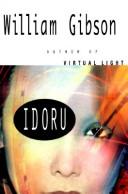
Cover via Open Library · Open Library
Idoru
Sign in to saveIdoru is a 1996 science fiction novel by William Gibson, first published in the United States by G.P. Putnam's Sons. Gibson has described the book as set in the same universe as Virtual Light but not a sequel, with only a small number of shared characters. Critics and scholars have frequently discussed Idoru alongside Virtual Light (1993) and ''All Tomorrow's Parties'' (1999), which Tama Leaver describes as Gibson's "post-cyberpunk" "Interstitial trilogy", and which a later profile in The New Yorker characterized as a connected phase of his 1990s work set largely in California and Tokyo in the
Book · Open Library
- Author
- William Gibson
- First published
- 1996
- Editions
- 30
- Subjects
- Fiction, Virtual reality, Rock musicians, Teenage girls, Americans, American fiction, Friendship, Psychology
via Open Library
Wikidata facts
- Instance of
- literary work
- Author
- William Gibson
- Genre
- science fiction
- Country of origin
- United States
- Publisher
- Viking Press
- Series
- Bridge trilogy
- Followed by
- All Tomorrow's Parties
- Follows
- Virtual Light
- Main subject
- music
- Narrative location
- Japan
Show 5 more facts
- form of creative work
- novel
- publication date
- 1996-09-04
- language of work or name
- English language
- title
- Aidoru (Complete Novel)
- nominated for
- Locus Award for Best Science Fiction Novel
via Wikidata · CC0
~16 min read
Encyclopedic overview
9 sectionsContents
- Background and publication
- Plot
- Themes and analysis
- Space, architecture, and interstitial zones
- Celebrity, mediation, and manufactured identities
- Posthuman embodiment and materiality
- Reception
- References
- External links
Idoru is a 1996 science fiction novel by William Gibson, first published in the United States by G.P. Putnam's Sons. Gibson has described the book as set in the same universe as Virtual Light but not a sequel, with only a small number of shared characters. Critics and scholars have frequently discussed Idoru alongside Virtual Light (1993) and ''All Tomorrow's Parties'' (1999), which Tama Leaver describes as Gibson's "post-cyberpunk" "Interstitial trilogy", and which a later profile in The New Yorker characterized as a connected phase of his 1990s work set largely in California and Tokyo in the early 21st century.
The novel follows two intersecting storylines, including the data analyst Colin Laney and a teenage fan, Chia Pet McKenzie, as they are drawn into events surrounding Rez's announced plan to marry Rei Toei, an "idoru" who exists as a virtual media star. Academic readings of Idoru have emphasized its treatment of mediated celebrity and identity, the role of information systems and built environments, and the novel's engagement with posthuman themes while maintaining an interest in embodiment and materiality.
Excerpted from Wikipedia’s “Idoru” article, available under the CC BY-SA 4.0 licence.