Encyclopedia of Life · EOL (see source)
Indian star tortoise
Sign in to saveAlso known as Geochelone elegans
Species of tortoise native to India/Sri Lanka
Species
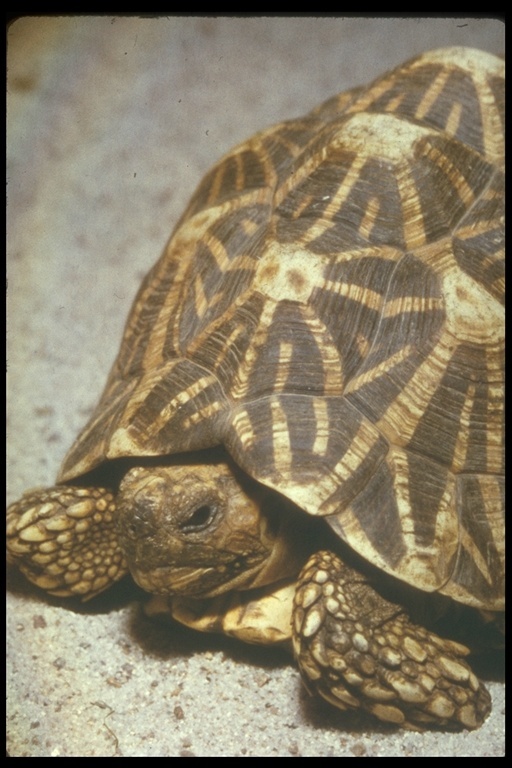
VulnerableDie Indische Sternschildkröte (Geochelone elegans) ist eine monotypische Art aus der Familie der Landschildkröten. Ihr Verbreitungsgebiet umfasst Pakistan, Indien und Sri Lanka. Inhaltsverzeichnis 1 Erscheinungsbild 2 Verbreitungsgebiet und Lebensraum 3 Fortpflanzung 4 Haltung als Terrarientier 5 Nachweise 5.1 Einzelnachweise 5.2 Literatur 6 Weblinks Erscheinungsbild Die Indische Sternschildkröte erreicht eine Carapaxlänge von bis zu 38 Zentimetern und ein Gewicht bis zu 7 Kilogramm.[1] Ihr Rückenpanzer ist eher länger und stark aufgewölbt. Auch die einzelnen Wirbel- und Rippenschilde weisen eine starke Aufwölbung auf. In der Mitte der Schilde befindet sich ein heller Fleck, von dem aus bis zu acht gelbe Streifen zum Rand hinführen. Diese auffällige Zeichnung hat zu dem Namen Sternschildkröte geführt. Der Bauchpanzer weist eine ähnliche Musterung auf. Der Panzer hat eine annähernd monostatische Form, die es dem Tier erleichtert, sich aus der Rückenlage zu befreien. Er ist damit ein Beispiel für die Realisierung der geometrischen Figur des Gömböc in der Natur. Die Vorderbeine sind gelblich. Der Kopf und die hinteren Extremitäten verfügen über eine schwarze Färbung auf gelbem Grund.
via IUCN
Wikidata facts
- Instance of
- taxon
- Parent taxon
- Geochelone
- Image
- Indian star tortoise - Houston Zoo - cropped.jpg
Show 11 more facts
- taxon rank
- species
- IUCN conservation status
- Vulnerable
- taxon name
- Geochelone elegans
- Commons category
- Geochelone elegans
- Commons gallery
- Geochelone elegans
- taxon common name
- żółw gwiaździsty
- litter size
- 5
- CITES Appendix
- Appendix I of CITES
- shape
- gömböc
- diel cycle
- diurnality
- short name
- G. elegans
Sources (2)
via Wikidata · CC0
~12 min read
Encyclopedic overview
The Indian star tortoise (Geochelone elegans) is a threatened tortoise species native to India, Pakistan and Sri Lanka where it inhabits dry areas and scrub forest. It has been listed as Vulnerable on the IUCN Red List since 2016, as the population is thought to comprise more than 10,000 individuals, but with a declining trend. It is threatened by habitat loss and poaching for the illegal wildlife trade. It was upgraded to CITES Appendix I in 2019 by full consensus among all member states, giving it the highest level of international protection from commercial trade. Conservation group TRAFFIC found 6,040 were seized globally that were intended to be sold in the pet trade. Currently they are commonly bred in many countries to be sold as pets.
Engraving of an Indian star tortoise from "The Royal Natural History" (1896)
Excerpted from Wikipedia’s “Indian star tortoise” article, available under the CC BY-SA 4.0 licence.