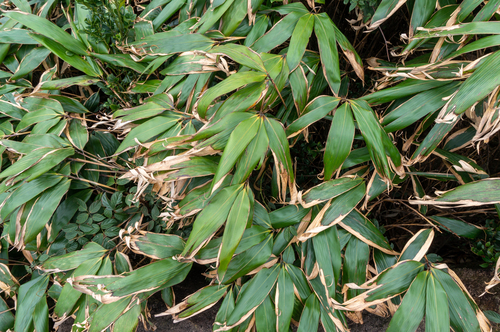
(c) 曾云保, all rights reserved, uploaded by 曾云保
Indocalamus
Sign in to saveAlso known as Chinese reed bamboos
Indocalamus is a genus of about 35 species of flowering plants in the grass family (Poaceae), native to central and southern China, Hainan, Vietnam, and Laos. They are quite small evergreen bamboos normally up to in height, initially forming clumps and then spreading to form larger thickets. They have thick, glossy leaves. Ruo leaves use to wrap foods like rice during dragon boat festival, originate in fujian refer to Indocalamus longiauritus originally but now are nonspecific to just about any leaf wrap.
Species
large-leaved bamboo
GENUS
- KingdomPlantae
- PhylumTracheophyta
- ClassLiliopsida
- OrderPoales
- FamilyPoaceae
via GBIF · Kew POWO
Wikidata facts
- Instance of
- taxon
- Parent taxon
- Bambusoideae
- Image
- 2040413 Indocalamus latifolius.JPG
Show 6 more facts
- taxon name
- Indocalamus
- taxon rank
- genus
- Commons category
- Indocalamus
- topic's main category
- Category:Indocalamus
- taxon common name
- 箬竹属
Sources (2)
via Wikidata · CC0
~1 min read
Encyclopedic overview
2 sectionsContents
- Species
- References
Indocalamus is a genus of about 35 species of flowering plants in the grass family (Poaceae), native to central and southern China, Hainan, Vietnam, and Laos. They are quite small evergreen bamboos normally up to in height, initially forming clumps and then spreading to form larger thickets. They have thick, glossy leaves. Ruo leaves use to wrap foods like rice during dragon boat festival, originate in fujian refer to Indocalamus longiauritus originally but now are nonspecific to just about any leaf wrap.
Some species were formerly included in Sasa and Sasamorpha.
Excerpted from Wikipedia’s “Indocalamus” article, available under the CC BY-SA 4.0 licence.