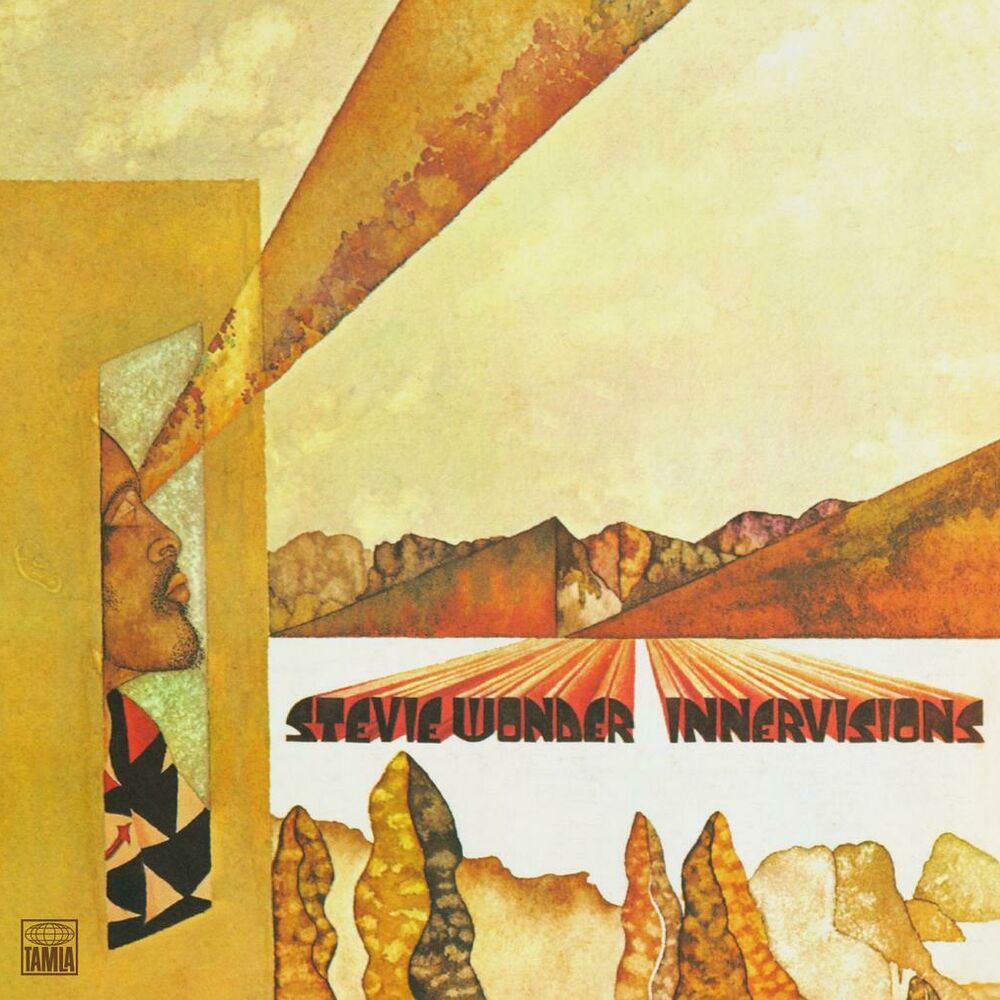
Deezer — Stevie Wonder · Deezer (cover art)
Innervisions
Sign in to saveInnervisions is the sixteenth studio album by American singer, songwriter, and musician Stevie Wonder, released on August 3, 1973, by Tamla, a subsidiary of Motown Records. A landmark recording of Wonder's "classic period", the album has been regarded as completing his transition from the "Little Stevie Wonder" known for romantic ballads into a more musically mature, conscious, and grown-up artist.
Listeners · Last.fm
- Listeners
- 7,307
- Total plays
- 32,193
Tags
Real name; Jamie Spratling. <a href="https://www.last.fm/music/Innervisions">Read more on Last.fm</a>
Key facts
- Album.name
- Innervisions
- Album.type
- studio
- Album.artist
- Stevie Wonder
- Album.cover
- Steviewonder innervisions.jpg
- Album.released
- August 3, 1973
- Album.recorded
- April 17, 1972 – May 25, 1973
- Album.studio
- Record Plant (Los Angeles) Mediasound (New York City)
- Album.length
- 44:15
- Album.label
- Tamla
- Album.producer
- Stevie Wonder Malcolm Cecil Robert Margouleff
- Album.prev_title
- Talking Book
- Album.prev_year
- 1972
- Album.next_title
- Fulfillingness' First Finale
- Album.next_year
- 1974
via Wikipedia infobox
Wikidata facts
- Instance of
- album
- Award
- Grammy Hall of Fame
- Genre
- jazz
- Producer
- Malcolm Cecil
- Duration
- 2652
- Performer
- Stevie Wonder
- Distribution format
- music streaming
Show 8 more facts
- publication date
- 1973-08-03
- nominated for
- Grammy Award for Album of the Year
- language of work or name
- English language
- title
- Innervisions
- number of parts of this work
- 5
- place of publication
- United States
- form of creative work
- studio album
- review score
- 5
Sources (2)
via Wikidata · CC0
~16 min read
Encyclopedic overview
15 sectionsContents
- Recording
- Post-release car crash
- Critical reception
- Commercial performance
- Legacy
- Track listing
- Personnel
- Charts
- Weekly charts
- Year-end charts
- Singles
- Certifications
- See also
- References
- External links
Innervisions is the sixteenth studio album by American singer, songwriter, and musician Stevie Wonder, released on August 3, 1973, by Tamla, a subsidiary of Motown Records. A landmark recording of Wonder's "classic period", the album has been regarded as completing his transition from the "Little Stevie Wonder" known for romantic ballads into a more musically mature, conscious, and grown-up artist.
On Innervisions, Wonder continued to experiment with the revolutionary T.O.N.T.O. (The Original New Timbral Orchestra) synthesizer system developed by Malcolm Cecil and Robert Margouleff. Wonder's previous two albums, 1972’s Music of My Mind and Talking Book, boosted his standing in the music industry, transforming him from a reliable hitmaker into a "master" of the new album format. Ahead of Innervisions, Cecil and Margouleff were pushing Wonder to shift his lyrical themes, allowing for political and metaphysical issues to be discussed in his music instead of primarily singing about romance. The album's second single, “Living for the City” is considered its centerpiece.
Excerpted from Wikipedia’s “Innervisions” article, available under the CC BY-SA 4.0 licence.