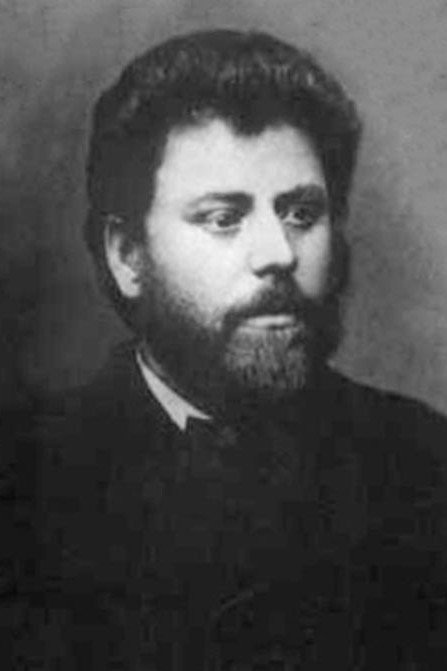
Profile via TMDB · Courtesy of TMDB
Ion Creangă
Sign in to saveAlso known as Ion Torcălău
Moldavian - born Romanian writer, raconteur and schoolteacher
OverviewAI-generated
Ion Creangă was a male writer, autobiographer, and children's writer from the Principality of Moldavia, the United Principalities of Moldavia and Wallachia, and the Kingdom of Romania. Born on March 1, 1837, in Humulești, he was also a beekeeper. He wrote in Romanian and was a member of the Romanian Academy and the Junimea movement. His work is associated with literary realism, and he was influenced by Mihai Eminescu.
Creangă wrote in genres including anecdote, children's literature, erotic literature, and fable. His notable works include *Povestea lui Harap Alb și alte povești și povestiri*, *Folk tales from Roumania*, *Povestiri*, *Povestiri povești amintiriursupăcălitdevulpe*, and *Documente*. He used the pseudonyms Popa Smantana and Ioan Vântură-Țară. He was an independent politician and adhered to Eastern Orthodoxy.
He died on December 31, 1889, in Iași due to a seizure, a result of his epilepsy. He is buried in Eternitatea cemetery. His life and work have been described by sources such as the Brockhaus and Efron Encyclopedic Dictionary.
Synthesized by Vinony from 31 facts across 4 sources: Wikidata, Open Library, TMDb, Europeana Sparql. Generated from structured data (not the Wikipedia text) and checked against those facts — may still contain errors.
Person · Open Library
- Born
- 1837
- Died
- 1889
- Works
- 28
Top works
- Povestea lui Harap Alb și alte povești și povestiri
- Folk tales from Roumania
- Povestiri
- Povestiri povești amintiriursupăcălitdevulpe
- Documente
via Open Library + Wikidata
Film & TV
Humulești, Principality of Moldavia
Known for
- Eminescu. Veronica, Creanga — Himself - Subject (archive footage)1914
via TMDB
Key facts
- Born
- ( 1837-03-01 ) March 1, 1837, Humulești , Principality of Moldavia , (now part of Târgu Neamț , Romania)
- Died
- December 31, 1889 (1889-12-31) (aged 52) ( seizure ), Iași , Kingdom of Romania
- Resting place
- Eternitatea Cemetery , Iași, Romania
- Pen name
- Popa Smântână Ioan Vântură-Țară
- Occupation
- Short story writer, educator, folklorist, poet, textile worker, cleric, politician
- Language
- Romanian
- Nationality
- Moldavian Romanian
- Period
- 1864–1883
- Genre
- Anecdote children's literature erotic literature fable fairy tale fantasy lyric poetry memoir novella satire short story sketch story
- Literary movement
- Realism Junimea
- Spouse
- Ileana Grigoriu ( married</span>"}]]}'>m. December 26, 1859</span>"}]]}'>1859 – 1873 )
- Children
- Constantin (born ( 1860-12-19 ) December 19, 1860)
via Wikipedia infobox
Wikidata facts
- Instance of
- human
- Gender
- male
- Citizenship
- Kingdom of Romania
- Place of birth
- Târgu Neamț
- Place of death
- Iași
- Occupation
- short story writer
- Languages spoken
- Romanian
- Religion
- Eastern Orthodoxy
- Genre
- sketch story
- Movement
- Junimea
- Image
- Ion Creanga-Foto03.jpg
Show 14 more facts
- Commons category
- Ion Creangă
- topic's main category
- Category:Ion Creangă
- date of death
- 1889-12-31
- medical condition
- epilepsy
- Commons Creator page
- Ion Creangă
- Commons gallery
- Ion Creangă
- member of
- Romanian Academy
- pseudonym
- Popa Smantana, Ioan Vântură-Țară
- influenced by
- Mihai Eminescu
- place of burial
- Eternitatea cemetery
- name in native language
- Ion Creangă
- cause of death
- seizure
- writing language
- Romanian
- date of birth
- 1837-03-01
via Wikidata · CC0
Works in European collections
1 object attributed to Ion Creangă, held across European museums, libraries & archives · via Europeana

~40 min read
Encyclopedic overview
Ion Creangă ( Romanian pronunciation: [iˈon ˈkre̯aŋɡə]; also known as Nică al lui Ștefan a Petrei, Ion Torcălău and Ioan Ștefănescu; March 1, 1837 – December 31, 1889) was a Moldavian, later Romanian writer, raconteur and schoolteacher. A main figure in 19th-century Romanian literature, he is best known for his Childhood Memories volume, his novellas and short stories, and his many anecdotes. Creangă's main contribution to fantasy and children's literature includes narratives structured around eponymous protagonists ("Harap Alb", "Ivan Turbincă", "Dănilă Prepeleac", "Stan Pățitul"), as well as fairy tales indebted to conventional forms ("The Story of the Pig", "The Goat and Her Three Kids", "The Mother with Three Daughters-in-Law", "The Old Man's Daughter and the Old Woman's Daughter"). Widely seen as masterpieces of the Romanian language and local humor, his writings occupy the middle ground between a collection of folkloric sources and an original contribution to a literary realism of rural inspiration. They are accompanied by a set of contributions to erotic literature, collectively known as his "corrosives".
A defrocked Romanian Orthodox priest with an unconventional lifestyle, Creangă made an early impact as an innovative educator and textbook author, while pursuing a short career in nationalist politics with the Free and Independent Faction. His literary debut came late in life, closely following the start of his close friendship with Romania's national poet Mihai Eminescu and their common affiliation with the influential conservative literary society Junimea. Although viewed with reserve by many of his colleagues there, and primarily appreciated for his records of oral tradition, Creangă helped propagate the group's cultural guidelines in an accessible form. Later critics have often described him, alongside Eminescu, Ion Luca Caragiale and Ioan Slavici, as one of the most accomplished representatives of Junimist literature.
Excerpted from Wikipedia’s “Ion Creangă” article, available under the CC BY-SA 4.0 licence.