
File:Courthouse_Crystal_Falls_MI.jpg · Wikimedia Commons · See Wikimedia Commons
Iron County
Sign in to saveAlso known as Iron County, Michigan, Iron County, MI
county in the Upper Peninsula in Michigan, United States
Key facts
- Country
- United States
- State
- Michigan
- Founded
- April 3, 1885
- Named after
- Iron ore
- Seat
- Crystal Falls
- Largest city
- Iron River
- Total
- 1,211 sq mi (3,140 km )
- Land
- 1,166 sq mi (3,020 km )
- Water
- 45 sq mi (120 km ) 3.7%
- Estimate 2025
- 11,757
- Density
- 10/sq mi (3.9/km )
- Time zone
- UTC−6 ( Central )
- Summer dst
- UTC−5 ( CDT )
- Congressional district
- 1st
- Website
- ironmi .com
via Wikipedia infobox
Official website
Iron County Economic Chamber Alliance - Welcome to Iron County.
iron.org →In 1851, Harvey Mellen came to this area which was populated by a small number of Indians, principally of the Menominee and Chippewa (Ojibway) tribes. Mellen reported an abundance of white pine in the vicinity and also noted sighting an outcrop of ore (“a ledge of red granite”) along the banks of the Iron River (then known as the Maple River). Excavation for this ore was delayed for 30 years, however, until the area became accessible by railroad and until economic conditions, with a growing demand for iron by American industries in the late nineteenth century, were more favorable for development of mineral resources. Iron ore prospectors began to venture into the wilderness of the Iron County area in 1875. Exploratory work was confined to the river valleys, where the mantle of glacial deposits was thin, and where outcrops of ore were moved frequent. Early known explorers were John Armstrong along the Paint River on the east side of the county, and R.I., and William Selden with Donald C. MacKinnon (later joined by his brothers Alexander and Archie) along the Maple (Iron) River on the west side of the County. Both parties were successful in striking enough ore in 1880 to warrant opening mines; the Crystal Falls Mine on the east side and the Iron River (Riverton) Mine on the west side. The initial strikes brought a wave of prospectors to both river valleys, where additional mines were rapidly developed. Iron ore mining quickly established itself as the primary industry leading to the development of the County. Eventually the County witnessed the opening of some 70 producing mines, with the center in mining activity gradually shifting to the west side. Historically of secondary importance to the iron mining industry, but also a major contributor to the development of Iron County, is the lumbering industry. The influx of Iumbermen seeking to harvest dense stands of white pine coincided with the commencement of mining activity in the area: logging first began in the County in 1875 along the banks of the Michigamme River. All of Iron County’s rivers, as part of the Lake Michigan watershed, flow into the Menominee River, where, at the river’s mouth, the Menominee River Manufacturing Company operated huge lumber mills capable of handling over seven million board feet of pine annually. With such access to the Menominee lumber mills, Iron County’s pine forests were soon being cleared wholesale, with little thought of reseeding for future growth. Unlike the lumbering industry, the mining industry was dependent on the railroads to provide a means of transporting ore to Lake Michigan communities for smelting. (a single attempt to Smet Ore locally was made in Iron River in 1885 by the Iron River Furnace Company, but was soon abandoned due to lack of profit.) The railroads were more vitally important not only for the growth of mining but for the development of the County in general. In both Crystal Falls and Iron River, early developers of mines were closely connected with the Chicago and Northwestern Railroad. George Runkel and S. D. Hollister, operators of the Paint River Mine in Crystal Falls, were affiliated with the railroad, and gave the company assurances that enough ore awaited extraction in the immediate vicinity to make a railroad from Florence, Wisconsin to Crystal Falls a lucrative route. On the West side of the County, Iron River pioneers Selden and his son, William H. Selden as well as Donald C. MacKinnon, were all associated with the Chicago and Northwestern Railroad, and were able to persuade the company to construct an additional line from Stager to Iron River. With the completion of both these lines in 1882, mining in Iron County began in earnest, and the settlement of Crystal Falls and Iron River rapidly expanded. Local government was first established the same year, when Crystal Falls and Iron River townships were created under the Supervision of Marquette County. In September of 1885, after much local agitation, the
Read more on their site →Excerpt from the official site · 16,414 chars · not written by Vinony
Wikidata facts
- Named after
- iron
- Country
- United States
- Located in
- Michigan
- Contains
- Crystal Falls
- Capital
- Crystal Falls
- Population
- 11631
- Area
- 3137
- Shares border with
- Vilas County
- Official website
- www.iron.org
- Image
- Iron County Courthouse full view.jpg
- Households
- 5150
Show 8 more facts
- Commons category
- Iron County, Michigan
- water as percent of area
- 3.7
- native label
- Iron County
- topic's main category
- Category:Iron County, Michigan
- category of associated people
- Category:People from Iron County, Michigan
- inception
- 1885-04-03
- different from
- Iron County
- per capita income
- 28556
Sources (9)
via Wikidata · CC0
~8 min read
Encyclopedic overview
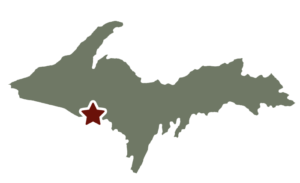
Iron County is one of two landlocked counties in the Upper Peninsula of the U.S. state of Michigan. As of the 2020 census, the population was 11,631. The county seat is Crystal Falls.
History
Excerpted from Wikipedia’s “Iron County” article, available under the CC BY-SA 4.0 licence.