
Costa do Marfim
Also known as Republic of Côte d'Ivoire, ci, Cote d'Ivoire, Republic of Cote d'Ivoire, Côte-d'Ivoire, Cote d'lvoire, Côte d’Ivoire, Cote Ivoire
país de África
AI overview
Ivory Coast is a West African country on the Gulf of Guinea with a population of 31.5 million, making it the third-most populous nation in the region, with its economic center in the port city of Abidjan. The country is culturally and linguistically diverse, with French as its official language and approximately 78 languages spoken among a population that practices Islam, Christianity, and traditional faiths.
AI-generated from the Wikipedia summary — may contain errors.
Weather now
cached 10h ago22°overcast clouds
94% 1.8 m/s OpenWeatherMap
7-day forecast
via Open-Meteo
Country
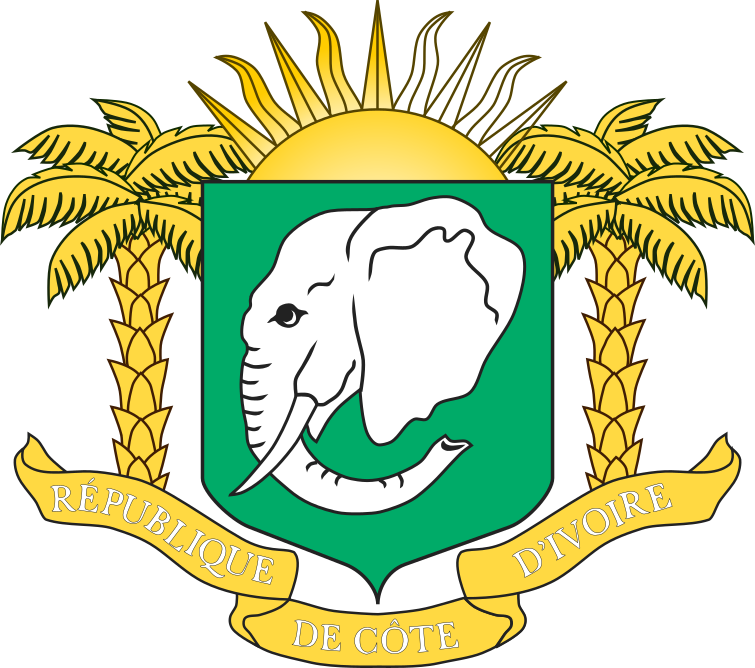
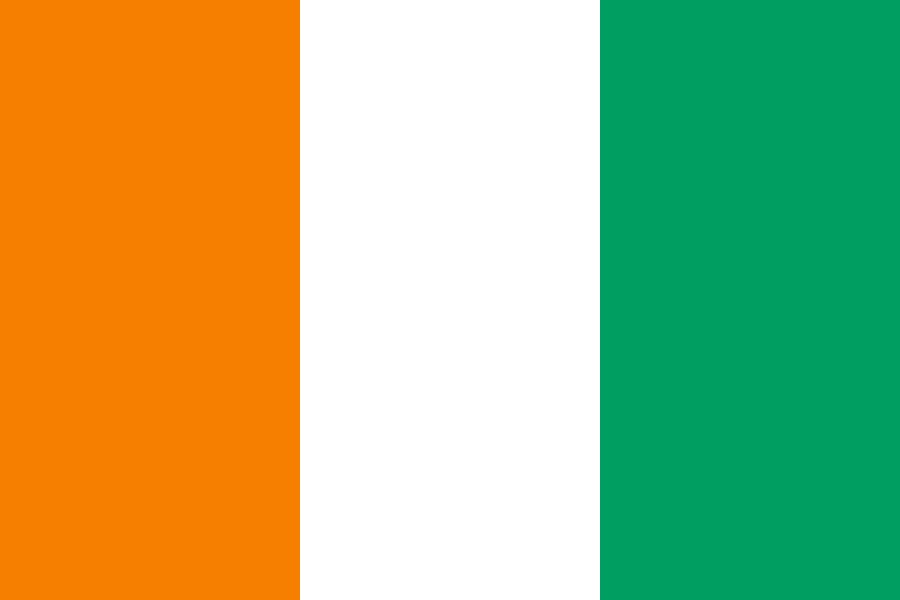
- Capital
- Yamoussoukro
- Population
- 31,719,275
- Region
Travel guide
Get in
thumb|375px|A map showing the visa requirements of Côte d'Ivoire, with countries in green having visa-free access
Get around
Intercity travel in Côte d'Ivoire is usually more comfortable than travel in neighbouring West African countries. The roads are generally in good condition and the bus service is relatively modern. The downside is the very frequent military checkpoints which add hours to a trip. Though the stops are a hassle, Ivorian soldiers tend to be quite professional and don't hassle non-French Western travellers. Soldiers in Ghana, for example, are much more likely to demand a bribe than in Côte d'Ivoire. Most Western governments recommend that their citizens steer clear of Côte d'Ivoire. This should be taken particularly seriously by people who are not travelling on French passports. An Ivorian soldier's attitude towards you will change very quickly when and if you explain that you are not French.
Travelling around Abidjan is easiest when you have your own vehicle. The roads are very good and the traffic rules are generally obeyed.
Taxis are a great and easy way to get around in Abidjan. Just look for an orange coloured car and flag it down. Fares are very cheap: US$ 2–4 depending on the length of the journey. Always bargain before you get into the taxi. Overall however, they are reasonably priced, unlike in Accra.
See
thumb|Basilica of Our Lady of Peace of Yamoussoukro.
Fine beaches, tourist villages, rainforests and wildlife preserves are the principal attractions of Côte d'Ivoire. Taï National Park has the largest tropical rainforest in West Africa. Comoë National Park is the biggest and best-known national park in Côte d'Ivoire. It has plenty of wildlife including birds, elephants, giraffes, lions, monkeys and antelopes.
Do
Football: the 2023 Africa Cup of Nations was hosted by Côte d'Ivoire 13 January - 11 February 2024, with 24 national teams participating. Games were played in Abidjan, San-Pédro, Yamoussoukro, Bouaké and Korhogo. The new national stadium, opened in 2020, is Stade Olympique d'Ebimpé (capaity 60,000), and internationals are also played at Stade Félix-Houphouët-Boigny (capacity 50,000); both are in Abidjan. The top tier for club competition is Ligue 1, with 14 teams, and a playing season Oct-May.
Article · Português
A Costa do Marfim (em francês: Côte d'Ivoire), oficial e protocolarmente República de Côte d'Ivoire, é um país africano, limitado a norte pelo Mali e pelo Burquina Fasso, a leste pelo Gana, a sul pelo Oceano Atlântico e a oeste pela Libéria e pela Guiné. Sua capital é Iamussucro, mas a maior cidade é Abidjã. Em Portugal, denomina-se ebúrneo, marfinês, costa-marfinês ou ainda costa-marfinense a quem é natural da Costa do Marfim. No Brasil, é marfinense. O governo marfinês solicitou à comunidade internacional em outubro de 1985 que o país seja designado apenas pelo nome francês Côte d'Ivoire e vários países e organizações internacionais acataram. No entanto, em português o país é comumente designado pelo seu nome original Costa do Marfim, já que a região foi batizada por exploradores portugueses. O mesmo ocorrendo em outras línguas, como Ivory Coast em inglês e Elfenbeinküste em alemão. Antes de sua colonização pelos europeus, a Costa do Marfim era o lar de vários estados, incluindo , o Império de Congue e . A área tornou-se um protetorado da França em 1843 e se consolidou como uma colônia francesa em 1893, em meio à disputa europeia pela África. Alcançou a independência em 1960, liderada por Félix Houphouët-Boigny, que governou o país até 1993. Relativamente estável pelos padrões regionais, a Costa do Marfim estabeleceu estreitos laços políticos e econômicos com seus vizinhos da África Ocidental, mantendo ao mesmo tempo relações estreitas com o Ocidente, especialmente a França. O país experimentou um golpe de Estado em 1999 e duas guerras civis fundamentadas religiosamente, primeiro entre 2002 e 2007 e novamente durante 2010 e 2011. Em 2000, o país adotou uma nova constituição. A Costa do Marfim é uma república com forte poder executivo investido em seu presidente. Através da produção de café e cacau, o país foi uma potência econômica na África Ocidental durante as décadas de 1960 e 1970, embora tenha passado por uma crise econômica nos anos 80, contribuindo para um período de turbulência política e social. No século XXI, a economia marfinense é amplamente baseada no mercado e ainda depende fortemente da agricultura, com a produção de culturas de pequenos agricultores sendo dominante. A língua oficial é o francês, com línguas indígenas locais também amplamente utilizadas, incluindo baúle, diúla (que é usada no comércio), dã, anim e cebaara senufô. No total, existem cerca de 78 línguas faladas na Costa do Marfim. Existem grandes populações de muçulmanos, cristãos (principalmente católicos romanos) e várias religiões indígenas.
Abstract from DBpedia / Wikipedia · CC BY-SA
Gallery (16)
On the map
2 mapped locations
Connections
Categories
1960 establishments in Ivory CoastBlood diamondsCountries and territories where French is an official languageCountries in AfricaCountries in West AfricaEconomic Community of West African StatesExtractive Industries Transparency InitiativeIvory CoastMember states of the African UnionMember states of the Organisation internationale de la FrancophonieMember states of the Organisation of Islamic Cooperation