
jamdani
Sign in to saveAlso known as jamdari, jamdani weaving, jamdani work, art of jamdari, art of jamdari weaving
Jamdani () is a fine muslin textile (figured with different patterns) produced for centuries in South Rupshi of Narayanganj district in Bangladesh on the bank of Shitalakshya River.
Key facts
- Textile.name
- Jamdani
- Textile.image
- জামদানী শাড়ী.jpg
- Textile.caption
- Jamdani Saris in historic Sonargaon city
- Textile.type
- Fabric
- Textile.material
- Cotton
- Textile.method
- Weaving
- Textile.process
- Craft production
- Textile.location
- Narayanganj, Bangladesh
- Intangible heritage.ICH
- Traditional art of Jamdani weaving
- Intangible heritage.State Party
- Bangladesh
- Intangible heritage.ID
- 00879
- Intangible heritage.Region
- APA
- Intangible heritage.Year
- 2013
- Intangible heritage.Session
- 8th
- Intangible heritage.List
- Representative
via Wikipedia infobox
Described at
Traditional art of Jamdani weaving - UNESCO Intangible Cultural Heritage
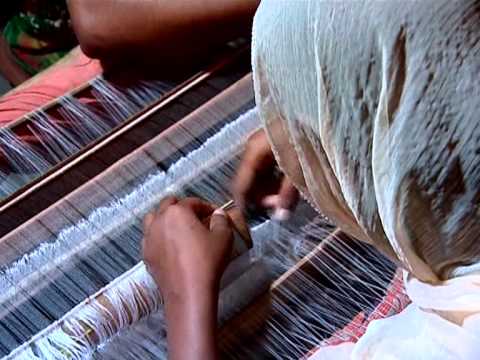
ich.unesco.org →Jamdani is a vividly patterned, sheer cotton fabric, traditionally woven on a handloom by craftspeople and apprentices around Dhaka. Jamdani textiles combine intricacy of design with muted or vibrant colours, and the finished garments are highly breathable. Jamdani is a time-consuming and labour-intensive form of weaving because of the richness of its motifs, which are created directly on the loom using the discontinuous weft technique. Weaving is thriving today due to the fabric’s popularity for making saris, the principal dress of Bengali women at home and abroad. The Jamdani sari is a symbol of identity, dignity and self-recognition and provides wearers with a sense of cultural identity and social cohesion. The weavers develop an occupational identity and take great pride in their heritage; they enjoy social recognition and are highly respected for their skills. A few master weavers are recognized as bearers of the traditional Jamdani motifs and weaving techniques, and transmit the knowledge and skills to disciples. However, Jamdani weaving is principally transmitted by parents to children in home workshops. Weavers – together with spinners, dyers, loom-dressers and practitioners of a number of other supporting crafts – form a closely knit community with a strong sense of unity, identity and continuity.
Excerpt from a page describing this subject · 7,564 chars · not written by Vinony
Wikidata facts
- Subclass of
- weaving
- Country
- Bangladesh
- Country of origin
- Bangladesh
- Material used
- cotton
- Image
- Making of Jamdani-10.jpg
Show 4 more facts
- Commons category
- Jamdani
- described at URL
- ich.unesco.org/es/RL/00879
- intangible cultural heritage status
- Representative List of the Intangible Cultural Heritage of Humanity
- on focus list of Wikimedia project
- Wiki Loves Folklore
Sources (2)
via Wikidata · CC0
~9 min read
Encyclopedic overview
13 sectionsContents
- Etymology
- Origin
- Weave
- Varieties of jamdani work
- Changes with time
- Decline and fall
- Current problems
- Geographical indication
- Recent attempts at revival
- Images
- See also
- References
- External links
Jamdani () is a fine muslin textile (figured with different patterns) produced for centuries in South Rupshi of Narayanganj district in Bangladesh on the bank of Shitalakshya River.
The historic production of jamdani was patronized by imperial warrants of the Mughal emperors. During the period of British rule in India, Bengal's jamdani and muslin industries rapidly declined due to being unable to compete with imported textiles manufactured in Great Britain. In more recent years, the production of jamdani has witnessed a revival in Bangladesh. Jamdani involved skilful use of white, black, golden, silver and other similar coloured threads to weave geometric and floral patterns into the fabric.
Excerpted from Wikipedia’s “jamdani” article, available under the CC BY-SA 4.0 licence.