
wayang
Sign in to saveAlso known as wajang
thumb| performance by the famous Indonesian (puppet master) Manteb Soedharsono, with the story "Gathutkaca Winisuda", in [[Bentara Budaya Jakarta, Indonesia, on 31 July 2010]]
Key facts
- Performing art.name
- Wayang
- Performing art.image
- 257px
- Performing art.types
- Traditional puppet theatre
- Performing art.ancestor
- Javanese people
- Performing art.culture
- Indonesia
- Performing art.era
- Hindu - Buddhist civilisations
- Intangible heritage.ICH
- Wayang puppet theatre
- Intangible heritage.State Party
- Indonesia
- Intangible heritage.ID
- 00063
- Intangible heritage.Region
- APA
- Intangible heritage.Year
- 2008
- Intangible heritage.Session
- 3rd
- Intangible heritage.List
- Representative
- Intangible heritage.Note
- (the leather shadow puppet), (the flat wooden puppet), (the three-dimensional wooden puppet)
via Wikipedia infobox
Described at
Wayang puppet theatre - UNESCO Intangible Cultural Heritage
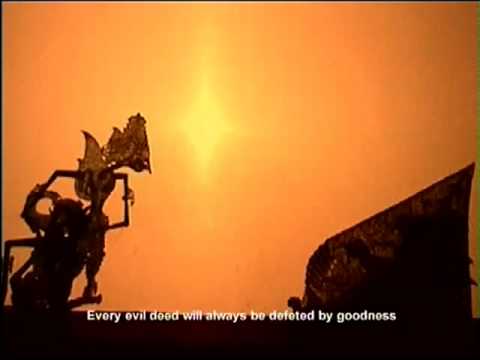
ich.unesco.org →Renowned for its elaborate puppets and complex musical styles, this ancient form of storytelling originated on the Indonesian island of Java. For ten centuries wayang flourished at the royal courts of Java and Bali as well as in rural areas. Wayang has spread to other islands (Lombok, Madura, Sumatra and Borneo) where various local performance styles and musical accompaniments have developed. While these carefully handcrafted puppets vary in size, shape and style, two principal types prevail: the three-dimensional wooden puppet (wayang klitik or golèk) and the flat leather shadow puppet (wayang kulit) projected in front of a screen lit from behind. Both types are characterized by costumes, facial features and articulated body parts. The master puppeteer (dalang) manipulates the swivelling arms by means of slender sticks attached to the puppets. Singers and musicians play complex melodies on bronze instruments and gamelan drums. In the past, puppeteers were regarded as cultivated literary experts who transmitted moral and aesthetic values through their art. The words and actions of comic characters representing the “ordinary person” have provided a vehicle for criticizing sensitive social and political issues, and it is believed that this special role may have contributed to wayang’s survival over the centuries. Wayang stories borrow characters from indigenous myths, Indian epics and heroes from Persian tales. The repertory and performance techniques were transmitted orally within the families of puppeteers, musicians and puppet-makers. Master puppeteers are expected to memorize a vast repertory of stories and to recite ancient narrative passages and poetic songs in a witty and creative manner. The Wayang Puppet Theatre still enjoys great popularity. However, to compete successfully with modern forms of pastimes such as video, television or karaoke, performers tend to accentuate comic scenes at the expense of the story line and to replace musical accompaniment with pop tunes, leading to the loss of some characteristic features.
Excerpt from a page describing this subject · 12,562 chars · not written by Vinony
Wikidata facts
- Instance of
- theatrical genre
- Subclass of
- puppetry
- Country
- Indonesia
- Country of origin
- Indonesia
- Location
- Gresik
- Image
- 2 painted wayang puppets.jpg
Show 6 more facts
- Commons gallery
- Wayang
- Commons category
- Wayang
- topic's main category
- Category:Wayang
- intangible cultural heritage status
- Masterpieces of the Oral and Intangible Heritage of Humanity
- described at URL
- www.unesco.org/culture/ich/en/RL/wayang-puppet-theatre-00063
- on focus list of Wikimedia project
- Wikipedia:Vital articles/Level/4
Sources (2)
via Wikidata · CC0
~38 min read
Encyclopedic overview
29 sectionsContents
- Etymology
- History
- Origin in India
- Records
- Art form
- ''Wayang kulit''
- ''Wayang golek''
- ''Wayang klitik''
- ''Wayang beber''
- ''Wayang wong''
- ''Wayang topeng''
- Stories
- ''Wayang purwa''
- ''Wayang panji''
- ''Wayang Menak''
- ''Wayang kancil''
- Contemporary retellings
- Artist
- Dalang
- ''Sindhen''
- ''Wiyaga''
- Legacy
- UNESCO designation
- Wayang Museum
- Gallery
- See also
- References
- Further reading
- External links
thumb| performance by the famous Indonesian (puppet master) Manteb Soedharsono, with the story "Gathutkaca Winisuda", in [[Bentara Budaya Jakarta, Indonesia, on 31 July 2010]]
'''' ( , ) is a traditional Javanese form of puppet theatre. The term refers both to the show as a whole and the puppet in particular. Performances of wayang puppet theatre are accompanied by a gamelan orchestra in Java, and by gender wayang in Bali. The dramatic stories depict mythologies, such as episodes from the Hindu epics the Ramayana and the Mahabharata'', as well as local adaptations of cultural legends. Traditionally, a is played out in a ritualized midnight-to-dawn show by a , an artist and spiritual leader; people watch the show from both sides of the screen.
Excerpted from Wikipedia’s “wayang” article, available under the CC BY-SA 4.0 licence.