English
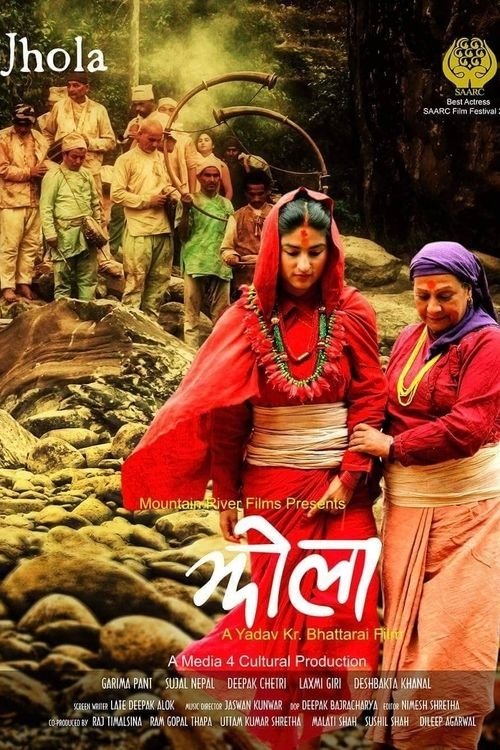
Poster from TMDB
Jhola
Sign in to saveJhola () is a 2013 Nepali film based on a story by writer Krishna Dharabasi. It is about Sati culture that was prevalent in the Nepalese society until the 1920s in which wife had to immolate herself upon her husband's death, typically on his funeral pyre. For her role, actress Garima Panta won Best Actress award at SAARC Film Festival held in Sri Lanka, 2014. The film was selected as the Nepali entry for the Best Foreign Language Film at the 87th Academy Awards, but was not nominated.
Film · TMDB
9.0The Sati system was abolished decades ago but Jhola is still relevant to today's Nepal where, unfortunately, cases of sexual harassment, violence against women, trafficking remain all too common.
Cast
- Garima Panta as Kanchi
- Sujal Nepal
- Laxmi Giri
- Deepak Chhetri
- Deshbhakta Khanal
This product uses the TMDB API but is not endorsed or certified by TMDB.
Wikidata facts
Show 1 more fact
- publication date
- 2013-12-07
Sources (1)
via Wikidata · CC0
~3 min read
Encyclopedic overview
6 sectionsContents
- Sati custom
- Plot
- Cast
- See also
- References
- External links
Jhola () is a 2013 Nepali film based on a story by writer Krishna Dharabasi. It is about Sati culture that was prevalent in the Nepalese society until the 1920s in which wife had to immolate herself upon her husband's death, typically on his funeral pyre. For her role, actress Garima Panta won Best Actress award at SAARC Film Festival held in Sri Lanka, 2014. The film was selected as the Nepali entry for the Best Foreign Language Film at the 87th Academy Awards, but was not nominated.
==Sati custom== Sati custom is an ancient practice of burning a widow on her deceased husband's funeral pyre or burning her alive in his grave. According to Hindu Scriptures, the custom of Sati was a voluntary practice in which a woman voluntarily decides to end her life with her husband after his death. But later the practice was abused and women were forced to commit Sati or were even dragged against their wish and put into the burning pyres. Historical accounts show that several Royal and common women were burnt alive through this savage practice. In BS 1977 Ashad 25 (1920 AD), Chandra Shumsher J.B.R. officially abolished the Sati system from Nepal.
Excerpted from Wikipedia’s “Jhola” article, available under the CC BY-SA 4.0 licence.