
Kabuki-za
Sign in to saveAlso known as Kabukiza, Kabukiza theatre
'''' in Ginza is the principal theater in Tokyo for the traditional kabuki'' drama form.
In the Vinony graph
Vinony's link graph records 106 inbound references to Kabuki-za, and connects out to Chūō, Japan and Tokyo.
The entry is geolocated on the map in landmark.
It sits within the topics 1889 establishments in Japan, Building and structure articles needing translation from Japanese Wikipedia and Buildings and structures in Chūō, Tokyo.
Vinony links it to 16 Wikipedia language editions.
Key facts
- Theatre.name
- Kabuki-za
- Theatre.native_name
- 歌舞伎座
- Theatre.image
- File:2019 Kabuki-za.jpg
- Theatre.caption
- Kabuki-za, Tokyo's premier kabuki theater
- Theatre.address
- 東京都中央区銀座四丁目12番15号 4-12-15 Ginza, Chūō-ku
- Theatre.city
- Tokyo
- Theatre.country
- Japan
- Theatre.owner
- Kabuki-za Theatrical Corporation
- Theatre.operator
- Shochiku
- Theatre.capacity
- 1,964
- Theatre.type
- Kabuki theater
- Theatre.opened
- 21 November 1889
- Theatre.website
- http://www.kabuki-za.co.jp/
via Wikipedia infobox
Official website
Link to the official site · 10,065 chars · not written by Vinony
Described at
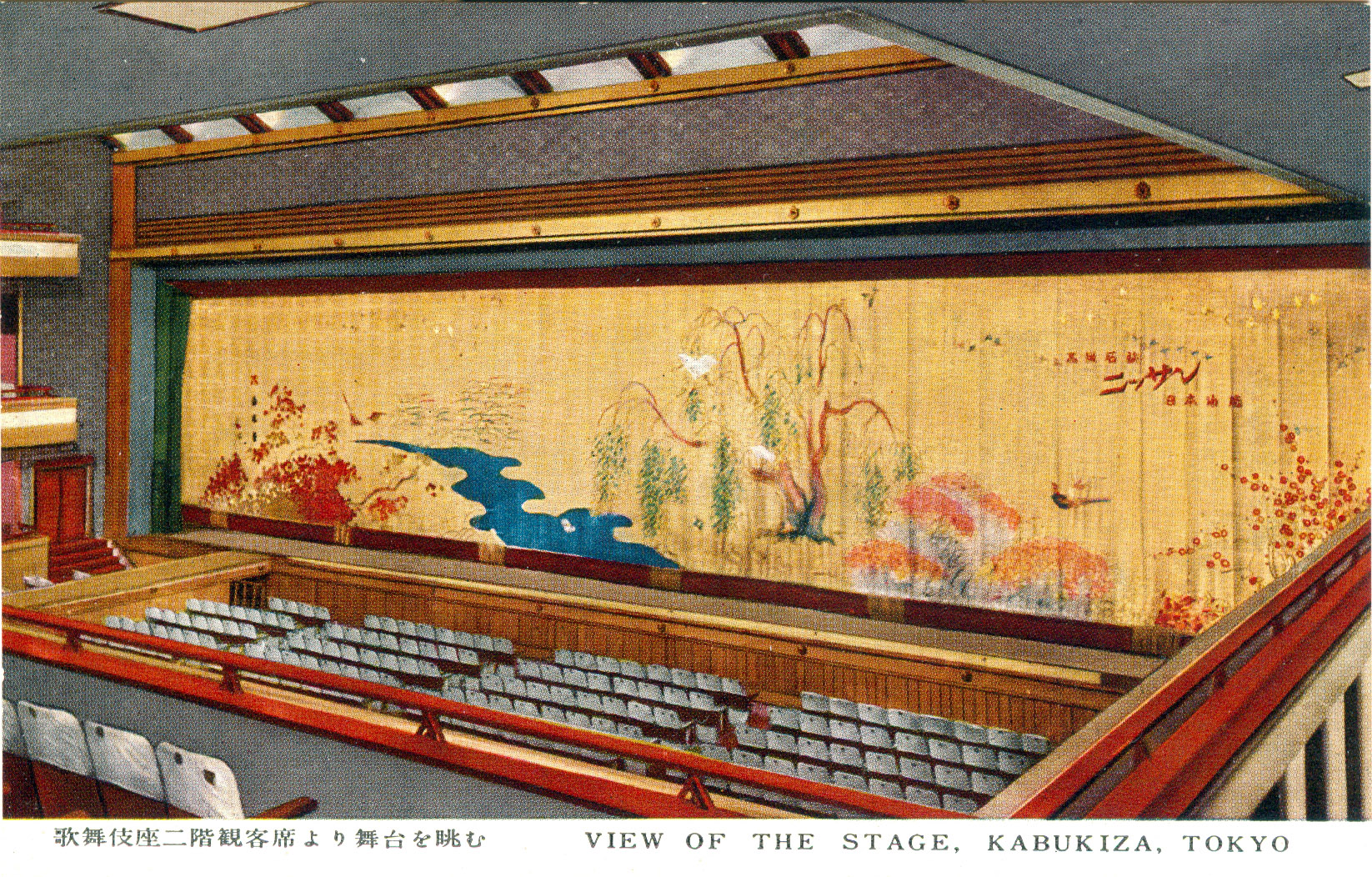
View of the stage and interior, Kabukiza, Tokyo, c. 1960. | Old Tokyo
See also: Kabuki Theatre, 1911-1951 Kabuki theater, and Kabuki actors How Faubion Bowers Saved Kabuki "Kabuki is a matter of beauty in a flash, that a movement in the flash of a second determines all ... what you can only conclude to be a divine act, a marvelous moment of an act, which the actor
oldtokyo.com →A balcony view of the stage, including the hanamichi (at stage right). “The kabuki stage features a projection called a hanamichi [flower path], a walkway which extends into the audience and via which dramatic entrances and exits are made. The stage is used not only as a walkway or path to get to and from the main stage, but important scenes are also played on the ‘path’. “Kabuki stages and theaters have steadily become more technologically sophisticated, and innovations including revolving stages and trap doors were introduced during the 18th century. “A driving force has been the desire to manifest one frequent theme of Kabuki theater, that of the sudden, dramatic revelation or transformation. A number of stage tricks, including actors’ rapid appearance and disappearance, employ these innovations. “Performances can last six hours or more, with long intermissions between the acts: some are 25-minutes long in order to permit the audience to partake of a meal in one of the theater restaurants.” Kabuki-za, sidewalk view, Tokyo, c. 1960. Destroyed by wartime firebombing in May 1945, the theater was rebuilt to its prewar appearance and reopened in 1951. Please support this site. Consider clicking an ad from time to time. Thank you! This site uses Akismet to reduce spam. Learn how your comment data is processed.
Excerpt from a page describing this subject · 8,276 chars · not written by Vinony
Wikidata facts
- Instance of
- business
- Country
- Japan
- Located in
- Ginza
- Stock exchange
- Tokyo Stock Exchange
- Legal form
- kabushiki gaisha
- Operator
- Kabuki-za
- Official website
- www.kabukiweb.net/theatres/kabukiza
- Image
- 2019 Kabuki-za.jpg
- Has use
- kabuki
Show 9 more facts
- official shop URL
- www.kabuki-za.com/shop
- hashtag
- 歌舞伎座
- Commons category
- Kabuki-za
- inception
- 1889-11-21
- maximum capacity
- 1964
- described at URL
- www.oldtokyo.com/view-of-the-stage-kabukiza-tokyo-c-1960
- date of official opening
- 1889-11-21
- public transport stop
- Ginza Station
- item operated
- Kabuki-za
via Wikidata · CC0
~4 min read
Encyclopedic overview
5 sectionsContents
- History
- Architecture
- Performances
- References
- External links
'''' in Ginza is the principal theater in Tokyo for the traditional kabuki'' drama form.
== History == The Kabuki-za was originally opened by a Meiji era journalist, Fukuchi Gen'ichirō. Fukuchi wrote kabuki dramas in which Ichikawa Danjūrō IX and others starred; upon Danjūrō's death in 1903, Fukuchi retired from the management of the theater. The theater is now run by the Shochiku Corporation which took over in 1914.
Excerpted from Wikipedia’s “Kabuki-za” article, available under the CC BY-SA 4.0 licence.