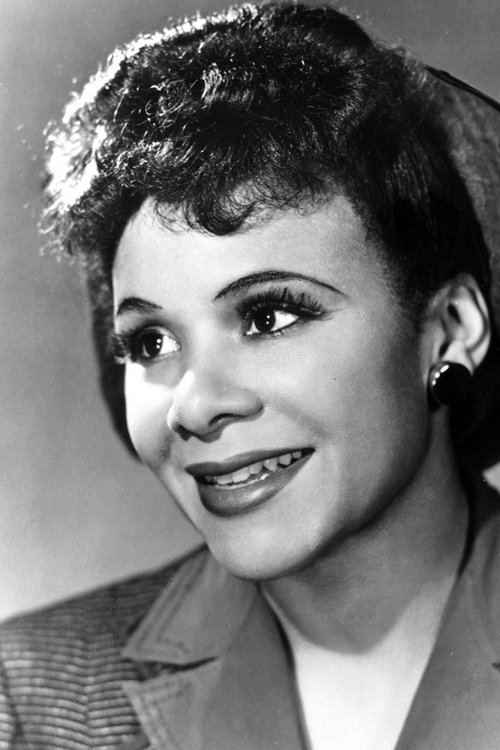
Profile via TMDB · Courtesy of TMDB
Katherine Dunham
Sign in to saveAlso known as Katherine Mary Dunham, Kaye Dunn
American dancer, choreographer, songwriter, actress and activist (1909/1912–2006)
Film & TV
Chicago, Illinois, USA
Known for
- James Dean: A Portrait — Self1995
- The Kennedy Center Honors — Self1978
- Washerwoman — Dancer1956
- Folio1955
- Mambo — Dance teacher1954
- Große Starparade1954
- I'm in the Revue — Dancer1950
- Casbah — Odette1948
- The Ed Sullivan Show — Self1948
- Stormy Weather — Katherine Dunham1943
via TMDB
Described at

Katherine Dunham - Oxford Reference
"Katherine Dunham" published on by null., (b Chicago, 22 Jun. 1912; d New York, 21 May 2006)US dancer, teacher, choreographer, and director who helped establish African-American dance as an international theatre form. She studied anthropology, specializing in dance at the University of Chicago, and took dance classes locally, making her major professional debut in Page's La Guillablesse in 1933. After a period of dance research in the West Indies (1937–8) she returned to Chicago to work for the Federal Theatre Project, and was then appointed director of dance for the New York Labor Stage in 1939, choreographing movement for plays and musicals. In 1940 she presented her own programme of work, Tropics and Le Jazz Hot—from Haiti to Harlem, with a specially assembled company. This launched her career as a choreographer. In the same year she and her company danced in the Broadway musical Cabin in the Sky (chor. Balanchine), after which she moved to Hollywood to dance and choreograph for various films including Carnival of Rhythm (1942) and Stormy Weather (1943). She developed her own style of black revues, designed by her husband John Pratt, with which she toured the US. These productions, such as Carib Song, Bal Negère, and later Bamboche, included full-scale ballets that were based on her anthropological research, including Rites de Passage (1943) and Chôros (1943, revived Alvin Ailey Dance Theater, 1972) as well as numbers based on popular dance forms. The combination of theatrical dance, vivid costumes, and traditional music won a huge audience for African-American dance while the school she opened in 1945 in New York, which taught ballet, modern, and Afro-Cuban dance, trained a generation of black dancers to follow her. In 1963 she choreographed the New York Metropolitan Opera House production of Aida, and between 1965 and 1966 was technical cultural adviser to the President and the Minister of Cultural Affairs in Senegal. She was subsequently appointed director of the Performing Arts Training Center at Southern Illinois University, East St Louis. She was author of Katherine Dunham's Journey to Accompong (New York, 1946) and the autobiographical A Touch of Innocence (London, 1959). In 1987 the Alvin Ailey Dance Theater staged fourteen of her works in a programme titled The Magic of Katherine Dunham.
oxfordreference.com →Link to a page describing this subject · 5,021 chars · not written by Vinony
Wikidata facts
- Instance of
- human
- Given name
- Katherine
- Family name
- Dunham
- Gender
- female
- Citizenship
- United States
- Place of birth
- Glen Ellyn
- Place of death
- New York City
- Occupation
- activist
- Languages spoken
- French
- Student of
- Ruth Page
- Field of work
- anthropology
- Official website
- kdcah.org
- Image
- Katherine Dunham ppmsca.05792.jpg
- Number of children
- 1
- Work location
- New York City
- Residence
- New York City
Show 7 more facts
- Commons category
- Katherine Dunham
- date of death
- 2006-05-21
- date of birth
- 1909-06-22
- ethnic group
- French Canadians
- name in native language
- Katherine Mary Dunham
- described at URL
- www.oxfordmusiconline.com/grovemusic/view/10.1093/gmo/9781561592630.001.0001/omo-9781561592630-e-1002092439
- affiliation
- Southern Illinois University Carbondale
Sources (7)
via Wikidata · CC0