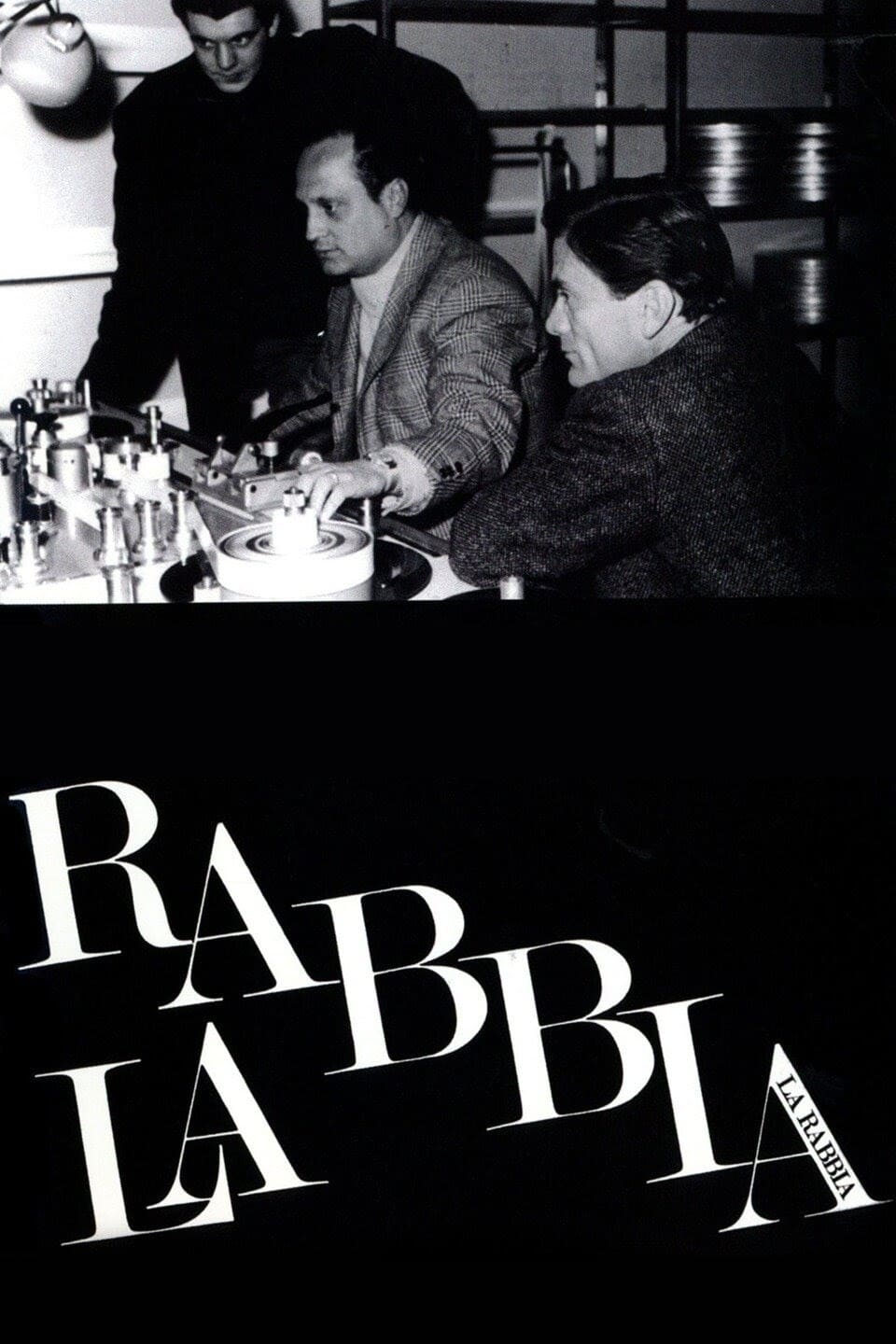
La Rabbia
Also known as Rabbia
Film von Pier Paolo Pasolini und Giovannino Guareschi
Film · TMDB
7.0Documentary footage (from the 1950s) and accompanying commentary to attempt to answer the existential question, Why are our lives characterized by discontent, anguish, and fear? The film is in two completely separate parts, and the directors of these respective sections, left-wing Pier Paolo Pasolini and conservative Giovanni Guareschi, offer the viewer contrasting analyses of and prescriptions for modern society. Part I, by Pasolini, is a denunciation of the offenses of Western culture, particularly those against colonized Africa. It is at the same time a chronicle of the liberation and independence of the former African colonies, portraying these peoples as the new protagonists of the world stage, holding up Marxism as their "salvation", and suggesting that their "innocent ferocity" will be the new religion of the era. Guareschi's part, by contrast, constitutes a defense of Western civilization and a word of hope, couched in traditional Christian terms, for man's future.
Released: 1963-04-13104 minDir: Pier Paolo PasoliniDocumentary
Stream on: Raro Video Amazon Channel
Cast
- Giorgio Bassani as Poetry Narrator - Part One (voice)
- Renato Guttuso as Prose Narrator - Part One (voice)
- Gigi Artuso as Narrator - Part Two (voice)
- Carlo Romano
Article · Deutsch
La Rabbia (in Fernsehaufführung auch La Rabbia – Der Zorn) ist ein Kompilations-Dokumentarfilm von Pier Paolo Pasolini aus dem Jahr 1963. Es ist ein aus 90.000 Metern Wochenschau-Material kompilierter Filmessay Pasolinis, der die gezeigten Bilder mit einem unterlegten Kommentar hinterfragt. Den von Pasolini verfassten Text sprechen der Schriftsteller Giorgio Bassani und der Maler Renato Guttuso.
Abstract from DBpedia / Wikipedia · CC BY-SA