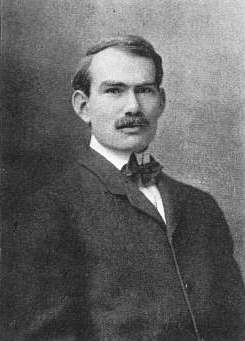
File:Lee_De_Forest.jpg · Wikimedia Commons · See Wikimedia Commons
Lee de Forest
Sign in to saveAmerican inventor (1873–1961)
Lee de Forest was an American inventor who lived from 1873 to 1961 and made significant contributions to the development of early electronic technology. His work laid important groundwork for modern radio and telecommunications, making him a key figure in the history of communication technology.
AI-generated from the Wikipedia summary — may contain errors.
Wikidata facts
- Instance of
- human
- Given name
- Lee
- Gender
- male
- Citizenship
- United States
- Place of birth
- Council Bluffs
- Place of death
- Hollywood
- Occupation
- engineer
- Employer
- Illinois Institute of Technology
- Political party
- Republican Party (United States)
- Languages spoken
- English language
- Award
- John Scott Award
- Notable work
- triode
- Student of
- Josiah Willard Gibbs
- Field of work
- history of technology
- Official website
- www.leedeforest.org
- Image
- Formal portrait of Lee de Forest.jpg
Show 9 more facts
- Commons category
- Lee De Forest
- place of burial
- San Fernando Mission Cemetery
- Commons Creator page
- Lee De Forest
- nominated for
- Nobel Prize in Physics
- archives at
- Illinois Institute of Technology
- date of birth
- 1873-08-26
- name in native language
- Lee De Forest
- date of death
- 1961-06-30
Sources (10)
via Wikidata · CC0
~40 min read
Encyclopedic overview
Lee de Forest (August 26, 1873 – June 30, 1961) was an American inventor, electrical engineer, and early pioneer in electronics of fundamental importance. He invented the first practical electronic amplifier, the three-element "Audion" triode vacuum tube in 1908. This helped start the Electronic Age, and enabled the development of the electronic oscillator. These made radio broadcasting and long-distance telephone lines possible, and led to the development of talking motion pictures, among countless other applications.
He had over 300 patents worldwide, but also a tumultuous career – he boasted that he made, then lost, four fortunes. He was also involved in several major patent lawsuits, spent a substantial part of his income on legal bills, and was even tried (and acquitted) for mail fraud.
Excerpted from Wikipedia’s “Lee de Forest” article, available under the CC BY-SA 4.0 licence.