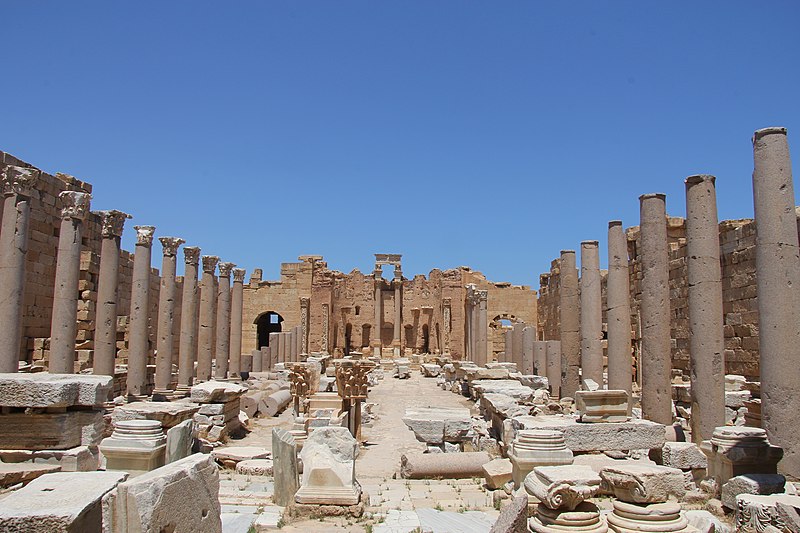
File:Leptis_Magna_(29)_(8288918733).jpg · Wikimedia Commons · See Wikimedia Commons
Leptis Magna is an ancient city located in what is now Libya that was once a major center of trade and Roman power in North Africa. It matters because its well-preserved ruins provide important archaeological evidence about Roman civilization and North African history during antiquity.
AI-generated from the Wikipedia summary — may contain errors.
Described at
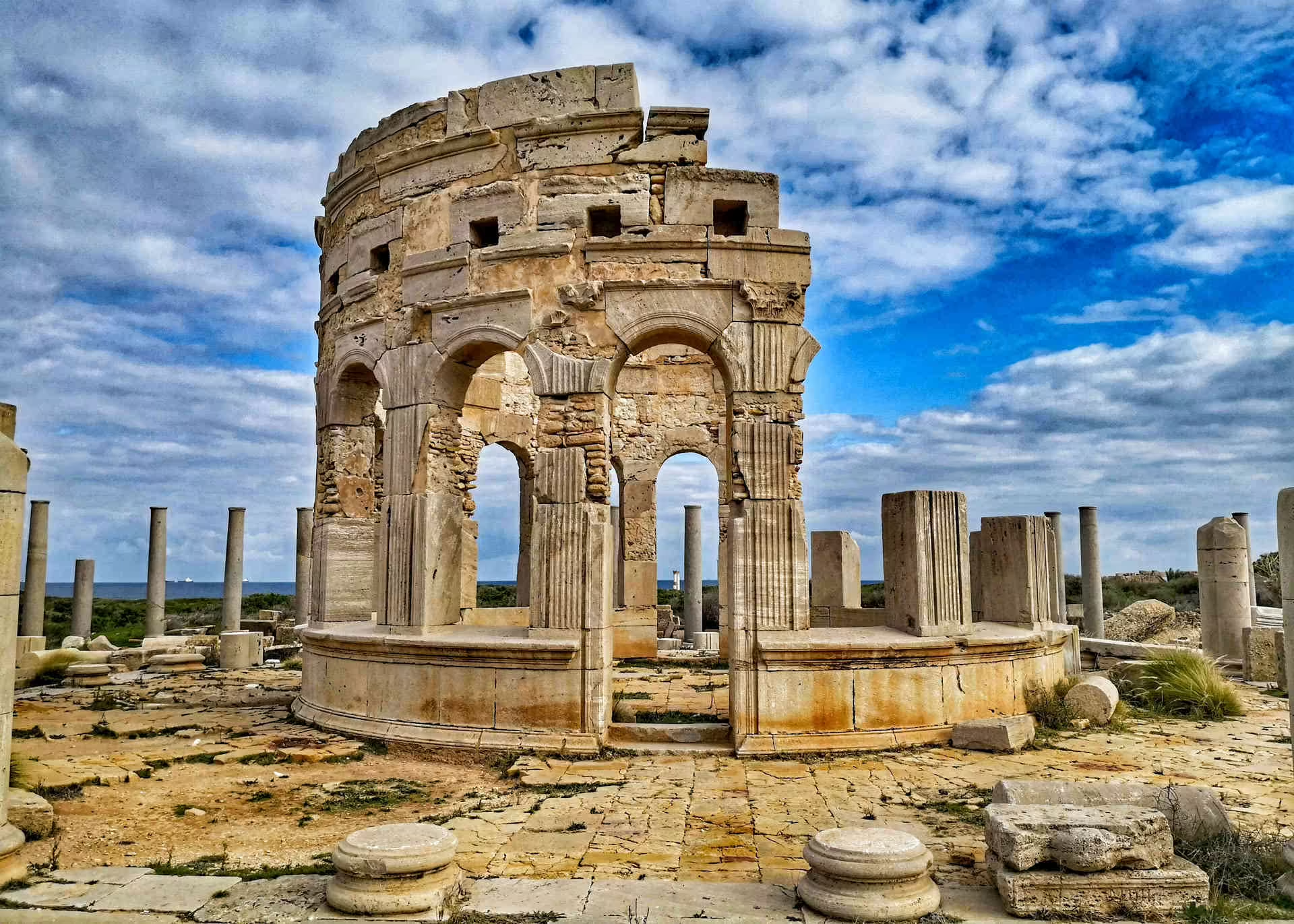
Leptis Magna - Líbya - PlaceMania
Leptis Magna bolo jedným z najkrajších miest Rímskej ríše s impozantnými pamiatkami, prístavom, trhoviskom, obchodmi a obytnými štvrťami.
placemania.sk →Feninčania sú známi ako výnimoční moreplavci. Na mohutných lodiach, zdobených konskými hlavami na počesť boha mora Yamma, podnikali neohrozené výpravy, a to vďaka pokročilým vedomostiam o navigácii. Ich svet pozostával z niekoľkých nezávislých mestských štátov ležiacich na pobreží Stredozemného mora na území dnešnej Sýrie, Libanonu a severného Izraela. Pripisuje sa im vynájdenie lodného kýlu, abecedy, purpurového farbiva a pravdepodobne aj skleného riadu. Dokonca im prisudzujú privezenie domestikovanej mačky do Európy. Fenickí moreplavci si totiž všimli, že mačky výborne chytajú potkany, preto ich s radosťou brali na paluby svojich lodí. Takto ich priviezli do Talianska a ešte ďalej. Fenické výrobky sa našli až na severe vo Veľkej Británii, a jedno z najvychytenejších miest Rímskeho impéria Leptis Magna vzniklo ako obchodná zástavka Feničanov Lpqy v 7. storočí pred n. l. Leží na stredomorskom pobreží severnej Afriky a Maltu s Talianskom má na dosah ruky. Nachádza sa v súčasnej Líbyi pri ústí vádí Lebda do mora. Feničanov na tejto polohe zaujala hlavne potenciálna príležitosť dostať sa k vnútrozemským karavanovým trasám. Sídlo, ktoré sa sústredilo okolo prístavu na vádí Lebda, sa podľa všetkého rozrástlo na obrovskú fenickú kolóniu a neskôr padlo do rúk Kartágincov. Akýkoľvek obchodný či architektonický rozmach (ktorý sa čoskoro stratil pod novými úrovňami mesta) však bledne v porovnaní s tým, aký význam dosiahlo mesto v rukách Rimanov. Už od čias prvého rímskeho cisára Augusta patrilo Leptis Magna do rímskej provincie Afrika, a hoci mohlo stále slúžiť ako obchodná zastávka, oveľa známejšie bolo svojím poľnohospodárstvom a najmä výrobou olivového oleja. Na väčšine okolitého územia sa rozkladá polopúšť, no mesto malo to šťastie, že v jeho tesnej blízkosti bola veľmi úrodná pôda. Ukázalo sa, že je mimoriadne vhodná na pestovanie olivovníkov. Okrem toho tu bola sieť občasných riek – vádí – ktoré pri nedostatku zrážok pomáhali zavlažovať úrodu. Leptis Magna vďaka olivovému oleju neuveriteľne zbohatlo. Pre všetkých od cisára až po otrokov predstavoval hlavný zdroj tukov v strave. Mydlá na báze olivového oleja sa zase starali o hygienu a lampy, v ktorých horel olivový olej, osvetľovali temnotu. Z miestneho prístavu sa do celého Rímskeho impéria vyvážalo nespočetné množstvo amfor plných olivového oleja. Leptis Magna sa zmenilo na jedno z najviac romanizovaných miest v severnej Afrike a bohatá elita mesta navzájom súperila o to, kto postaví dôležitejšiu verejnú budovu. Takto vznikli chrámy, fórum, divadlo, akvadukt a verejné kúpele, amfiteáter, pretekárska dráha pre vozy (hipodróm) a tak ďalej. Leptis Magna tak malo rovnaké výhody ako hlavné mesto ríše. Status mesta významne narástol, keď jeden z jeho rodákov, Lucius Septimus Severus , zasadol v roku 193 nášho letopočtu na trón celej Rímskej ríše. Podľa popredných historikov, ktorí sa venujú tomuto miestu, to bol prvý naozaj provinčný cisár. Severus nezabudol na svoje korene a rodné mesto poctil tým, že ho pasoval za skutočné rímske mesto. Okrem tohto čestného postavenia mu doprial značné daňové úľavy a financoval rozsiahlu prestavbu s cieľom spraviť z mesta metropolu hodnú cisára. Mesto dostalo obrovské nové fórum, baziliku a víťazný oblúk zdobený podobizňami severovskej dynastie, ktorý stál uprostred hlavnej križovatky. Po páde severovskej dynastie sa rozvoj mesta spomalil, presne ako sa dalo čakať. Stavby, ktoré už stáli, boli vystavené sérii zemetrasení v 60. rokoch 4. storočia n. l. a nájazdom nomádskych kmeňov v rovnakom období. V 5. storočí sa mesto pod východorímskou (byzantskou) vládou trochu spamätalo, ale vtedy už bolo len zlomkom svojej predošlej slávy a prístavu hrozilo, že ho pochovajú nánosy. Keď v roku 643 celú oblasť ovládli Arabi, mesto bolo podľa všetkého už opustené. Tie isté pohyblivé duny, čo vytvárali cesty pre karavány, ktoré Feničanov prilákali, napokon pohltili aj ruiny mesta Leptis Magna. Až do viktoriánskej éry mesto ticho spalo. Jeho pokoj narúšali le
Excerpt from a page describing this subject · 20,593 chars · not written by Vinony
Wikidata facts
- Instance of
- archaeological site
- Country
- Ancient Rome
- Located in
- Al Khums
- Area
- 387.485
- Body of water
- Mediterranean Sea
- Image
- Leptis Magna (29) (8288918733).jpg
- Significant event
- list of World Heritage in Danger
Show 8 more facts
- Commons category
- Leptis Magna
- Commons gallery
- Leptis Magna
- inception
- 0700-00-00
- heritage designation
- World Heritage Site
- dissolved, abolished or demolished date
- 0637-00-00
- time period
- Roman Empire
- native label
- Leptis Magna
- described at URL
- www.placemania.sk/svetova-zaujimavost/leptis-magna
via Wikidata · CC0
~25 min read
Encyclopedic overview
Leptis or Lepcis Magna, (Arabic: لبدة الكبرى, romanized: Libda al-Kubrā) also known by other names in antiquity, was a prominent city of the Carthaginian Empire and Roman Libya at the mouth of the Wadi Lebda in the Mediterranean.
Established as a Punic settlement prior to 500 BC, the city experienced significant expansion under Roman Emperor Septimius Severus (r. 193–211), who was born in the city. The 3rd Augustan Legion was stationed here to defend the city against Berber incursions. After the legion's dissolution under Gordian III in 238, the city was increasingly open to raids in the later part of the 3rd century. Diocletian reinstated the city as provincial capital, and it grew again in prosperity until it fell to the Vandals in 439. It was reincorporated into the Eastern Empire in 533 but continued to be plagued by Berber raids and never recovered its former importance. It fell to the Muslim invasion in c. 647 and was subsequently abandoned.
Excerpted from Wikipedia’s “Leptis Magna” article, available under the CC BY-SA 4.0 licence.
Gallery (12)
On the map
Available in 66 languages
- Español
- Français
- Deutsch
- 中文
- 日本語
- Русский
- Português
- Italiano
- العربية
- Akan
- Akan
- Albanian
- Armenian
- Asturian
- Azerbaijani
- Bahasa Indonesia
- Basque
- Breton
Show 47 more
- Bulgarian
- Burmese
- Catalan
- Croatian
- Czech
- dag
- Danish
- Egyptian Arabic
- Esperanto
- Estonian
- Finnish
- Frafra
- Galician
- Georgian
- Greek
- Hebrew
- Hungarian
- Icelandic
- Irish
- Kinyarwanda
- Latin
- Lithuanian
- Maithili
- Malagasy
- Maltese
- Moroccan Arabic
- Mossi
- Nederlands
- Nepali
- Norwegian
- Occitan
- Polski
- Romanian
- Serbian
- Serbian (Latin)
- Sicilian
- Slovenian
- Svenska
- Swahili
- Tiếng Việt
- Türkçe
- Ukrainian
- Urdu
- Waray
- Welsh
- فارسی
- 한국어
via Wikidata sitelinks · CC0