
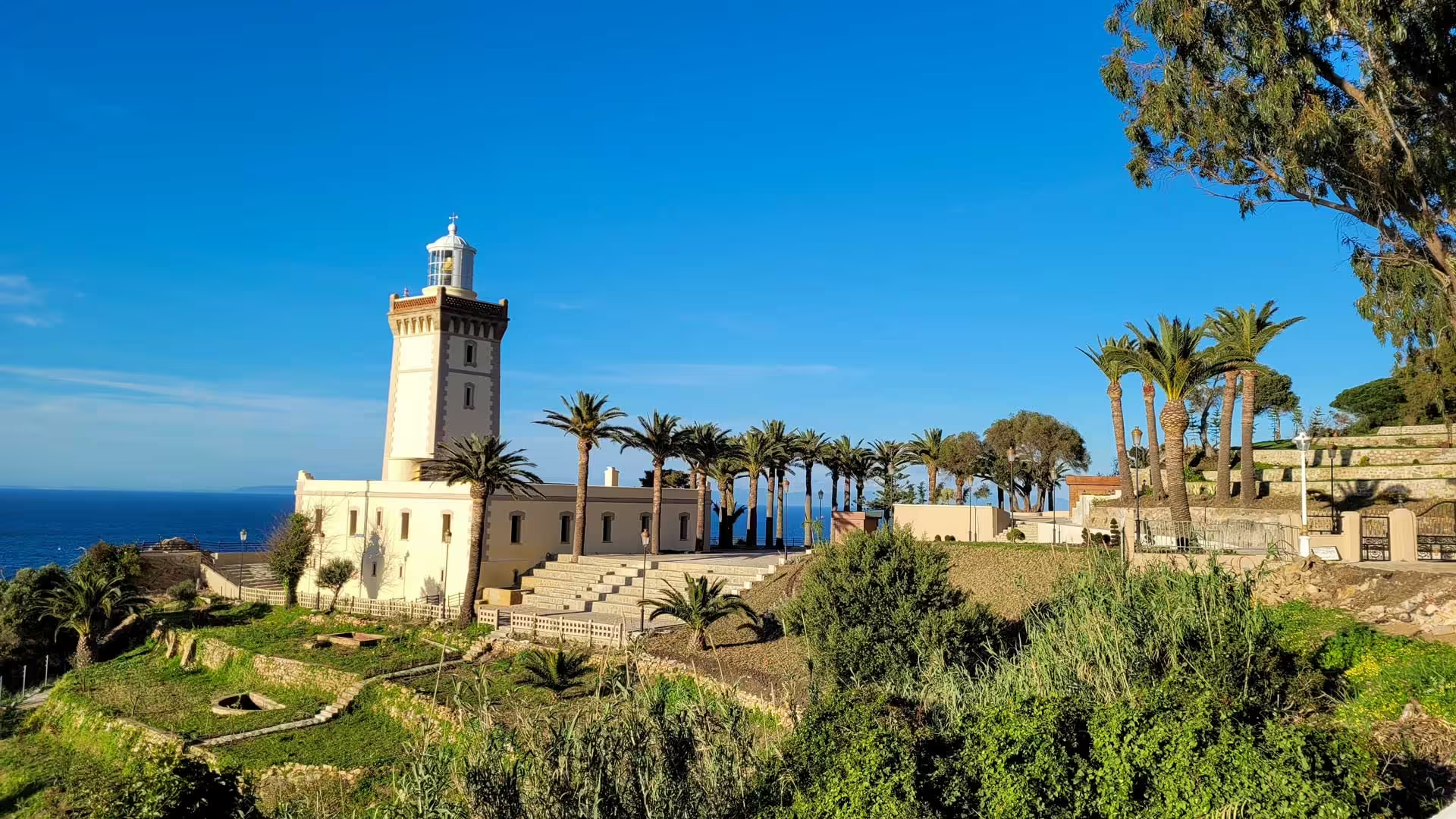
File:Tanger_cor.jpg · Wikimedia Commons · See Wikimedia Commons
Tangier
Sign in to saveAlso known as Tangiers, Tangeri, Tanger, Ṭanjah, Ṭanja, Tingi, Tinigi, Tingis
Tangier ( ; , , ) is a city in northwestern Morocco, on the coasts of the Mediterranean Sea and the Atlantic Ocean. The city is the capital of the Tangier-Tetouan-Al Hoceima region, as well as the Tangier-Assilah Prefecture of Morocco.
Tangier is a city in northwestern Morocco that sits where the Mediterranean Sea and Atlantic Ocean meet. It serves as the capital of the Tangier-Tetouan-Al Hoceima region and the Tangier-Assilah Prefecture.
AI-generated from the Wikipedia summary — may contain errors.
Weather now
7-day forecast
via Open-Meteo
Place details
- Locality
- Tanger طنجة
- Region
- Tanger-Tétouan-Al Hoceïma ⵟⴰⵏⵊ-ⵟⵉⵜⴰⵡⵉⵏ-ⵍⵃⵓⵙⵉⵎⴰ طنجة تطوان الحسيمة
- Country
- Maroc ⵍⵎⵖⵔⵉⴱ المغرب
- Population
- 1,065,601
- Timezone
- Africa/Casablanca
via OpenStreetMap · GeoNames
Key facts
- Settlement.name
- Tangier
- Settlement.settlement_type
- City
- Settlement.image_shield
- Coat of arms of Tangier.png
- Settlement.shield_size
- 75px
- Settlement.nicknames
- The blue and white city, City of the Boughaz, Bride of the North
- Settlement.pushpin_map
- Morocco#Africa
- Settlement.pushpin_label_position
- left
- Settlement.pushpin_relief
- yes
- Settlement.pushpin_map_caption
- Location of Tangier within Morocco
- Settlement.subdivision_type
- Country
- Settlement.subdivision_name
- Morocco
- Settlement.subdivision_type1
- Region
- Settlement.subdivision_type2
- Prefecture
- Settlement.subdivision_name1
- Tanger-Tetouan-Al Hoceima
- Settlement.subdivision_name2
- Tangier-Assilah Prefecture
- Settlement.elevation_min_m
- 0
- Settlement.population_as_of
- 2024
- Settlement.population_total
- 1275428
via Wikipedia infobox
Described at
Novodobá Sodoma - Maroko - PlaceMania
Na konci každej ulice sa takmer vždy nachádza výhľad, takže oči automaticky prehliadajú to, čo sa nachádza v blízkosti, aby dosiahli na kúsok prístavu, hrebene hôr alebo mora a vzdialenú líniu pobrežia.
placemania.sk →Link to a page describing this subject · 20,484 chars · not written by Vinony
Wikidata facts
- Instance of
- big city
- Demonym
- طانجاويات
- Country
- Tangier International Zone
- Located in
- Tangier-Assilah Prefecture
- Population
- 1275428
- Area
- 199.5
- Elevation
- 56
- Time zone
- UTC±00:00
- Capital of
- Tangier International Zone
- Official website
- tanger.ma
- Image
- Tangier - 44699733295.jpg
- Households
- 362062
- Dialing code
- 5399
Show 15 more facts
- twinned administrative body
- Saint-Josse-ten-Noode
- Commons category
- Tangier
- postal code
- 90100
- topic's main category
- Category:Tangier
- category for people born here
- Category:Births in Tangier
- category for people who died here
- Category:Deaths in Tangier
- category of associated people
- Category:People from Tangier
- Commons gallery
- Tanger
- native label
- ⵟⴰⵏⵊⴰ
- inception
- 0401-00-00
- owner of
- Tangier Grand Stadium
- language used
- Ghomara
- P12749
- Genoa CFC
- described at URL
- www.placemania.sk/svetova-zaujimavost/tanger-novodoba-sodoma
Sources (8)
via Wikidata · CC0
Travel guide
Understand
thumb|300px|Night view of Tangier
Tangier is a fascinating Moroccan city to visit. It has many of the things that travellers love—a sense of exotic mystery, interesting history, beautiful vistas, unspoiled beaches, and friendly people. It is an interesting mix of the cultures of north Africa, Spain, and France and indeed has a very international history, and has traditionally been home to people from several different cultures. At the beginning of the 20th century, for instance, a quarter of the city's population were Europeans and another quarter Jewish.
Founded sometime in the 5th century BCE, Tangier has been part of all major empires in the region throughout history. During the last centuries major European powers have contested for the city at the southern bank of the Strait of Gibraltar in order to gain control over the traffic between the Atlantic and the Mediterranean. This game even brought France and Germany to the brink of war in 1905. Deemed too important to be controlled by a single country, it was under joint international control from 1925 to 1956 (during that period known as the Tangier International Zone). During World War II and the Cold War it was also a major center for spying activities by major powers, as well as a playground for gamblers, crooks and millionaires. Also, several Western cultural personalities such as William S. Burroughs, George Orwell, Henri Matisse and the rock band Rolling Stones have spent some time in Tangier. The American au…
Get around
thumbnail|Walking in the medina (old town)
Tangier is very easy to navigate around; the two main roads are Boulevard Mohammed V which runs from near the Medina through the ville nouvelle and Boulevard Mohammed VI (formerly Ave des FAR) which runs along from the beachfront from the port to Malabata. The exception is the Medina (old town), a complex array of alleyways some of which can only be accessed on foot. Mohammed V has a whole range of clothes shops, pharmacies and cafes as well as Hotel Flandria, Hotel Rembrandt. Hotel El Minzah lies just off this road. Mohammed VI runs along the beach front where you will find numerous hotels (Rif, Ramada, Sherezade, Solazure, Tariq, Movenpick), bars, discos, restaurants and cafes. Most hostels are on the roads heading uphill near the port area and in the Medina.
See
thumb|250px|The former Sultan's palace in the Kasbah, now holding the Tangier city museum
Tangier is a city where there are rather few individual sights. Instead, the whole city can be considered one single big sight. Take a simple walk along the beach (Ave Mohamed VI) to enjoy what the city is famed for. In the you can see fishing boats bringing in fresh fish everyday. There are also restaurants serving very fresh fish. Moreover, here you can also see the frequent fast ferries arriving from and departing to Tarifa.
Do
thumb | 300px | The Fanatics of Tangier (painting by Eugène Delacroix)
Walk around the city. Get happily lost in the medina, which is most active in evening and night. Alternatively walk along Boulevard Pasteur with its view to the sea from Terrasse des Paresseux or the beachfront Avenue Mohammed VI and in the port area and look at the fishermen bringing in their catch. When walking around, there are plenty of opportunities for shopping, described in the next section.
For nice views of the city and the seas, head to the aforementioned Terrasse des Paresseux, Kasbah or to the famous Café Hafa in the Drink section.
Football:
Buy
thumbnail|Artisan at work in the Medina
The medina is full of small shops, though beware that some of them are tourist traps and salesmen are seemingly outright desperate to get you to buy stuff in which you are not interested. Much of the brasswork is made in other towns but is available here. Leather goods are also available. Stay away from the tourist traps and you may find the price quite agreeable. Colourful leather slippers, men's and women's clothing can be reasonable priced. When shopping here, bargaining is essential as there are no fixed prices. It is advisable to negotiate prices in dirham rather than euros.
There are other markets notably the souk in the medina (mainly vegetables, clothes and tourist items) and in Ben Mekada (vegetables). The latter does not cater for tourists and is known as one of the "rough spots" of Tangier and, where, in the 1980s, there were bread riots.
Eat
thumbnail|Tajine with mutton, prunes and almonds thumbnail|Mint tea
There are restaurants serving most major cuisines in Tangier. Though while you're here, why not try out the specialties of Maghreb; different types of tagines (stews) and couscous as well as mint tea?
In the morning a "locals" cafe will give you a cafe au lait for 5 dirham. (Cafes where tourists congregate will charge you 10 dirham.) Usually there is a bread vendor at the cafe (by the port or the madina) who will serve you bread with cheese and honey for another 5 dirham. It's perfectly okay to buy your bread/breakfast elsewhere and eat it outside at the cafe. If the bread guy is next to the cafe the waiter will often collect.
You may quickly bore of tagines and street food is a great option for snacking throughout the day. Fresh orange juice costs about 5 dirham; sandwiches of egg, peppers, and sauce are about 10 dirham. Yogurt mixtures can be particularly creative, such as avocado and almonds, or fruit mixtures. Tiny stalls in the souk sell cooked vegetables like eggplant, with rice, and other tasty treats and a meal there can cost 10 dirham or so. In the early evening you may find squares of chickpea cakes sprinkled with salt and paprika.
In the evening, go to the plaza next to CTM bus station. There are several cafes and restaurants facing the plaza. The price and services are good because of the keen competition. Just wandering around in the medina will bring you across numerous Moroccan restaurants …
Drink
There are many places in Tangier to drink. Much depends on the current owner who tends to give the place a certain ambiance. Popular bars/discos with foreign (and local) clientele include Casa Pepe, Sable D'or, Morocco Palace, Marco Polo (popular with truck drivers) and hotel bars such as Ramada and El Minzah.
You could opt for a coffee, and there are no shortage of cafes; some of which are the best in the country. Some have amazing views (cafe Hafa), some good coffee, some are popular (cafe Tropicana, cafe Celine Dion), some with music (cafe in the Dawliz complex), some have good cakes (cafe Oslo), some are places to relax after a hard day shopping (cafe Madam Porte, cafe Vienna), and some are rather sleazy.
Fresh fruit juices are sold by street vendors during the summer months. The cafes also serve fresh fruit juices and often have wpanache, a delicious mix of fruit juices often with milk, apple and almond.
Sleep
thumbnail|Tangier from the west
There are plenty of hotels to choose from in all categories. Rates may vary depending on the season. Many riads (traditional Moroccan mansions) nowadays function as hotels, with nightly rates around 300–500 D. These can be found mostly in the medina.
Stay safe
thumbnail|View in the Medina
Generally, central Tangier is a very safe city compared with many places in Europe though this does not necessarily apply to the suburbs. The only trouble you may encounter are the persistent touts whom you should ignore, or the con-men ready to fleece you (by trying to chat up to you then sometimes offer to smoke hashish), and you will encounter these almost exclusively in the medina. There are policemen everywhere and you will probably feel safer than at home. Tangier is generally safe for lone women.
Dressing like a local will help you blend in and get good reception from merchants, who will often quote you actual prices instead of inflated tourist prices. There are lots of expats in this city that speak Spanish first, then English and then French. A polite no thank you and then simply ignoring touts does get rid of them.
This is not the case if you are visiting Tangier as part of a tour (e.g. a day tour from Costa del Sol or a cruise excursion). In this case, as of May 2015, the souvenir touts are going to follow your group during the whole time you're in the medina. Yes, they may have interesting looking stuff for sale, but if you buy anything from anyone of them it will mark you as an easy target and the other ten touts in the gang will surround you until you get back on the tour bus. Save your shopping for the shops, at which you will stop. They are also eager to get to sell you something, but they do at least have a larger selection and…
Go next
Asilah — Town at the ocean with a splendid white medina and lots of beaches, 20 km south. Grand taxi 50 dirham, bus 11 dirham. Larache — A lively and non-touristy town 85 km to the south featuring beaches and the Phoenician-Roman ruins of Lixus at the estuary of river Loukkos. Chefchaouen — Some 120 km southeast. This is a traditional Rif mountain village with blue and white houses surrounded by beautiful forested countryside. Tetouan — The other major city in the region, 60 km to the southeast. It has what some people call the prettiest medina of the country, which is also a UNESCO World Heritage Site. The coast further east features sand beaches, resorts and good diving. Ceuta — 65 km northeast, this is a Spanish enclave on the African mainland. The road there passes Jbel Musa which in antiquity was known as one of the Pillars of Hercules (the other one was the Rock of Gibraltar) Mainland Spain — You can buy train, bus and ferry tickets at the stations and ports listed above, although you may find it easier to purchase ferry tickets from travel agents rather than face the gauntlet of touts at the port. If you plan on leaving by ferry, it is important to note that the ferries from Tanger Med to Algeciras often do not follow a set schedule, and departure times can change even within a day of having purchased tickets. One alternative is to take a fast ferry to Tarifa, because these are more likely to run on time and at least one of the companies provides a free bus to the port…
Travel guide from Wikivoyage (CC BY-SA 4.0)
~48 min read
Encyclopedic overview
32 sectionsContents
- Names
- History
- Ancient
- Medieval
- Early modern
- Internationalisation
- Moroccan independence
- Geography
- Climate
- Subdivisions
- Economy
- Notable landmarks
- Transport
- Education
- Primary education
- International primary institutions
- International high schools
- Culture
- Language
- Religion
- Sport
- Museums
- In popular culture
- Espionage
- Notable people
- Twin towns – sister cities
- Gallery
- See also
- References
- Citations
- General bibliography
- External links
Tangier ( ; , , ) is a city in northwestern Morocco, on the coasts of the Mediterranean Sea and the Atlantic Ocean. The city is the capital of the Tangier-Tetouan-Al Hoceima region, as well as the Tangier-Assilah Prefecture of Morocco.
Many civilisations and cultures have influenced the history of Tangier, starting from before the 10th centuryBCE. Originating as a strategic Phoenician town and trading centre, Tangier has been a nexus for many cultures. In 1923, it became an international zone managed by colonial powers and became a destination for many European and American diplomats, spies, bohemians, writers and businessmen. That status came to an end with Moroccan independence, in phases between 1956 and 1960.
Excerpted from Wikipedia’s “Tangier” article, available under the CC BY-SA 4.0 licence.
Gallery (52)
On the map
3 mapped locations
Available in 107 languages
- Español
- Français
- Deutsch
- 中文
- 日本語
- Русский
- Português
- Italiano
- العربية
- हिन्दी
- Achinese
- Afrikaans
- Akan
- Aragonese
- Armenian
- Asturian
- azb
- Azerbaijani
Show 88 more
- Bahasa Indonesia
- Balinese
- Bangla
- Basque
- be_x_old
- Belarusian
- Bosnian
- Breton
- Bulgarian
- Burmese
- Catalan
- Cebuano
- Chechen
- Chuvash
- Croatian
- Czech
- Danish
- Egyptian Arabic
- Esperanto
- Estonian
- Extremaduran
- Filipino
- Finnish
- Galician
- Georgian
- Greek
- Guarani
- Hausa
- Hebrew
- Hungarian
- Ido
- Interlingua
- Kabyle
- Karachay-Balkar
- Kazakh
- Ladino
- Latin
- Latvian
- Lithuanian
- Lombard
- Macedonian
- Malay
- Malayalam
- Maltese
- Marathi
- Mingrelian
- Mongolian
- Moroccan Arabic
- Nederlands
- Northern Frisian
- Norwegian
- Norwegian Nynorsk
- Occitan
- Ossetic
- Papiamento
- Piedmontese
- Polski
- Romanian
- Sardinian
- Scots
- Serbian
- Serbian (Latin)
- Shona
- Sicilian
- Silesian
- simple
- Slovenian
- Standard Moroccan Tamazight
- Svenska
- Swahili
- Tachelhit
- Tajik
- Tatar
- Tiếng Việt
- Türkçe
- Ukrainian
- Urdu
- Uzbek
- Walloon
- Waray
- Welsh
- West Flemish
- Western Panjabi
- Wu Chinese
- zh_yue
- فارسی
- ไทย
- 한국어
via Wikidata sitelinks · CC0