Also known as Luang Phabang, Լուանգպրաբանգ
provinshuvudstad
Luang Prabang is a city in north central Laos that serves as a major cultural and historical center in Southeast Asia. The city is significant for its well-preserved architecture, Buddhist temples, and traditional way of life, making it an important destination for understanding Lao culture and heritage.
AI-generated from the Wikipedia summary — may contain errors.
via Open-Meteo
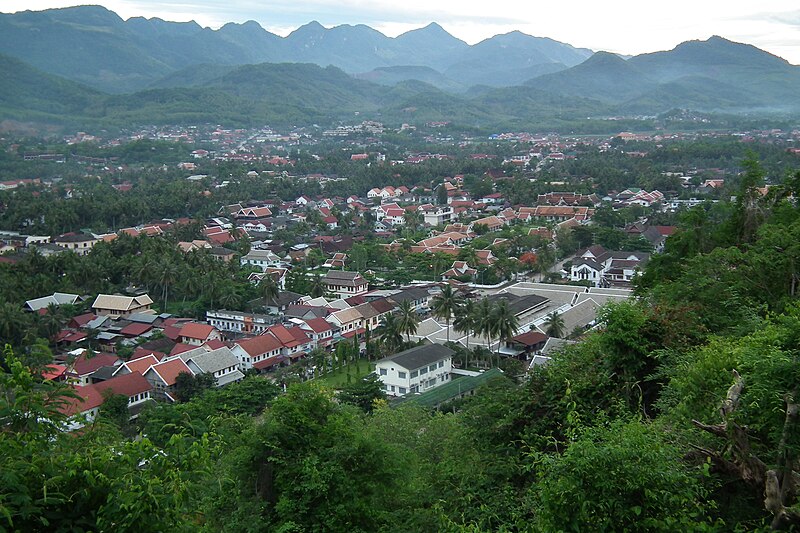
thumb|Mount Phou Si (Phousi Hill) and the Mekong in Luang Prabang as seen at sunset from Wat Chomphet Set at the confluence of two rivers that almost surround the town, and beneath a temple-topped hill, Luang Prabang is a wonderful patchwork of traditional Lao wooden houses and hints of European architecture, reminders of when Laos was part of the French colony of Indochina. Golden-roofed wats (temples), decorated with mosaics and murals of the life of Buddha, sit under the gaze of wrap-around teak balconies and 19th-century shuttered windows. All of this is set against a backdrop of verdant greenery and rugged mountains.
Luang Prabang is a relatively small city with an atmospheric and charming personality. With UNESCO so closely involved and a largely responsible group of local business owners, the pressures of mass tourism have been held at bay, but for how much longer remains to be seen. Restaurants in the main street cater for luxury tourists. More typical Lao venues can still be found along the Mekong.
From late February to April, slash-and-burn agriculture creates a smoky haze that can irritate eyes and lungs, obscuring the scenery.
Luang Prabang International Airport is a visa-on-arrival and e-Visa entry point. See Laos#Get in for details.
Visa extensions are possible at the immigration office opposite the Rama Hotel. The cost is US$2/day plus a US$2 form fee. The process is very easy. Turn up in the morning with your passport and one photo. Fill in a form (in Luang Prabang they do this for you) and come back in the afternoon for your extension.
Luang Prabang's Old Town is only about 1.5 km long and 500 m wide, which makes it small enough to comfortably cover on foot, and this is in fact the only way to climb Phousi Hill. The city is also quite flat, which makes cycling an attractive option, although the ever-increasing traffic makes this dangerous at times.
For longer trips, your options are basically negotiating with open-air tuk-tuks, or arranging a tour package with your hotel or a travel agent, which will likely see you crammed into one of the ubiquitous silver Toyota minivans. (Large buses and trucks are both banned in the old town.) Prices for both are always per person unless you explicitly negotiate a charter. Loca ridehailing is also available.
Louang Prabang, även stavat Luang Prabang, (lao: ຫລວງພະບາງ) är en stad i Laos, med en folkmängd på ca 50 000 invånare (2005). Från 1300-talet var staden under långa perioder huvudstad i riket Lan Xang, som geografiskt till viss del motsvarar dagens Laos. Legender berättar om stadens tillkomst. Prins Fa Ngum flydde till Angkor men återkom och med hjälp av en armé från Angkor tog han makten 1353 och valde Luang Prabang som sin huvudstad. Staden har fått sitt namn av en Buddhaskulptur (Phrabang Buddha) som togs till staden från Vientiane 1512. På grund av stridigheter flyttades huvudstaden 1563 till Vientiane. Louang Prabang upptogs 1995 på Unescos världsarvslista, och betraktas som ett unikt exempel på en blandning mellan den traditionella och koloniala arkitekturen. Staden, som ligger vid Mekongfloden 42 mil norr om Vientiane, är känd för den höga koncentrationen av buddhistkloster och buddhistmunkar. Idag finns där 33 tempel/kloster varav några byggdes redan på 1600-talet.
Abstract from DBpedia / Wikipedia · CC BY-SA
via OpenStreetMap · GeoNames
via Wikidata · CC0
Thai baht and USD are widely accepted but the exchange rates vary. There are some ATMs that accept Visa, MasterCard, Maestro and Eurocards. These ATMs are mostly on Sisavangvong Rd near the end of the Night Market. The ATMs dispense currency in Lao kip, and generally allow a maximum withdrawal of 1,000,000 kip with a charge of 20,000 kip. Banque Franco-Lao allows a maximum withdrawal of 2,000,000 kip with a charge of 40,000 kip. Multiple withdrawals are allowed to a daily maximum of 5,000,000 kip. If you arrive by plane, there is an ATM and a money changer at the airport which is only open for a few hours each day. Also, their rates are significantly worse than the banks in town.
Money changers/exchange For Malaysians, it is best to change ringgit to baht, then change the baht to kip in Laos. This is because they give poor rates in Laos for Malaysian ringgit.
There are a number of money changers who generally do not offer good rates, and are either on Sisavangvong Rd or in the permanent markets further east. One is next to the ATM near the Night Markets, another is about 50 m further north along the street, in a small booth in front of one of the first restaurants. The rates offered may vary, so shop around before you change. Better maybe to use official money changing services at a bank which are easily found. There are reports of scams whereby money changers quote cash advance rates instead of the spot rates. They will charge you more in US dollars with a different exchan…
thumb|Or lam pork stew, probably Luang Prabang's most famous dish thumb|Khai phaen roasted algae sheets
There are no multi-national fast food outlets in Luang Prabang. Restaurants line Sisavangvong Rd and the roads along the Mekong and Nam Khan. Food runs the gamut from standard SE Asian backpacker fare to more traditional Lao dishes, including buffalo sausage right up to very high quality French cuisine. There are also numerous market stalls for cheaper food, including baguettes, crepes, and pancakes.
Typical prices for Beerlao is 45,000 kip for a large bottle and 35,000 kip for a small, which generally are standard throughout the country. Most riverside places offer the same prices for beer and similar food, although prices for food can vary wildly. Shop around and don't be shy about asking prices if anything is unclear.
Probably the most recommended food is the Lao version of fried spring roll, vegetable or pork.
A speciality of Luang Prabang worth trying is khai phaen (ໄຄແຜ່ນ), made by collecting green algae from the Mekong, drying it as sheets and jazzing it up with sesame seeds, chillies, oil, etc. The end product resembles Japanese nori seaweed, and it's widely sold from street stalls, but is not meant to be eaten raw! Instead, find any bar and try it flash-fried, which transforms chewy plastic into a delicious, crispy, salty snack that goes well with beer.
Other local specialities include:
Or lam (ເອາະຫຼາມ), a mild, herbal pork stew flavored with sakhaan (chili …
There are a number of places to drink around Luang Prabang, though the late-night club scene is pretty much nonexistent. The liveliest and busiest bars are in a small cluster between Mt Phousi and the Nam Khong.
Luang Prabang's status means that curfews are strictly enforced here. Bars start winding down at 23:00 and close at 23:30 sharp. The only late-night options permitted are outside the main part of town, a discothèque patronised mostly by locals and bizarrely, a ten pin bowling alley.
If you do plan on staying out after hours, check the arrangements with your guesthouse first to avoid being locked out.
If you're simply looking to relax and enjoy the river views, most riverside restaurants have tables outside where you can sit back with a beer or two. There's even a specific Luang Prabang variant of the omnipresent BeerLao.
Luang Prabang has the best selection of accommodation in Laos, with something to suit every budget. There is everything from tent sites under a roof for 20,000 kip per night up to super luxury at US$1,500 per night. 300,000 kip (US$13) for a room seems to be the low end, as of late 2024.
Don't expect though that the whole kit and caboodle that you can find in Vietnam or Cambodia, air-con, cable TV, Internet, can be found in LP for US$12 just near the main tourist area. Walk a bit outside of it (but not near the river), and you may find such deals even during the peak season, though. If you rent a motorbike, even better deals can be found at the city outskirts.
While the big chains have yet to make an appearance, there's plenty of "boutique" accommodation, although this heavily overused word runs the gamut from quirky to luxury. Most of the lanes and alleys all through Luang Prabang have places to stay, with a large selection also found in the lanes south of the Post Office. Free Wi-Fi is quite common in budget guesthouses.
Scooter accidents are common amongst tourists in Luang Prabang. Do not rent a scooter here if you are not experienced. The road to the Kuang Si falls is especially dangerous due to the deep pot-holes filled with loose material, sand on the road, and speeding drivers of tourist vans. Even if you're used to motorcycling in flat areas, remember that bikes with automatic transmissions can often stall out or freeze up when trying to deal with some of the more extreme hills in Luang Prabang's environs.
If you come down with a serious illness or injury, your best bet would be to fly directly to Bangkok and seek medical treatment there.
Huay Xai — for those departing by boat to Thailand this is the necessary stopover Vang Vieng — the next stop on the backpacker circuit for many younger travellers. The road to Vang Vieng is very bad, so taking the train is recommended. Phonsavan - starting point for Plain of Jars UNESCO world heritage sites For a more serene experience: Nong Khiaw — to the north Muang Ngoi Neua Vientiane Hanoi — if you're heading to Vietnam and you're staying in a Vietnamese-run hotel, ask them to exchange money into Dong for you. They ought to give you a good rate. Nong Khiaw
Travel guide from Wikivoyage (CC BY-SA 4.0)
via Wikidata sitelinks · CC0
Discovered by embedding cosine similarity (sentence-transformers MiniLM, 384-dim).