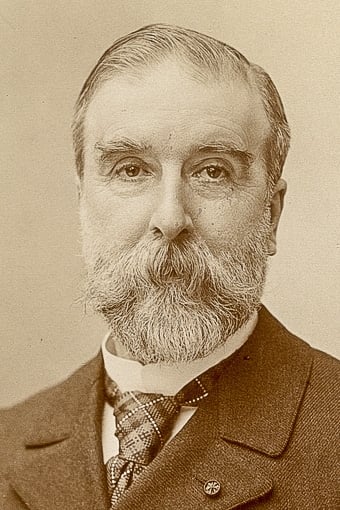
Profile via TMDB · Courtesy of TMDB
Ludovic Halévy
Sign in to saveAlso known as Ludovic Halevy, Lü-to-wei-k'o A-lai-wei, Jules Servières
French writer (1834–1908)
OverviewAI-generated
Ludovic Halévy was a French librettist, playwright, lyricist and writer, born in Paris on 1 January 1834. His father was Léon Halévy, his children were Daniel Halévy and Élie Halévy, and his sibling was Lucien-Anatole Prévost-Paradol. He was educated at the Lycée Louis-le-Grand and became a member of the Académie Française.
He received the Commander of the Legion of Honour, and was credited with 109 works, including Madame et monsieur Cardinal and La granduchessa di Gérolstein. His work is held in the collections of the Minneapolis Institute of Art and the National Gallery of Art. He died in Paris on 7 May 1908, and was buried at Montmartre Cemetery.
Synthesized by Vinony from 37 facts across 7 sources: Wikidata, Open Library, MusicBrainz, Last.fm, TMDb, Europeana Sparql, Vinony collections. Generated from structured data (not the Wikipedia text) and checked against those facts — may still contain errors.
Person · Open Library
- Born
- 1834
- Died
- 1908
- Works
- 109
Top works
- Les petites Cardinal ...
- La bella Elena
- L'homme à la clé
- Madame et monsieur Cardinal
- La canzone di Fortunio
via Open Library + Wikidata
Music · MusicBrainz
- Type
- Person
- Gender
- Male
- Country
- France
- Active from
- 1834
- Active to
- 1908
via MusicBrainz · CC0
Listeners · Last.fm
- Listeners
- 226
- Total plays
- 757
<a href="https://www.last.fm/music/Ludovic+Hal%C3%A9vy">Read more on Last.fm</a>
Key facts
- Born
- ( 1834-01-01 ) 1 January 1834, Paris
- Died
- 7 May 1908 (1908-05-07) (aged 74), Paris
- Occupation
- Author, librettist
- Children
- Élie and Daniel
- Parents
- Léon Halévy , Alexandrine Lebas
- Relatives
- Lucien-Anatole Prévost-Paradol (half-brother), Élie Halévy (paternal grandfather), Louis-Hippolyte Lebas (maternal grandfather), Fromental Halévy (paternal uncle)
via Wikipedia infobox
Wikidata facts
- Instance of
- human
- Given name
- Ludovic
- Gender
- male
- Citizenship
- France
- Place of birth
- Paris
- Place of death
- Paris
- Child
- Élie Halévy
- Father
- Léon Halévy
- Occupation
- writer
- Educated at
- Lycée Louis-le-Grand
- Languages spoken
- French
- Native language
- French
- Field of work
- music
- Image
- Ludovic Halévy by Henri Manuel 1908.jpg
Show 10 more facts
- Commons category
- Ludovic Halévy
- date of birth
- 1834-01-01
- date of death
- 1908-05-07
- member of
- Académie Française
- name in native language
- Ludovic Halévy
- Commons Creator page
- Ludovic Halévy
- place of burial
- Montmartre Cemetery
- has works in the collection
- National Gallery of Art
- writing language
- French
- P12749
- Megapiranha paranensis
via Wikidata · CC0
Works in European collections
36 objects attributed to Ludovic Halévy, held across European museums, libraries & archives · via Europeana
Carmen [Música notada]: opéra en 4 actes, tiré de la nouvelle de Prosper Mérimée
Pomme d'api [Música notada] : opérette en un acte de L. Halévy et W. Busnach
Carmen.. Chanson bohême [Música notada] :]opéra-comique en 4 actes
Barba azul [Manuscrito] :]ópera bufa en cuatro actos. Emp.: La luz los campos dora (h. 5v) ... Fin.: un gran viudo y un gran pez! (h. 122)
Le petit duc [Música notada] : opéra-comique en trois actes
Carmen [Música notada] :]opéra en 4 actes, tiré de la nouvelle de Prosper Mérimée

Carmen: L 'amour est enfant de Bohéme/Bizet. Livret de Meilhac & Halévy

Card song: 3rd act; “Carmen”/(G. Bizet). Text by H. Meilhac and L. Halévy

Duet between Jose and Micaela from “Carmen”: I. Part: “José!....”“Micaela!”/(Bizet)

Cantilene from “Carmen”/(Bizet)

Duet from “Carmen”/Bizet

Aria of the Micaela from “Carmen”: II. Part/by Bizet

Dance scene from “Carmen”: Act II/(von Bizet)

I see the mother there: from the opera “Carmen”/(Bizet)

Torero song from “Carmen”/von Bizet

La fleur que tu m 'avais jetée: (The flower song); (“Carmen”)/(Meilhac, Halévy; Bizet)
![Torerolied from “Carmen”: [“I can return your toast,” Torerolied of the Escamillo from the opera “Carmen,” 2nd act]/Bizet](https://api.europeana.eu/thumbnail/v2/url.json?uri=http%3A%2F%2Fmedia.slub-dresden.de%2Ffon%2Fsnp%2Fb%2F007377%2Ffon_snp_b_007377_01.jpg&type=IMAGE)
Torerolied from “Carmen”: [“I can return your toast,” Torerolied of the Escamillo from the opera “Carmen,” 2nd act]/Bizet

Aria of the Micaela from “Carmen”: I. Part/by Bizet
![Final from “Carmen”: II. Nude [Hola, Carmen, hola!]/von Bizet](https://api.europeana.eu/thumbnail/v2/url.json?uri=http%3A%2F%2Fmedia.slub-dresden.de%2Ffon%2Fsnp%2Fa%2F008905%2Ffon_snp_a_008905_01.jpg&type=IMAGE)
Final from “Carmen”: II. Nude [Hola, Carmen, hola!]/von Bizet
![Duet from “Carmen” - “Ich seh die Mutter there”: (with orchestra)/[George Bizet]](https://api.europeana.eu/thumbnail/v2/url.json?uri=http%3A%2F%2Fmedia.slub-dresden.de%2Ffon%2Fsnp%2Fa%2F008963%2Ffon_snp_a_008963_02.jpg&type=IMAGE)
Duet from “Carmen” - “Ich seh die Mutter there”: (with orchestra)/[George Bizet]

Duet, III part: from “Carmen”; I. Nude/von Bizet

Carmen/(Bizet)

Cavatine (Flower Garden): from the opera “Carmen”/(Bizet)

Duet “Micaela and Don José” I. Part: How, you come from the Mother?; from “Carmen”/(Bizet)
![Torero song a. Carmen/[Bizet, Georges]](https://api.europeana.eu/thumbnail/v2/url.json?uri=http%3A%2F%2Fmedia.slub-dresden.de%2Ffon%2Fsnp%2Fb%2F007463%2Ffon_snp_b_007463_01.jpg&type=IMAGE)
Torero song a. Carmen/[Bizet, Georges]

Torero song a. d. Opera “Carmen”: (I can answer your toast)/(Bizet; Meilhac and Halevy)

O Carmen, just one word: from “Carmen”/von Bizet
![Flower aria from the opera “Carmen”: [Il fior che avevi a me tu dato, Flower aria of Don José, 2nd act]/(G. Bizet)](https://api.europeana.eu/thumbnail/v2/url.json?uri=http%3A%2F%2Fmedia.slub-dresden.de%2Ffon%2Fsnp%2Fa%2F012867%2Ffon_snp_a_012867_01.jpg&type=IMAGE)
Flower aria from the opera “Carmen”: [Il fior che avevi a me tu dato, Flower aria of Don José, 2nd act]/(G. Bizet)

Quintet of “Carmen”: II. Nude/(von Bizet)
![Final from “Carmen”: IV. Nude [How, you don’t love me anymore?]/von Bizet](https://api.europeana.eu/thumbnail/v2/url.json?uri=http%3A%2F%2Fmedia.slub-dresden.de%2Ffon%2Fsnp%2Fa%2F008971%2Ffon_snp_a_008971_01.jpg&type=IMAGE)
Final from “Carmen”: IV. Nude [How, you don’t love me anymore?]/von Bizet
![“African woman”: Land so wonderful [, aria of Vasco da Gama from the opera] “L africaine” [, 4th act]/Meyerbeer](https://api.europeana.eu/thumbnail/v2/url.json?uri=http%3A%2F%2Fmedia.slub-dresden.de%2Ffon%2Fsnp%2Fa%2F008235%2Ffon_snp_a_008235_01.jpg&type=IMAGE)
“African woman”: Land so wonderful [, aria of Vasco da Gama from the opera] “L africaine” [, 4th act]/Meyerbeer

Recitative and performance of Don José from “Carmen,” Act II/by Bizet
![Seguidilla from “Carmen”: [Draussen on the Wall of Seville, 1st act]](https://api.europeana.eu/thumbnail/v2/url.json?uri=http%3A%2F%2Fmedia.slub-dresden.de%2Ffon%2Fsnp%2Fb%2F001476%2Ffon_snp_b_001476_01.jpg&type=IMAGE)
Seguidilla from “Carmen”: [Draussen on the Wall of Seville, 1st act]
![Sextet and choir from “Carmen”: III. Nude [Only Courageous]/von Bizet](https://api.europeana.eu/thumbnail/v2/url.json?uri=http%3A%2F%2Fmedia.slub-dresden.de%2Ffon%2Fsnp%2Fa%2F008905%2Ffon_snp_a_008905_02.jpg&type=IMAGE)
Sextet and choir from “Carmen”: III. Nude [Only Courageous]/von Bizet

“I see the mother there...”: aus “Carmen”/(G. Bizet)

Duet between José and Micaela from “Carmen”: Part II: “A kiss of my mother”/(Bizet)
~11 min read
Encyclopedic overview
Ludovic Halévy (1 January 1834 – 7 May 1908) was a French author and playwright, known for his collaborations with Henri Meilhac on the libretti for Georges Bizet's Carmen and comic operas by Jacques Offenbach, including La belle Hélène (1864), La vie parisienne (1866), La Grande-Duchesse de Gérolstein (1867) and La Périchole (1868)
Born in Paris to a musical and artistic family, Halévy worked as a civil servant after leaving school, and continued to do so, while pursuing a parallel career as a playwright, librettist and novelist. He generally wrote with collaborators, including Hector Crémieux, and on two occasions, his father, but his partnership with Meilhac, an old schoolfriend, produced the works for which he is chiefly remembered.
Excerpted from Wikipedia’s “Ludovic Halévy” article, available under the CC BY-SA 4.0 licence.