
Luxemburg
Also known as Grand Duchy of Luxembourg
land in West-Europa
AI overview
Luxembourg is a small, landlocked country in Western Europe bordered by Belgium, Germany, and France, with its capital, Luxembourg City, serving as one of the four main seats of European Union institutions. It plays an important role in European governance, as Luxembourg City hosts key EU institutions including the Court of Justice of the European Union, which is the EU's highest court.
AI-generated from the Wikipedia summary — may contain errors.
Weather now
cached 13h ago16°broken clouds
86% 2.7 m/s OpenWeatherMap
7-day forecast
via Open-Meteo
Country
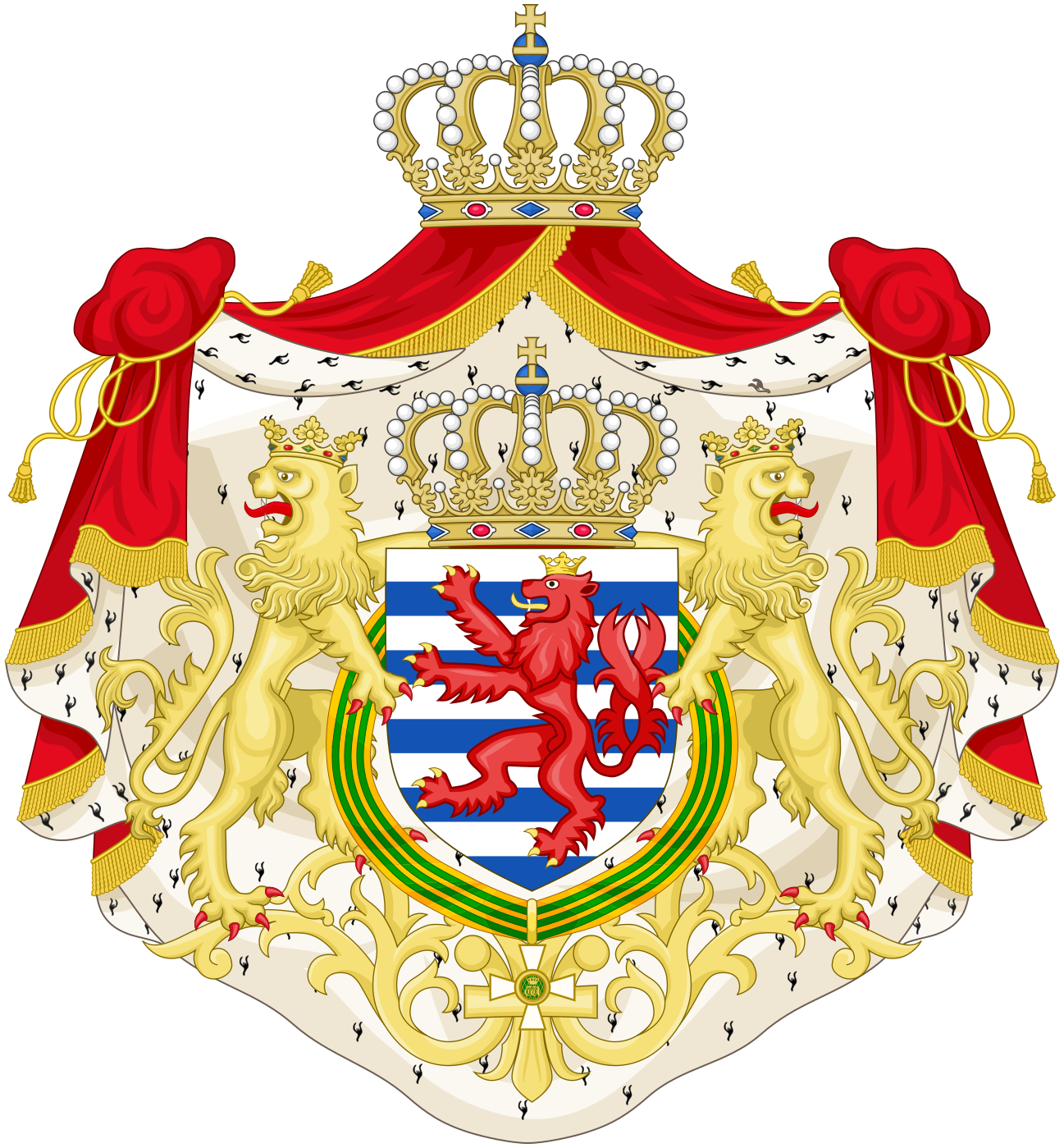
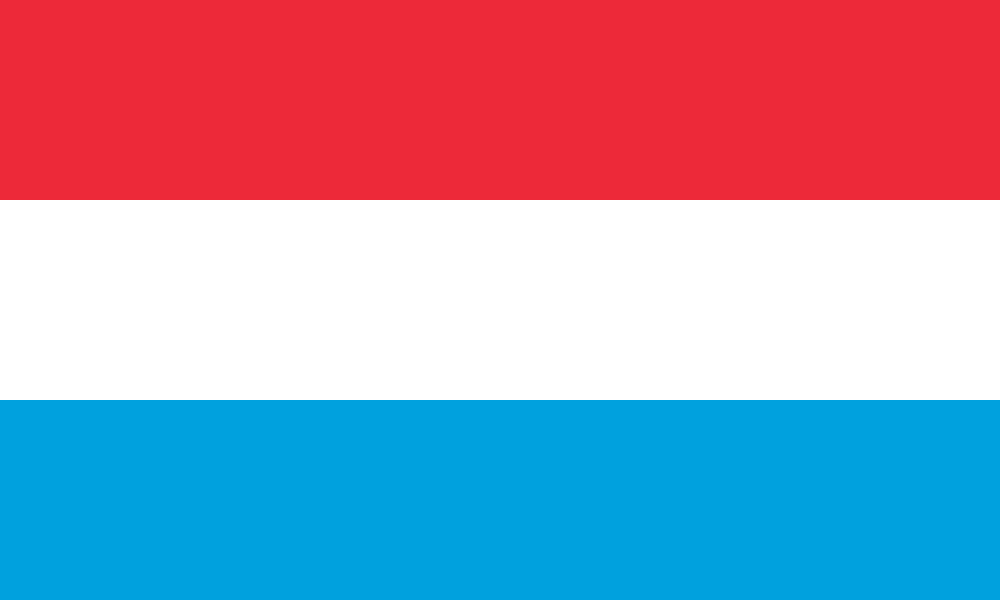
- Capital
- Luxembourg
- Population
- 681,973
- Region
Travel guide
Get around
thumb|Luxembourg central station
Luxembourg is a compact country, making it easy to reach nearly any town in the country in an hour or less by public transport. The Mobilitéit agency coordinates the country's trains and buses; their website and mobile app are both very useful for planning journeys throughout Luxembourg.
Since 29 February 2020, most public transport in Luxembourg has been free. You only need a ticket for cross-border journeys, or if you wish to travel first class on the train.
See
You may not expect it from one of the smallest countries in Europe, but The Grand Duchy of Luxembourg is a diverse land, full of beautiful nature and gorgeous historic monuments. Its turbulent history is filled with stories of emperors and counts with the surviving Luxembourg monarchy as well as many battles and disputes. Today, the almost fairy-tale like castles and fortresses are a faint but impressive reminder of those days, and amidst their lovely natural setting, they make some superb and picturesque sights.
thumb|View from the 'Grund' district in Luxembourg-city Most of the country's population lives in rural areas and apart from the delightful historic City of Luxembourg, the country's capital, settlements are mostly small. That said, the capital is a place not to be missed. It has a splendid location high on a cliff, overlooking the deep and narrow valleys of the Alzette and Pétrusse rivers. Several parts of the old town are listed as UNESCO World Heritage Sites, and the most interesting places include the Gothic Cathedral of Notre Dame, the town fortifications, and of course the Grand Ducal Palace, which is surrounded by charming cobblestoned lanes. However, there's far more to see, such as the Bock casemates, Neumünster Abbey and the Place d'Armes. There are several World War II memorial sites and a number of high-end museums, but just wandering through the old centre, taking in the beautiful views from the Chemin de la Corniche and crossing bridges to the nearest …
Do
Luxembourg has many excellent well-marked outdoor trails. Their location and GPS tracks can be found at Géoportail.lu
The Fédération Luxembourgeoise de Teqball has a list of public places for playing teqball, a sport invented in the 2010s by three Hungarians, that is a combination of table tennis and football (or soccer) played with a special curved table.
Article · Nederlands
Luxemburg, officieel het Groothertogdom Luxemburg (Luxemburgs: Groussherzogtum Lëtzebuerg, ; Frans: Grand-Duché de Luxembourg; Duits: Großherzogtum Luxemburg), is een land in het westen van Europa dat grenst aan België, Duitsland en Frankrijk. Met een oppervlakte van 2.586 km² en met iets meer dan een half miljoen inwoners is het groothertogdom op Malta na het kleinste land binnen de Europese Unie. De hoofdstad en grootste stad van het land is het gelijknamige Luxemburg. Luxemburg is een parlementaire democratie met een groothertog als constitutioneel monarch. Sinds de stichting van het graafschap Luxemburg in 963 is het land volop beïnvloed door het veel grotere Frankrijk aan de ene kant en het eveneens veel grotere Duitsland aan de andere kant, waardoor het diverse malen onderwerp van conflict is geweest. Desondanks wist het groothertogdom in 1867 zijn onafhankelijkheid te garanderen, al was het tot 1890 nog wel in personele unie met Nederland verbonden en is het in beide wereldoorlogen door Duitsland overrompeld. Sinds 1945 heeft het groothertogdom volop internationale economische, politieke en militaire samenwerking opgezocht. Zo behoort het land tot de grondleggers van de Europese Unie, de NAVO, de Verenigde Naties, de OESO en de Benelux. Deze internationale samenwerking heeft ervoor gezorgd dat Luxemburg zich heeft kunnen ontwikkelen van een voornamelijk op staalproductie gebaseerde economie tot een economie die vooral berust op internationale handel en bankwezen. Gevolg is dat het land behoort tot de welvarendste landen ter wereld, getuige een bruto binnenlands product (bbp) per hoofd van de bevolking van 104.512 Amerikaanse dollar (2009). Daarmee is Luxemburg het land met het hoogste bbp per hoofd van de bevolking volgens het Internationaal Monetair Fonds. Hoewel het een land met een betrekkelijk klein oppervlak betreft, speelt het een niet te miskennen rol in de diplomatie en met name de Europese samenwerking: onder meer was het land gastheer voor de internationale beraadslagingen die leidden tot de Verdragen van Schengen.
Abstract from DBpedia / Wikipedia · CC BY-SA
Gallery (59)
On the map
4 mapped locations
Connections
Categories
BeneluxCountries and territories where French is an official languageCountries and territories where German is an official languageCountries in EuropeDuchy of LuxembourgLandlocked countriesLow CountriesLuxembourgMember states of NATOMember states of the European UnionMember states of the Organisation internationale de la FrancophonieMember states of the Union for the Mediterranean