
Luxemburg
Also known as Grand Duchy of Luxembourg
storhertigdöme i Västeuropa
AI overview
Luxembourg is a small, landlocked country in Western Europe bordered by Belgium, Germany, and France, with its capital, Luxembourg City, serving as one of the four main seats of European Union institutions. It plays an important role in European governance, as Luxembourg City hosts key EU institutions including the Court of Justice of the European Union, which is the EU's highest court.
AI-generated from the Wikipedia summary — may contain errors.
Weather now
cached 9h ago16°broken clouds
86% 2.7 m/s OpenWeatherMap
7-day forecast
via Open-Meteo
Country
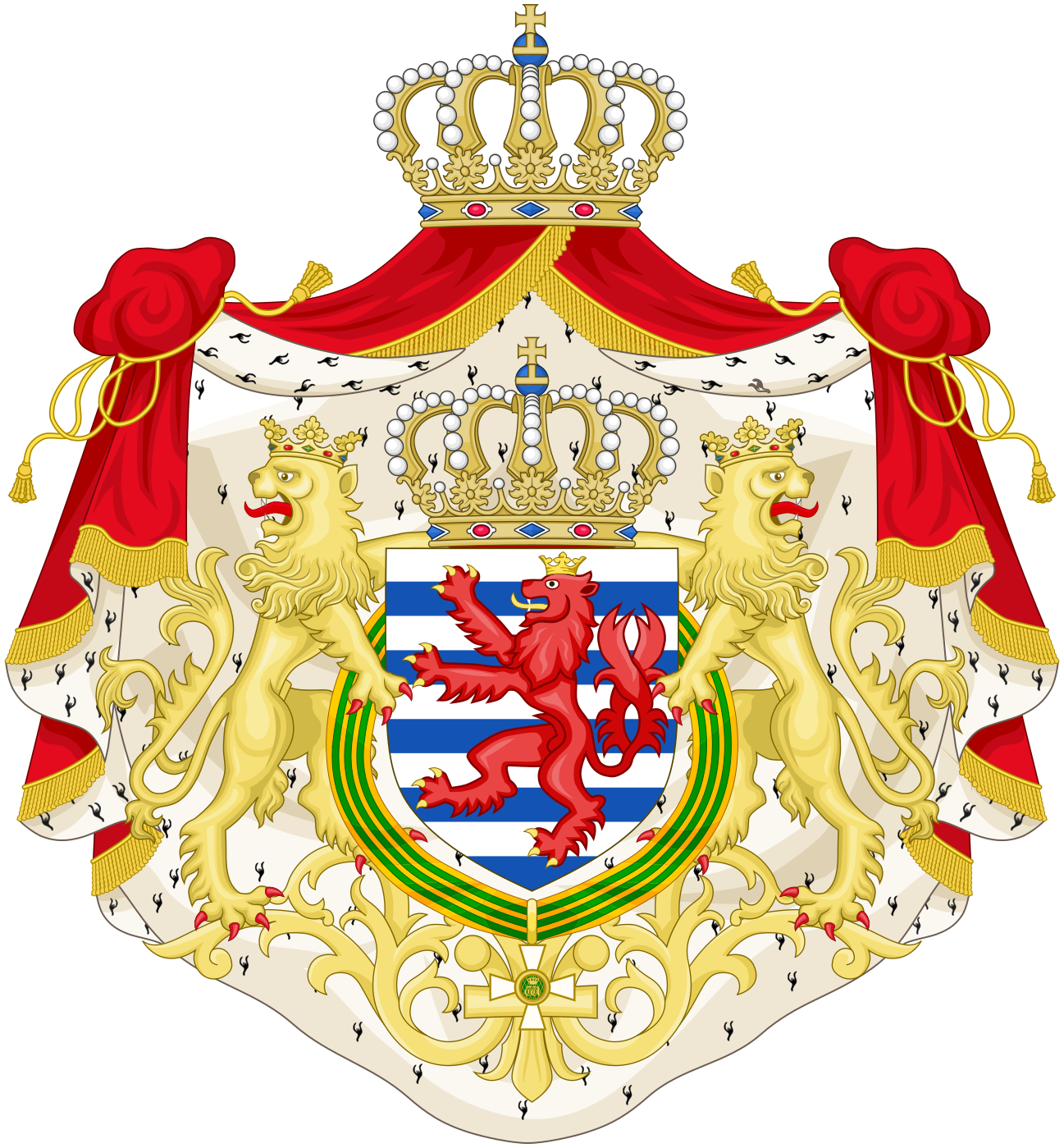
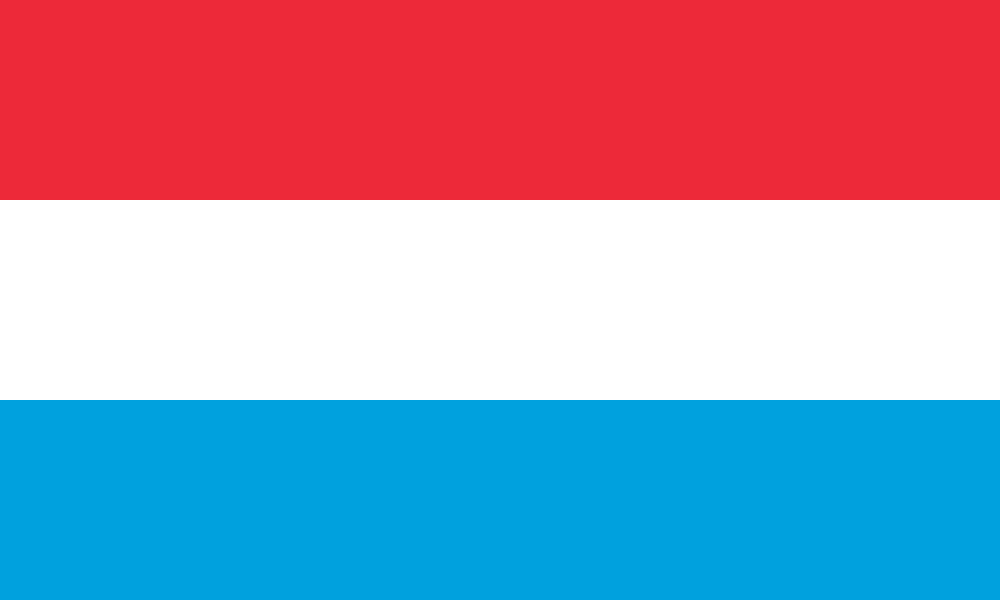
- Capital
- Luxembourg
- Population
- 681,973
- Region
Travel guide
Get around
thumb|Luxembourg central station
Luxembourg is a compact country, making it easy to reach nearly any town in the country in an hour or less by public transport. The Mobilitéit agency coordinates the country's trains and buses; their website and mobile app are both very useful for planning journeys throughout Luxembourg.
Since 29 February 2020, most public transport in Luxembourg has been free. You only need a ticket for cross-border journeys, or if you wish to travel first class on the train.
See
You may not expect it from one of the smallest countries in Europe, but The Grand Duchy of Luxembourg is a diverse land, full of beautiful nature and gorgeous historic monuments. Its turbulent history is filled with stories of emperors and counts with the surviving Luxembourg monarchy as well as many battles and disputes. Today, the almost fairy-tale like castles and fortresses are a faint but impressive reminder of those days, and amidst their lovely natural setting, they make some superb and picturesque sights.
thumb|View from the 'Grund' district in Luxembourg-city Most of the country's population lives in rural areas and apart from the delightful historic City of Luxembourg, the country's capital, settlements are mostly small. That said, the capital is a place not to be missed. It has a splendid location high on a cliff, overlooking the deep and narrow valleys of the Alzette and Pétrusse rivers. Several parts of the old town are listed as UNESCO World Heritage Sites, and the most interesting places include the Gothic Cathedral of Notre Dame, the town fortifications, and of course the Grand Ducal Palace, which is surrounded by charming cobblestoned lanes. However, there's far more to see, such as the Bock casemates, Neumünster Abbey and the Place d'Armes. There are several World War II memorial sites and a number of high-end museums, but just wandering through the old centre, taking in the beautiful views from the Chemin de la Corniche and crossing bridges to the nearest …
Do
Luxembourg has many excellent well-marked outdoor trails. Their location and GPS tracks can be found at Géoportail.lu
The Fédération Luxembourgeoise de Teqball has a list of public places for playing teqball, a sport invented in the 2010s by three Hungarians, that is a combination of table tennis and football (or soccer) played with a special curved table.
Article · Svenska
Luxemburg, officiellt Storhertigdömet Luxemburg (luxemburgiska: Groussherzogtum Lëtzebuerg, franska: Grand-Duché de Luxembourg, tyska: Großherzogtum Luxemburg), är en stat belägen i Västeuropa. Landet gränsar till Belgien i väster och norr, Tyskland i öster och Frankrike i söder. Det består av två huvudregioner: i norr, som en del av Ardennermassivet, och i söder. Luxemburg hade ett invånarantal på 590 667 den 1 januari 2017 och har en yta på 2 586 kvadratkilometer (motsvarande ett fjärdedels Skåne), vilket gör det till en av de minsta suveräna staterna i Europa och en av Europas mikrostater. Som en representativ demokrati med en konstitutionell monark leds landet av en storhertig och är världens enda kvarvarande storhertigdöme. Luxemburg är ett industriland, med en avancerad ekonomi och världens näst högsta BNP (PPP) per capita (efter Qatar), enligt Världsbanken. Dess centrala läge har historiskt gjort att det har haft stor strategisk betydelse för många makter, med anor tillbaka till grundandet som en romersk fästning, platsen för en viktig frankisk borg under tidig medeltid, och dess roll som en bastion för den spanska vägen från 1400-talet till 1600-talet. Luxemburg är medlem i Europeiska unionen, Nato, OECD, FN och Benelux, vilket speglar dess politiska konsensus till förmån för ekonomisk, politisk och militär integration. Staden Luxemburg, som är huvudstad och största stad, är säte för flera institutioner och organ inom EU. Den 18 oktober 2012 valdes Luxemburg in på en tillfällig plats i FN:s säkerhetsråd för första gången någonsin. Landet tjänstgjorde i säkerhetsrådet från den 1 januari 2013 till 31 december 2014. I enlighet med sitt geografiska läge, är Luxemburgs kultur en fusion av romanska och germanska Europa där man integrerar seder från båda två. Följaktligen är Luxemburg ett trespråkigt land: luxemburgska, franska och tyska är officiella språk. Även om det är en sekulär stat, är Luxemburg övervägande romersk-katolsk.
Abstract from DBpedia / Wikipedia · CC BY-SA
Gallery (59)
On the map
4 mapped locations
Connections
Categories
BeneluxCountries and territories where French is an official languageCountries and territories where German is an official languageCountries in EuropeDuchy of LuxembourgLandlocked countriesLow CountriesLuxembourgMember states of NATOMember states of the European UnionMember states of the Organisation internationale de la FrancophonieMember states of the Union for the Mediterranean