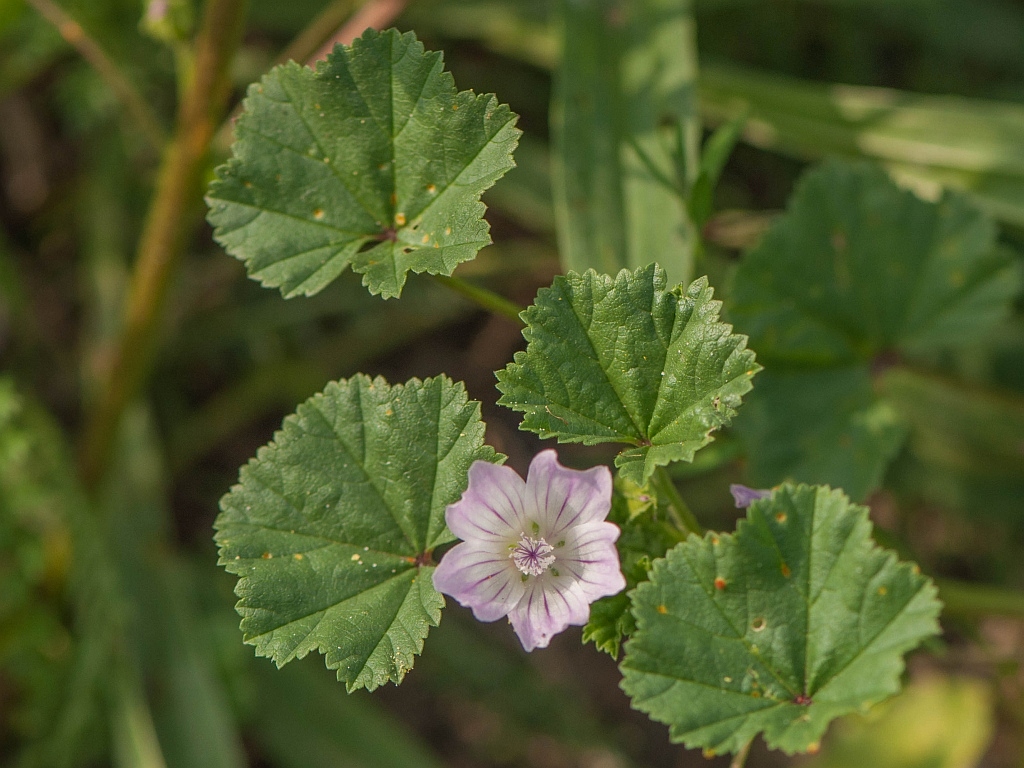
Image from GBIF · CC BY-NC
OverviewAI-generated
*Malva neglecta*, commonly known as common mallow, is a species of plant in the family Malvaceae. It belongs to the genus *Malva* within the order Malvales and the class Magnoliopsida. The species features pink flowers and green fruit. Its taxonomic range includes Xinjiang.
The International Union for Conservation of Nature assessed the species as Least Concern in 2012. Records from iDigBio document occurrences in Canada, Mexico, and the United States, with collections held by institutions such as the University of Alberta Museums, FCB-BUAP, INECOL, GH, and CICY.
Synthesized by Vinony from 32 facts across 7 sources: Wikidata, GBIF, IUCN Red List, Gbif Occ, Plants of the World, iDigBio, Vinony graph. Generated from structured data (not the Wikipedia text) and checked against those facts — may still contain errors.
Species
Least ConcernSPECIES
- KingdomPlantae
- PhylumTracheophyta
- ClassMagnoliopsida
- OrderMalvales
- FamilyMalvaceae
Die Weg-Malve (Malva neglecta) gehört zur Unterfamilie der Malvoideae innerhalb der Familie der Malvengewächse (Malvaceae) und wird auch Feld-Malve, Gemeine Malve, Gänse-Malve, Gänsepappel, Hasenpappel, Käsepappel, Käslikraut, Rosspappel oder Schwellkraut genannt. In Notzeiten wurde diese Pflanzenart als Gemüse und Mehllieferant verwendet, auch gelegentlich als Heilkraut. Wenn die Weg-Malve viel Stickstoff zur Ernährung hat, stellt sie durch die starke Anreicherung von Nitrat eine Gefahr für Tiere dar.
via GBIF · IUCN · Kew POWO
Museum specimens
- Specimen records
- 5,947
- With media
- 4,268
- Family
- Malvaceae
- Collections
- UNIVERSITY OF ALBERTA MUSEUMS, FCB-BUAP, INECOL, GH, CICY, IBUNAM
- Recorded in
- Canada, Mexico, United States
Wikidata facts
Show 10 more facts
via Wikidata · CC0
~6 min read
Encyclopedic overview
Malva neglecta is a species of plant of the family Malvaceae, native to most of the Old World except sub-Saharan Africa. It is an annual growing to 0.6 m (2 ft). It is known as common mallow in the United States and also as buttonweed, cheeseplant, cheeseweed, dwarf mallow, and roundleaf mallow. This plant is often consumed as a food, with its leaves, stalks and seed all being considered edible. This is especially true of the seeds, which contain 21% protein and 15.2% fat.
Description
Excerpted from Wikipedia’s “Malva neglecta” article, available under the CC BY-SA 4.0 licence.