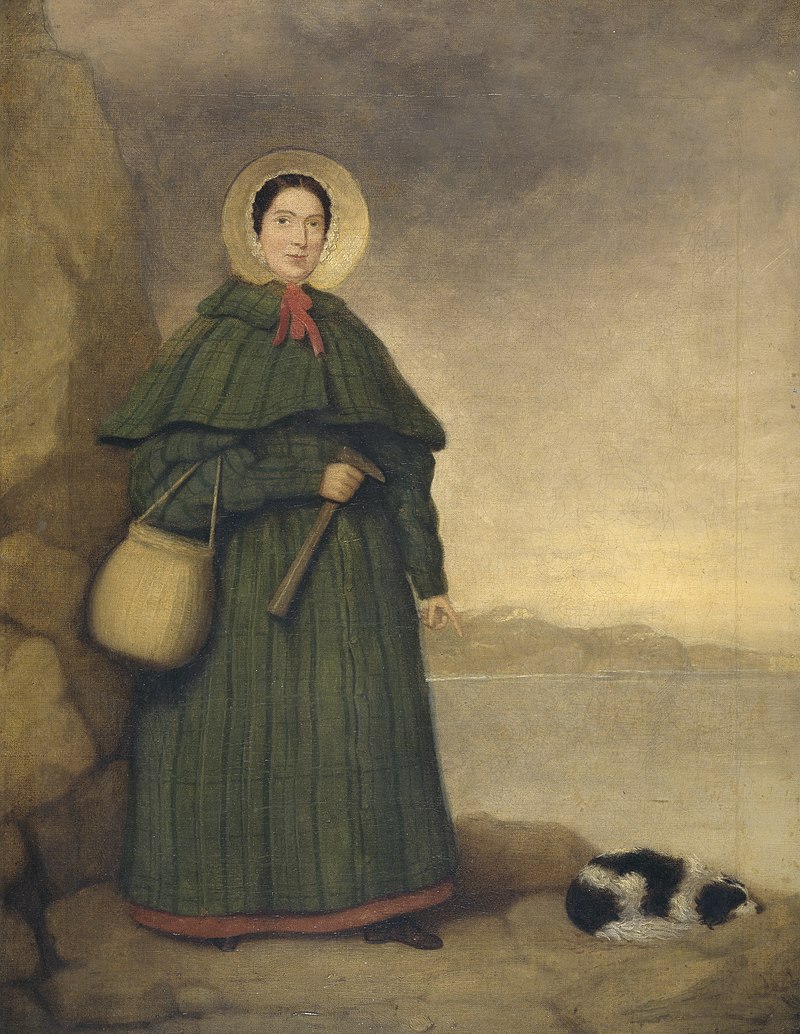
File:Mary_Anning_painting.jpg · Wikimedia Commons · See Wikimedia Commons
Mary Anning
Sign in to saveAlso known as Anning
British fossil collector and palaeontologist (1799–1847)
Mary Anning was a British fossil collector and palaeontologist who lived from 1799 to 1847 and made important discoveries that helped scientists understand prehistoric life. Her work examining and identifying fossils contributed significantly to the early development of modern paleontology during a time when few women participated in scientific fields.
AI-generated from the Wikipedia summary — may contain errors.
Wikidata facts
- Instance of
- human
- Given name
- Mary
- Gender
- female
- Citizenship
- United Kingdom of Great Britain and Ireland
- Place of birth
- Lyme Regis
- Place of death
- Lyme Regis
- Languages spoken
- English language
- Religion
- Anglicanism
- Field of work
- paleontology
- Image
- Mary Anning painting.jpg
Show 9 more facts
- Commons category
- Mary Anning
- date of birth
- 1800-00-00
- date of death
- 1843-03-12
- manner of death
- natural causes
- name in native language
- Mary Anning
- writing language
- English language
- P6944
- Mary Anning
- influenced by
- Elizabeth Philpot
- collection items at
- Natural History Museum
Sources (9)
via Wikidata · CC0
~40 min read
Encyclopedic overview
Mary Anning (21 May 1799 – 9 March 1847) was an English fossil collector, dealer, and palaeontologist. She became known internationally for her discoveries in Jurassic marine fossil beds in the cliffs along the English Channel at Lyme Regis in the county of Dorset, South West England. Anning's findings contributed to changes in scientific thinking about prehistoric life and the history of the Earth.
Anning searched for fossils in the area's Blue Lias and Charmouth Mudstone cliffs, particularly during the winter months when landslides exposed new fossils that had to be collected quickly before they were lost to the sea. Her discoveries included the first correctly identified ichthyosaur skeleton when she was twelve years old; the first two nearly complete plesiosaur skeletons; the first pterosaur skeleton located outside Germany; and fish fossils. Her observations played a key role in the discovery that coprolites, known as bezoar stones at the time, were fossilised faeces, and she also discovered that belemnite fossils contained fossilised ink sacs like those of modern cephalopods.
Excerpted from Wikipedia’s “Mary Anning” article, available under the CC BY-SA 4.0 licence.