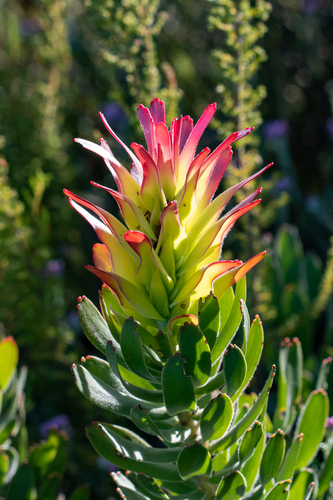
(c) magriet b, some rights reserved (CC BY-SA), uploaded by magriet b · cc-by-sa
Mimetes
Sign in to saveMimetes, the pagoda, is a genus of evergreen shrubs or small trees high, with thirteen species assigned to the family Proteaceae. This genus, as with other proteas, is popular with nectarivorous birds such as the Cape sugarbird and several sunbird species. All species of Mimetes are endemic to the Cape Floristic Region of South Africa.
Species
Common Pagoda
species
via · Kew POWO
Museum specimens
- Specimen records
- 147
- With media
- 118
- Family
- Proteaceae
- Collections
- MEL, A, UPS, ANSP, GH, NY
- Recorded in
- South Africa
Wikidata facts
- Instance of
- taxon
- Parent taxon
- Proteaceae
- Image
- Mimetes cucullata.jpg
Show 5 more facts
- topic's main category
- Category:Mimetes
- taxon name
- Mimetes
- taxon rank
- genus
- Commons category
- Mimetes
Sources (1)
via Wikidata · CC0
~14 min read
Encyclopedic overview
14 sectionsContents
- Description
- Inflorescence and flower heads
- Flower
- Taxonomy
- Phylogeny
- Naming
- Species
- Hybrids
- Reassigned species
- Unassigned names
- Distribution
- Ecology
- Conservation
- References
Mimetes, the pagoda, is a genus of evergreen shrubs or small trees high, with thirteen species assigned to the family Proteaceae. This genus, as with other proteas, is popular with nectarivorous birds such as the Cape sugarbird and several sunbird species. All species of Mimetes are endemic to the Cape Floristic Region of South Africa.
== Description == The thirteen species currently assigned to the genus Mimetes are evergreen, low shrubs to small trees of high. Its leaves lack stipules, are set alternately along the branches, without a leaf stalk, at an upward angle or more or less overlapping, long inverted egg-shaped, oval or long diamond-shaped, long and wide, with an entire margin, thickened at the tip and often with mostly three teeth clustered close together. After the flower heads in the axils of the leaves have been shed, the dormant growing tip is activated and produces the next inflorescence. It has twelve homologous sets of chromosomes (2n=24).
Excerpted from Wikipedia’s “Mimetes” article, available under the CC BY-SA 4.0 licence.