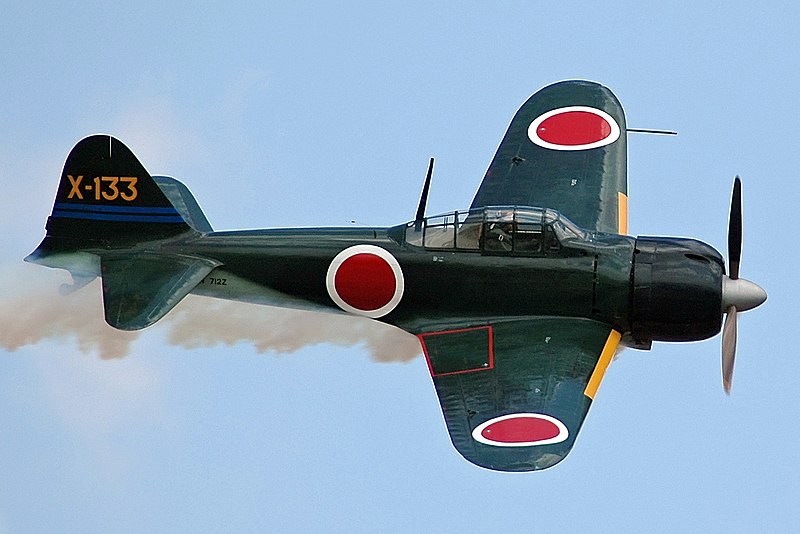
File:A6M3_Zero_N712Z_1.jpg · Wikimedia Commons · See Wikimedia Commons
Mitsubishi A6M Zero
Sign in to saveAlso known as Navy Type 0 Carrier Fighter, Zero, Type 0, Reisen, Zeke, Mitsubishi Carrier Fighter Design 6, A6M Reisen, Mitsubishi Navy 12-shi Carrier Fighter
Japanese fighter aircraft
The Mitsubishi A6M Zero was a Japanese fighter plane used during World War II that was known for its exceptional maneuverability and range. It played a significant role in Japan's early military campaigns in the Pacific, though it eventually became outmatched as Allied aircraft technology advanced.
AI-generated from the Wikipedia summary — may contain errors.
Wikidata facts
- Country
- Japan
- Developer
- Mitsubishi
- Manufacturer
- Mitsubishi Heavy Industries
- Designed by
- Jiro Horikoshi
- Conflict
- World War II
- Image
- Mitsubishi A6M Zero Replica.jpg
Show 10 more facts
- exhibition history
- National Museum of Nature and Science
- armament
- Type 99
- total produced
- 11000
- Commons category
- Mitsubishi A6M Zero
- Commons gallery
- Mitsubishi A6M Zero
- military designation
- Zeke
- first flight
- 1939-04-01
- powered by
- Nakajima Sakae
- service entry
- 1940-00-00
- service retirement
- 1945-00-00
Sources (8)
via Wikidata · CC0
~40 min read
Encyclopedic overview
The Mitsubishi A6M "Zero" is a long-range carrier-capable fighter aircraft that was manufactured by Mitsubishi Aircraft Company, which was part of Mitsubishi Heavy Industries. It was operated by the Imperial Japanese Navy (IJN) from 1940 to 1945. The A6M was designated as the Mitsubishi Navy Type 0 carrier fighter (零式艦上戦闘機, rei-shiki-kanjō-sentōki), or the Mitsubishi A6M Rei-sen. The A6M was usually referred to by its pilots as the Reisen (零戦, zero fighter), "0" being the last digit of the imperial year 2600 (1940) when it entered service with the IJN. The official Allied reporting name was "Zeke", although the name "Zero" was used more commonly.
The Zero is considered to have been the most capable carrier-based fighter in the world when it was introduced early in World War II, combining excellent maneuverability, high airspeed, strong firepower and very long range. The Imperial Japanese Navy Air Service also frequently used it as a land-based fighter.
Excerpted from Wikipedia’s “Mitsubishi A6M Zero” article, available under the CC BY-SA 4.0 licence.