morin khuur
Sign in to saveAlso known as Mongolian horse-head fiddle, khil-khuur, ma tʻou chʻin, matou qin, matouqin, hur, traditional music of the Morin Khuur
musical instrument
Described at
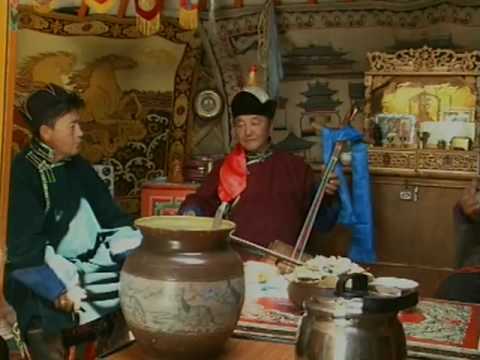
Traditional music of the Morin Khuur - UNESCO Intangible Cultural Heritage
ich.unesco.org →The two-stringed fiddle morin khuur has figured prominently in Mongolia’s nomad culture. String instruments adorned with horse heads are attested to by written sources dating from the Mongol empire of the thirteenth and fourteenth centuries. The fiddle’s significance extends beyond its function as a musical instrument, for it was traditionally an integral part of rituals and everyday activities of the Mongolian nomads. The design of the morin khuur is closely linked to the all-important cult of the horse. The instrument’s hollow trapezoid-shaped body is attached to a long fretless neck bearing a carved horse head at its extremity. Just below the head, two tuning pegs jut out like ears from either side of the neck. The soundboard is covered with animal skin, and the strings and bow are made of horsehair. The instrument’s characteristic sound is produced by sliding or stroking the bow against the two strings. Common techniques include multiple stroking by the right hand and a variety of left-hand fingering. It is mainly played in solo fashion but sometimes accompanies dances, long songs (urtiin duu), mythical tales, ceremonies and everyday tasks related to horses. To this day, the morin khuur repertory has retained some tunes (tatlaga) specifically intended to tame animals. Owing to the simultaneous presence of a main tone and overtones, morin khuur music has always been difficult to transcribe using standard notation. It has been transmitted orally from master to apprentice for many generations. Over the past forty years, most Mongolians have settled in urban centres, far from the morin khuur’s historical and spiritual context. Moreover, the tuning of the instrument is often adapted to the technical requirements of stage performance, resulting in higher and louder sounds that erase many timbral subtleties. Fortunately, surviving herding communities in southern Mongolia have managed to preserve many aspects of morin khuur playing along with related rituals and customs. 1. Performing arts (411) 2. Social practices, rituals and festive events (584) 3. Traditional craftsmanship (460)
Excerpt from a page describing this subject · 10,629 chars · not written by Vinony
Wikidata facts
- Instance of
- music genre
- Country of origin
- Mongolia
- Image
- Mongolian horse violin.JPG
Show 6 more facts
- uses
- engraving
- different from
- igil
- Commons category
- Morin khuur
- Hornbostel-Sachs classification
- 321.322-71
- described at URL
- ich.unesco.org/es/RL/00068
- intangible cultural heritage status
- Masterpieces of the Oral and Intangible Heritage of Humanity
Sources (1)
via Wikidata · CC0