
Mozambique
Also known as Moçambique, República de Moçambique, MZ, MOZ, mz, Republic of Mozambique
país de África
AI overview
Mozambique is a Southeast African country bordered by the Indian Ocean and several neighboring nations, with Maputo as its capital and largest city. It is strategically located on the continent's eastern coast and is separated from island nations like Madagascar and Comoros by the Mozambique Channel.
AI-generated from the Wikipedia summary — may contain errors.
Weather now
cached 1h ago20°clear sky
75% 1.1 m/s OpenWeatherMap
7-day forecast
via Open-Meteo
Country
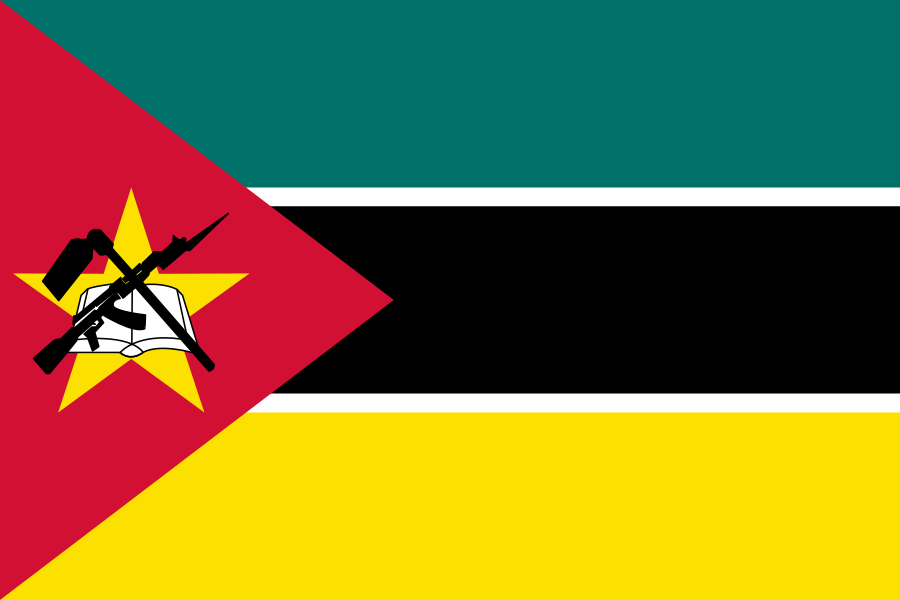
- Capital
- Maputo
- Population
- 34,090,466
- Region
Travel guide
Get in
As it is impossible to exchange meticais outside of Mozambique it is advisable to change a small amount of currency if arriving at a land border in mid to late afternoon to cover taxis and meals for the first night, currency exchanges generally close at 18:00 and due to sporadic ATM failures access to currency is by no means guaranteed out of hours. When accepted by merchants foreign currency has an extremely poor exchange rate.
See
thumb|Maputo Ilha de Mozambique, i.e. Mozambique Island is the only UNESCO World Heritage Site in Mozambique. The island boasts colonial architecture including probably the oldest European building in the Southern Hemisphere and beaches. The historic town of Inhambane. Sites from the civil war all over the country and the Museum of Revolution in Maputo to learn more about recent events in the country's history Wildlife and nature in Gorongosa National Park.
Do
Dive, see Diving in Mozambique for details. Tours and Safaris, a number of tour operators can help you reach Mozambique's highlights. The most reputable as per guide books Lonely Planet and Bradt are Mozaic Travel and Dana Tours in the south, and Kaskazini in the north.
Eat
thumb|Lobsters! As a country the Portuguese occupation has a profound impact on local foods that has produced some of the most unique and interesting cuisine within Southern Africa. Towards the coast a great deal of seafood is used within even the most basic of dishes, however, in land the maize based partridges common throughout Africa becomes staple but with some Portuguese flair.
Piri-Piri, also known as the African bird's-eye chili this extremely strong chili is common in sauce form throughout the country. Pãozinho , also known as Portuguese rolls or Prego (beef) no pão and bifana (fried pork) . A floury and often semi-sweet bread roll, typically served with meat in the center. Matapa, a seafood (clam, crab or prawn) stew made with cassava leaves and generally served over rice. This is one of the Mozambique staples. Camarão National, are Mozambican prawns marinaded in a Piri-Piri, garlic, onion, lemon and vinegar. Cray fish and other seafood. These are caught off the beach throughout the country and will generally be prepared with a piri-piri marinade, served with rice and matapa. Kakana This is a bitter tasting local vegetable.
Drink
All tap water in Mozambique should be assumed to be unsafe to drink, even if it is not harmful it usually has some sediment that your stomach will not be used to. Most western oriented lodgings either provide a fresh water source or sell bottled water.
Article · Español
Mozambique, oficialmente la República de Mozambique (en portugués, República de Moçambique), es un país situado al sureste de África, a orillas del océano Índico. Limita al norte con Tanzania y Malaui, al noroeste con Zambia, al oeste con Zimbabue, al suroeste con Suazilandia, al sur y al suroeste con Sudáfrica y al este con el océano Índico, donde colinda marítimamente con Madagascar, Comoras y los territorios franceses de Isla Europa, Juan de Nova y Bassas da India. El origen de su nombre es Msumbiji, el puerto suajili en la Isla de Mozambique. Su territorio está conformado por once provincias, divididas en ciento veintiocho distritos. Su capital y ciudad más poblada es Maputo. Entre los siglos I y V, pueblos bantúes emigraron al actual Mozambique desde el norte y el oeste. Entre los siglos VII y XI, se desarrollaron ciudades portuarias suajili, que contribuyeron al desarrollo de una cultura e idioma suajili propios. A finales de la Edad Media, estas ciudades fueron frecuentadas por mercaderes de Somalia, Etiopía, Egipto, Arabia, Persia e India. Vasco da Gama exploró sus costas en 1498 y Portugal lo colonizó en 1505. Mozambique consiguió la independencia en 1975, convirtiéndose poco después en la República Popular de Mozambique. El país fue escenario de una guerra civil que duró desde 1977 hasta 1992, dejando dos millones de minas terrestres todavía activas.[cita requerida] En 1994, Mozambique celebró sus primeras elecciones multipartidistas y desde entonces se ha mantenido como una república presidencial relativamente estable, aunque a la fecha enfrenta una insurgencia de baja intensidad. El país es uno de los países más pobres del mundo, ocupando un lugar bajo en PIB per cápita, índice de desarrollo humano, medidas de desigualdad y esperanza de vida, sin embargo, desde el final de la guerra civil, su calidad de vida ha mejorado notablemente. Desde 2001, el crecimiento económico de Mozambique se ha encontrado entre los más altos del mundo. La economía del país se basa principalmente en la agricultura, con un creciente sector turístico e industrial, centrado principalmente en alimentos y bebidas, fabricación de productos químicos y la producción de aluminio y petróleo. Su idioma oficial es el portugués, que es hablado principalmente como segundo idioma por aproximadamente la mitad de la población. Idiomas nativos comunes incluyen makua, makonde y suajili. Más del 99 % de la población de 31 millones es bantú, y su principal religión es el cristianismo, con minorías significativas que siguen el islam y religiones tradicionales africanas. El país es miembro de la Comunidad de Países de Lengua Portuguesa, la Unión Africana y la Mancomunidad de Naciones, siendo considerado como observador de la Francofonía.
Abstract from DBpedia / Wikipedia · CC BY-SA
Gallery (59)
On the map
6 mapped locations
Connections
Categories
1975 establishments in Africa1975 establishments in MozambiqueCountries and territories where Portuguese is an official languageCountries and territories where Swahili is an official languageCountries in AfricaCountries in East AfricaCountries in Southern AfricaFormer Portuguese coloniesLeast developed countriesMember states of the African UnionMember states of the Commonwealth of Nations