File:Mosto.jpg · Wikimedia Commons · See Wikimedia Commons
must
Also known as grape juice
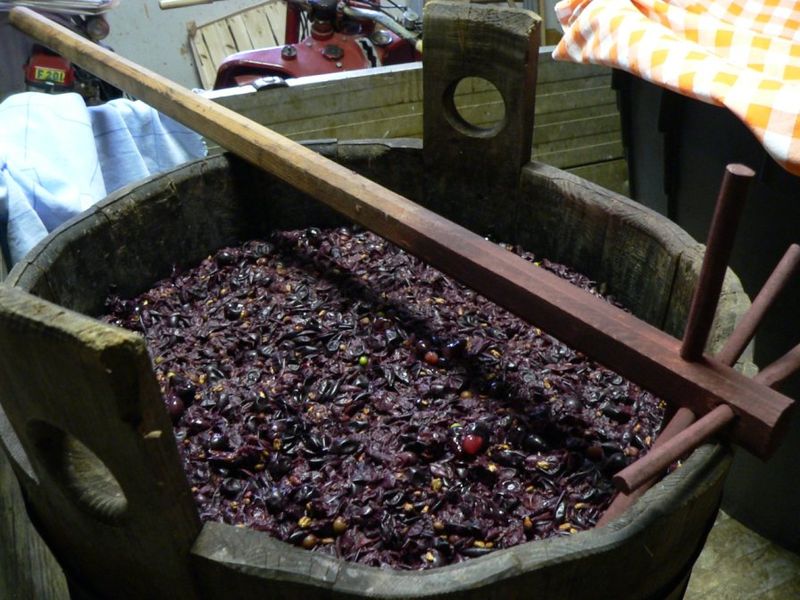
thumb|300px|Grapes being pressed to create must Must is freshly crushed fruit juice (usually grape juice) that contains the skins, seeds, and stems of the fruit. The solid portion of the must is called pomace and typically makes up 7–23% of the total weight of the must. Making must is the first step in winemaking. Because of its high glucose content, typically between 10 and 15%, must is also used as a sweetener in a variety of cuisines. Unlike commercially sold grape juice, which is filtered and pasteurized, must is thick with particulate matter, opaque, and comes in various shades of brown a
Wikidata facts
- Image
- Must.jpg
Show 3 more facts
- Commons category
- Must
- hashtag
- must
- exact match
- purl.obolibrary.org/obo/ENVO_00003899
Sources (1)
via Wikidata · CC0
~10 min read
Article
13 sectionsContents
- Winemaking
- Balsamico
- Mead
- In cookery
- Roman lead poisoning hypothesis
- Regional traditions
- Spain
- In Christian liturgy
- Liturgical norms
- See also
- References
- Further reading
- External links
thumb|300px|Grapes being pressed to create must Must is freshly crushed fruit juice (usually grape juice) that contains the skins, seeds, and stems of the fruit. The solid portion of the must is called pomace and typically makes up 7–23% of the total weight of the must. Making must is the first step in winemaking. Because of its high glucose content, typically between 10 and 15%, must is also used as a sweetener in a variety of cuisines. Unlike commercially sold grape juice, which is filtered and pasteurized, must is thick with particulate matter, opaque, and comes in various shades of brown and purple. The name comes from the Latin vinum mustum; .
==Winemaking== The length of time the pomace stays in the juice is critical for the final character of the wine. When the winemaker judges the time to be right, the juice is drained off the pomace, which is then pressed to extract the juice retained by the matrix. Yeast is added to the juice to begin the fermentation, while the pomace is often returned to the vineyard or orchard for use as fertilizer. A portion of selected unfermented must may be kept as Süssreserve, to be added as a sweetening component before bottling. Some winemakers create a second batch of wine from the used pomace by adding a quantity of water equivalent to the juice removed, letting the mixture sit for 24 hours, and draining off the liquid. This wine may be used as a drink for the employees of the winemaker or as a basis for some pomace brandies. Grappa, however, must by law be produced only from the pomace solids, with no water added.