File:GHS-pictogram-silhouette.svg · Wikimedia Commons · See Wikimedia Commons
mutagen
Sign in to saveAlso known as Genotoxins, mutagens
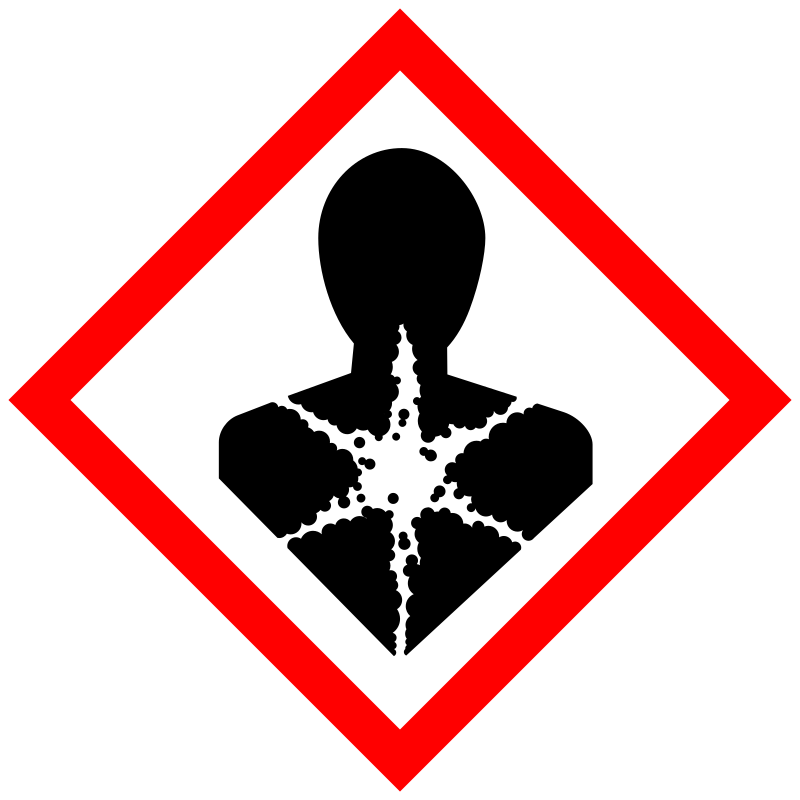
thumb|The Globally Harmonized System of Classification and Labeling of Chemicals|international pictogram for chemicals that are sensitising, mutagenic, [[carcinogenic or toxic to reproduction]]
Research
158,007 papers- Is fluoride a mutagen?The Science of the total environment · 1988
- Origins of current uncertainties in carcinogen/mutagen screening.Environmental and molecular mutagenesis · 1989
- Mutagen Synergy: Hypermutability Generated by Specific Pairs of Base Analogs.Journal of bacteriology · 2016
- Unequivocal demonstration that malondialdehyde is a mutagen.Carcinogenesis · 1983
- Mutagen formation during the cooking of fish.Cancer letters · 1981
via PubMed
Wikidata facts
Show 3 more facts
- topic's main category
- Category:Mutagens
- Commons category
- Mutagens
- has effect
- mutation
Sources (3)
via Wikidata · CC0
~25 min read
Encyclopedic overview
26 sectionsContents
- Discovery
- Difference between mutagens and carcinogens
- Difference between mutagens and DNA damaging agents
- Effects
- Types of Mutagens
- Physical mutagens
- Chemical mutagens
- Directly acting chemical mutagens
- Indirectly acting chemical mutagens
- Base analogs
- Intercalating agents
- Metals
- Biological agents
- Protection
- Test systems
- Bacterial
- Yeast
- ''Drosophila''
- Plant assays
- Cell culture assay
- Chromosome check systems
- Animal test systems
- In anti-cancer therapy
- In fiction
- See also
- References
thumb|The Globally Harmonized System of Classification and Labeling of Chemicals|international pictogram for chemicals that are sensitising, mutagenic, [[carcinogenic or toxic to reproduction]]
In genetics, a mutagen is a physical or chemical agent that permanently changes genetic material, usually DNA, in an organism and thus increases the frequency of mutations above the natural background level. As many mutations can cause cancer in animals, such mutagens can therefore be carcinogens, although not all necessarily are. All mutagens have characteristic mutational signatures with some chemicals becoming mutagenic through cellular processes.
Excerpted from Wikipedia’s “mutagen” article, available under the CC BY-SA 4.0 licence.