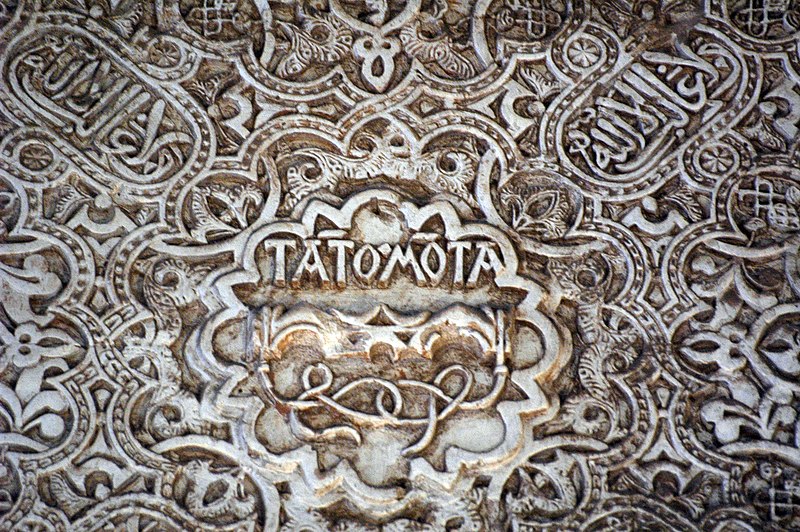
File:Alhambra_Tato_mota.jpg · Wikimedia Commons · See Wikimedia Commons
letra del alfabeto castellano, gallego y de otras lenguas
The letter Ñ (ñ) is a character in the extended Latin alphabet created by placing a wavy line called a tilde above the letter N, and it originated in medieval Spain as a shorthand way to write certain letter combinations before becoming an official part of the Spanish alphabet in the 1700s. Today it remains an important part of Spanish spelling and is used in words like "niño" (child) and "mañana" (tomorrow).
AI-generated from the Wikipedia summary — may contain errors.
Key facts
- Grapheme.name
- Eñe
- Grapheme.letter
- Ñ ñ
- Grapheme.script
- Latin script
- Grapheme.type
- Alphabet
- Grapheme.typedesc
- ic
- Grapheme.language
- Spanish language
- Grapheme.phonemes
- [] []
- Grapheme.unicode
- U+00D1, U+00F1
- Grapheme.alphanumber
- 15
- Grapheme.fam1
- I10
- Grapheme.fam2
- class=skin-invert-image|20px|Proto-Sinaitic Nun
- Grapheme.fam3
- class=skin-invert-image|20px|Proto-Caanite Nun
- Grapheme.fam4
- class=skin-invert-image|20px|Phoenician Nun
- Grapheme.fam5
- class=skin-invert-image|20px
- Grapheme.fam6
- class=skin-invert-image|20px|Early Greek Ny
- Grapheme.fam7
- Ν ν
- Grapheme.fam8
- 𐌍
- Grapheme.fam9
- N
via Wikipedia infobox
Wikidata facts
- Part of
- Spanish alphabet
- Has part
- tilde
- Image
- Latin Ñ.svg
Show 5 more facts
- different from
- N
- Commons gallery
- Ñ
- Commons category
- Ñ
- Unicode character
- ñ
- code
- --.--
Sources (2)
via Wikidata · CC0
Article · Español
La ñ (en mayúscula Ñ, nombre eñe, plural eñes) es la decimoquinta letra y la duodécima consonante del alfabeto español donde representa una consonante nasal palatal. La ñ está también presente en los alfabetos de otros idiomas relacionados históricamente con el español como asturiano, gallego, aimara, bubi, chamorro, gacería, guaraní, papiamento, quechua o filipino y por conveniencia en algunos que no lo están como el tártaro de Crimea, wólof, bretón, mapudungun o algunas lenguas aborígenes australianas y muchas otras lenguas en todos los continentes. A veces, toma la forma de .
Abstract from DBpedia / Wikipedia · CC BY-SA