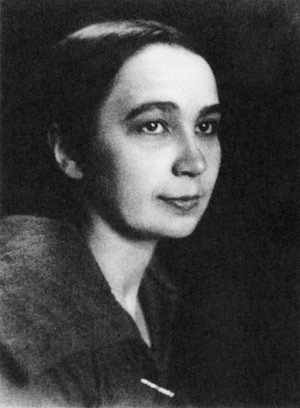
File:Natalia_Sergeyevna_Goncharova.jpg · Wikimedia Commons · See Wikimedia Commons
Natalia Goncharova
Sign in to saveAlso known as Natalya Sergeevna Goncharova, Natalija Gončarova, Natal'ya Sergeyevna Goncharova, Natalja Goncjarowa, Natalja Gontscharowa, Natal'ya Goncharova, Natalia Gontcharova, Natalija Sergeevna Gončarova
Russian-French artist (1881–1962)
OverviewAI-generated
Natalia Goncharova was a Russian painter, scenographer, costume designer, and illustrator. Born in 1881, she studied at the Moscow School of Painting, Sculpture and Architecture. Her artistic career began in 1901, and she worked within the Rayonism and Futurism movements. She was a member of the artistic groups The Blue Rider and Jack of Diamonds.
Goncharova lived in Tula, Moscow, and Paris, eventually becoming a citizen of the Russian Empire, France, and Russia. She was married to Mikhail Larionov and spoke French and Russian. Her works are held in the collections of the Museo Nacional Centro de Arte Reina Sofía, the Minneapolis Institute of Art, the Thyssen-Bornemisza Museum, and the Museum of Modern Art.
She died in Paris on October 17, 1962, and is buried at the Cimetière parisien d'Ivry. Her archives are kept at the Bibliothèque Kandinsky. She is described in the source Great Women Masters of Art.
Synthesized by Vinony from 31 facts across 5 sources: Wikidata, Open Library, Firecrawl, Europeana Sparql, TMDb. Generated from structured data (not the Wikipedia text) and checked against those facts — may still contain errors.
Person · Open Library
- Works
- 2
Top works
- Natalia Goncharova
via Open Library + Wikidata
Film & TV
Known for
- Joy Womack: The White Swan — self2021
via TMDB
Key facts
- Born
- Natalia Sergeevna Goncharova , ( 1881-07-03 ) 3 July 1881, Nagaevo, Tula Governorate , Russian Empire
- Died
- 17 October 1962 (1962-10-17) (aged 81), Paris, France
- Resting place
- Ivry Cemetery , Ivry-sur-Seine , France
- Education
- Moscow Institute of Painting, Sculpture and Architecture
- Known for
- Painting, costume design , writer, illustrator , set designer
- Movement
- Russian Futurism , Rayonism , Primitivism
via Wikipedia infobox
Described at
Geen toegang | Modemuze
modemuze.nl →Link to a page describing this subject · 5,478 chars · not written by Vinony
Wikidata facts
- Instance of
- human
- Given name
- Nathalie
- Gender
- female
- Citizenship
- Russia
- Place of death
- Paris
- Spouse
- Mikhail Larionov
- Languages spoken
- Russian
- Genre
- Rayonism
- Movement
- Futurism
- Image
- Natalia Sergeyevna Goncharova.jpg
- Residence
- Paris
Show 13 more facts
- Commons category
- Natalia Goncharova
- date of death
- 1962-10-17
- Commons Creator page
- Natalia Goncharova
- Commons gallery
- Natalia Goncharova
- date of birth
- 1881-06-16
- place of burial
- Cimetière parisien d'Ivry
- member of
- Jack of Diamonds
- archives at
- Bibliothèque Kandinsky
- birth name
- Наталья Сергеевна Гончарова
- catalog code
- 151
- start of work period
- 1901-01-01
- end of work period
- 1962-01-01
Sources (8)
via Wikidata · CC0
Works in European collections
10 objects attributed to Natalia Goncharova, held across European museums, libraries & archives · via Europeana
Mystical pictures of war, made of folder with 14 autolithographies
Mystical pictures of war, made of folder with 14 autolithographies
Mystical pictures of war, made of folder with 14 autolithographies
Mystical pictures of war, made of folder with 14 autolithographies
Mystical pictures of war, made of folder with 14 autolithographies
Mystical pictures of war, made of folder with 14 autolithographies
Mystical pictures of war, made of folder with 14 autolithographies
Mystical pictures of war, made of folder with 14 autolithographies
Mystical pictures of war, made of folder with 14 autolithographies
Mystical pictures of war, made of folder with 14 autolithographies
~15 min read
Encyclopedic overview
Natalia Sergeevna Goncharova (Russian: Ната́лья Серге́евна Гончаро́ва, IPA: [nɐˈtalʲjə sʲɪrˈɡʲe(j)ɪvnə ɡənʲtɕɪˈrovə]; 3 July 1881 – 17 October 1962) was a Russian avant-garde artist, painter, costume designer, writer, illustrator, and set designer. Goncharova's lifelong partner was fellow Russian avant-garde artist Mikhail Larionov. She was a founding member of both the Jack of Diamonds (1909–1911), Moscow's first radical independent exhibiting group, the more radical Donkey's Tail (1912–1913), and with Larionov invented Rayonism (1912–1914). She was also a member of the German-based art movement Der Blaue Reiter. Born in Russia, she moved to Paris in 1921 and lived there until her death.
Her painting vastly influenced the avant-garde in Russia. Her exhibitions held in Moscow and St Petersburg (1913 and 1914) were the first promoting a "new" artist by an independent gallery. When it came to the pre-revolutionary period in Russia, where decorative painting and icons were a secure profession, her modern approach to rendering icons was both transgressive and problematic. She was one of the leading figures in the avant-garde in Russia and carried this influence with her to Paris.
Excerpted from Wikipedia’s “Natalia Goncharova” article, available under the CC BY-SA 4.0 licence.