File:Planisphæri_cœleste.jpg · Wikimedia Commons · See Wikimedia Commons
natural philosophy
Sign in to saveAlso known as philosophy of nature
ancient philosophical study of nature and physical universe that was dominant before the development of modern science. It is considered to be the precursor of natural science
Natural philosophy was the ancient study of nature and the physical universe that people pursued before modern science developed. It matters because it laid the groundwork for natural science, making it the foundational predecessor to how we investigate the natural world today.
AI-generated from the Wikipedia summary — may contain errors.
Wikidata facts
- Instance of
- branch of science
- Subclass of
- philosophy
- Image
- NewtonsPrincipia.jpg
Show 4 more facts
- Commons category
- Natural philosophy
- replaced by
- natural science
- topic's main category
- Category:Natural philosophy
- described by source
- Granat Encyclopedic Dictionary
via Wikidata · CC0
~26 min read
Encyclopedic overview
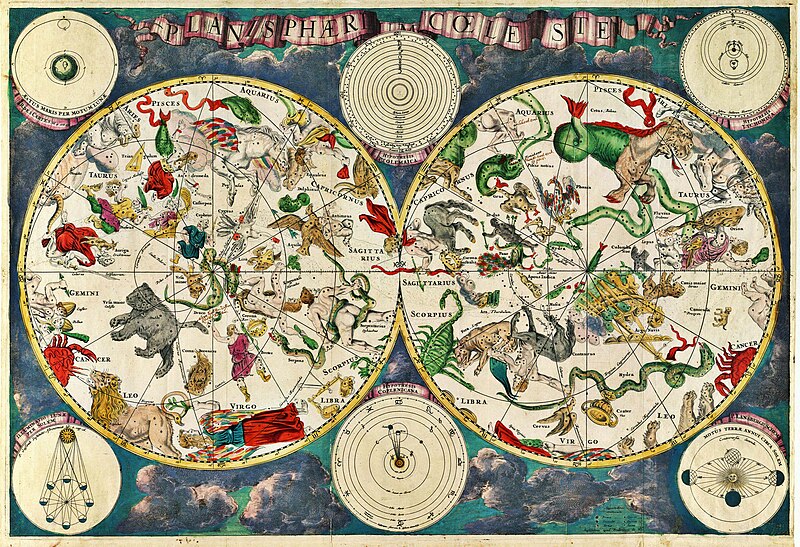
A celestial map from the 17th century, by the Dutch cartographer Frederik de Wit
Natural philosophy, philosophy of nature (from Latin philosophia naturalis), or experimental philosophy, until the late modern period, was the systematic and research-based study of nature and the physical universe, while ignoring any supernatural influence. Used since at least Aristotle (classical antiquity) until the 19th century, the term natural philosophy referred to a branch of philosophy—a broader term then, meaning all rational fields of study and contemplation—that explored topics now considered to fall under the purview of science, such as physics, biology, chemistry, and astronomy. Thus, natural philosophy served as the precursor to, and has been mostly supplanted by, modern science.
Excerpted from Wikipedia’s “natural philosophy” article, available under the CC BY-SA 4.0 licence.
Available in 62 languages
- Español
- Français
- Deutsch
- 中文
- 日本語
- Русский
- Português
- Italiano
- العربية
- हिन्दी
- Afrikaans
- Albanian
- Armenian
- Azerbaijani
- Bahasa Indonesia
- Bangla
- Basque
- Belarusian
Show 43 more
- Bulgarian
- Catalan
- Central Kurdish
- Czech
- Danish
- Esperanto
- Estonian
- Fijian
- Finnish
- Galician
- Georgian
- Greek
- Hebrew
- Hungarian
- hyw
- Kazakh
- Kyrgyz
- Latvian
- Mingrelian
- mnw
- Nederlands
- Norwegian
- Pashto
- Polski
- Romanian
- Serbian
- Serbian (Latin)
- simple
- Sindhi
- Sinhala
- Slovak
- Svenska
- Tamil
- Tiếng Việt
- Türkçe
- Ukrainian
- Urdu
- Uzbek
- zh_min_nan
- zh_yue
- فارسی
- ไทย
- 한국어
via Wikidata sitelinks · CC0