File:Fleet_5_nations.jpg · Wikimedia Commons · See Wikimedia Commons
naval fleet
Sign in to saveAlso known as navy fleet, fleet, maritime fleet, military maritime fleet
large formation of warships within a navy
A naval fleet is a large group of warships organized together as part of a country's navy. Fleets matter because they allow nations to project military power across oceans, protect shipping routes, and maintain strategic presence in distant waters.
AI-generated from the Wikipedia summary — may contain errors.
Wikidata facts
- Part of
- navy
- Has part
- Naval division
Show 2 more facts
- Commons category
- Fleets
- topic's main category
- Category:Naval fleets
Sources (1)
via Wikidata · CC0
~8 min read
Encyclopedic overview
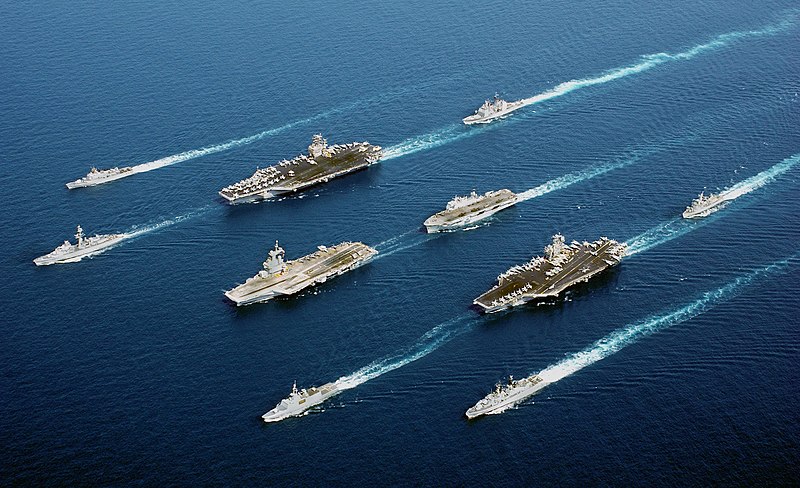
A rare occurrence of a 5-country multinational fleet, during Operation Enduring Freedom in the Oman Sea. In four descending columns, from left to right: Maestrale, De Grasse; USS John C. Stennis, Charles de Gaulle, Surcouf; USS Port Royal, HMS Ocean, USS John F. Kennedy, HNLMS Van Amstel ; and Luigi Durand de la PenneA naval fleet is the largest operational formation of warships in a navy, typically under a single command and organized for strategic missions. While modern fleets are permanent, multi-role forces (e.g., carrier strike groups), historical fleets were often ad hoc assemblies for specific campaigns. The term "fleet" can also synonymously refer to a nation’s entire navy, particularly in smaller maritime forces.
Fleets have shaped geopolitics since antiquity—from the trireme fleets of Athens to the nuclear-powered carrier groups of today—enabling power projection, trade protection, and deterrence. Multinational fleets, such as NATO’s Standing Maritime Groups, demonstrate their continued diplomatic-military role.
Excerpted from Wikipedia’s “naval fleet” article, available under the CC BY-SA 4.0 licence.