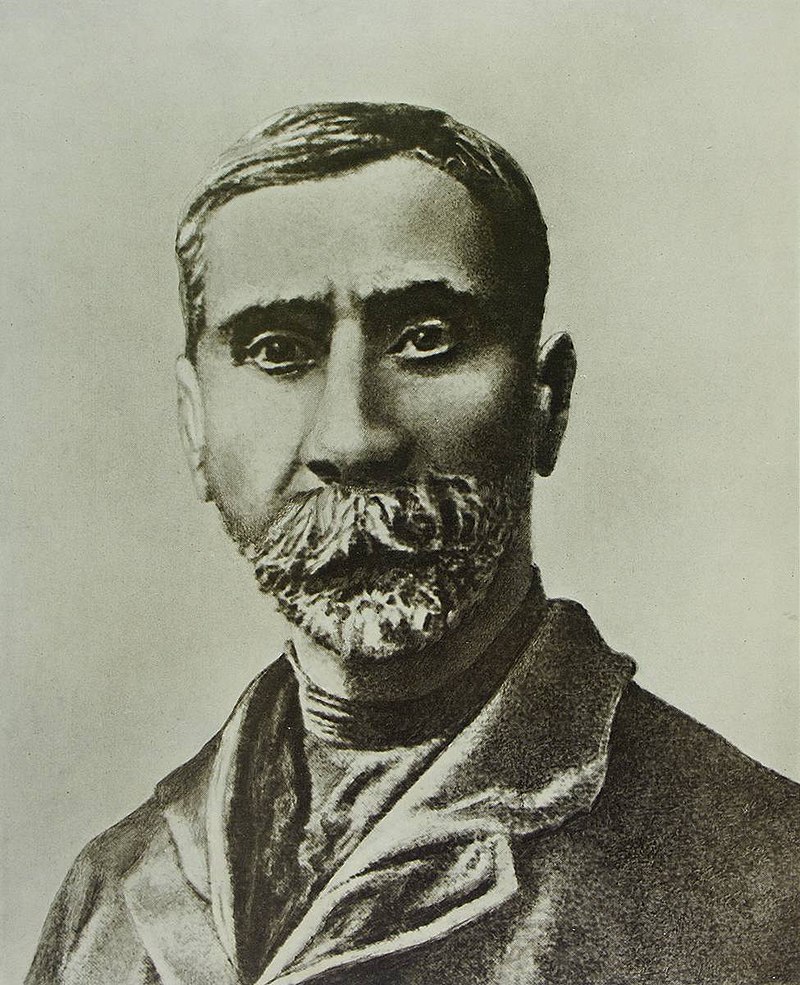
File:Niko_Pirosmani_1916.jpg · Wikimedia Commons · See Wikimedia Commons
Niko Pirosmani
Sign in to saveAlso known as Niko Pirosmanishvili, Nikolaĭ Aslanovich Pirosmanashvili, Pʻirosmanišvili, Niko Pirosmanachvili, Niko Pirosmanashvili, Niko Pirosmanašvili, Niko Pʻirosmanašvili, Nikolay Pirosmani
Georgian artist (1862-1918)
Key facts
- Born
- Nikoloz Aslanis Dze Pirosmanashvili , ( 1862-05-05 ) 5 May 1862 , Mirzaani
- Died
- 9 April 1918 (1918-04-09) (aged 55) , Tbilisi , Transcaucasian Democratic Federative Republic
- Education
- Self-taught
- Known for
- Painting
- Movement
- Naïve art
via Wikipedia infobox
Described at
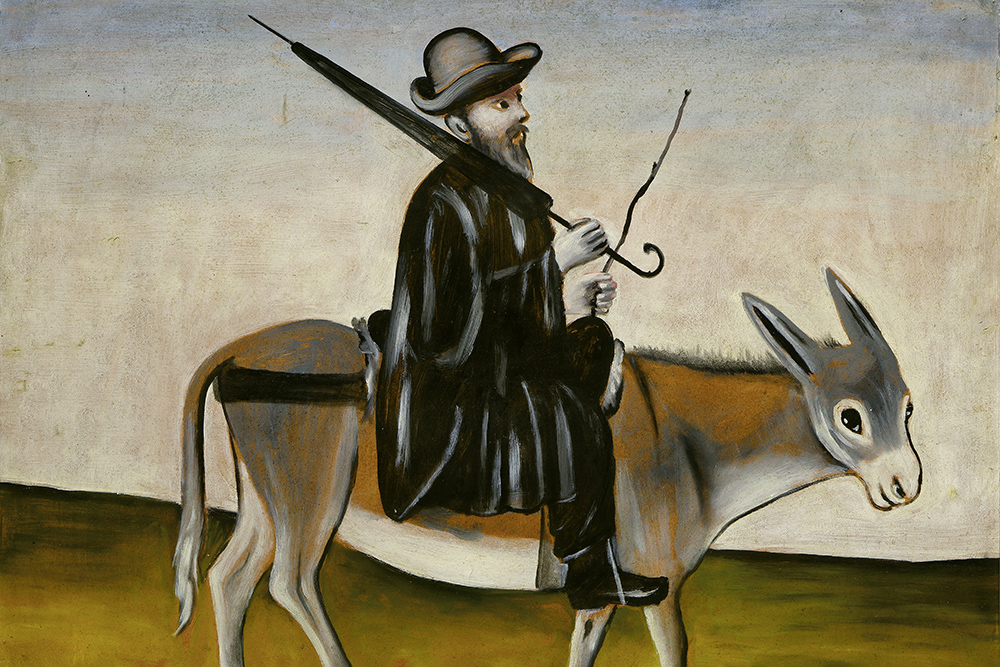
The Georgian avant-gardists who embraced the past - Apollo Magazine
apollo-magazine.com →In the first three decades of the 20th century the city of Tiflis, now Tbilisi, became a cultural crucible whose sparks would fly all over the world. What would come to be known as Georgian Modernism encompassed poetry, film, music and book design, though it is best known for its achievements in theatre and art. The movement would help found the institutions of an independent state. All too soon it would be crushed by Stalin and his secret police chief Lavrentiy Beria – both Georgian products of a different kind of modernism. For more than 60 years this movement was ignored, even in Georgia. The art history of the period was first falsified, then forgotten. It took decades for dissident scholars and artists to recover the stories and works of the leading lights of Georgian Modernism. Scholars such as Nana Kipiani, a pioneering art historian of the period, have delved into museum storages, theatre archives and personal libraries to reclaim works of dazzling originality. Some are still being unearthed. It is only now, with a recent exhibition at Bozar in Brussels, that this extraordinary legacy is being set out before the rest of the world. There is, of course, an exception. One Georgian artist from the early 20th century, Nikoloz Pirosmanashvili, known to the world as Pirosmani, has been canonised and is already familiar in the West. Recently the subject of highly regarded exhibitions in Denmark and Switzerland, Pirosmani was the quintessential outsider artist. A peasant who moved to the big city and taught himself to paint pub signs, he lived on the margins of Tiflis, exchanging canvasses for room and board. He is often called a ‘primitivist’, but that belies the considered, singular nature of his work and his well-developed style. In his paintings, black backgrounds and thick lines pick out stylised feasts, religious festivals and exotic animals in a manner that still casts a shadow over Georgian and Russian art more than a century after he died. Pirosmani, who is a famous name in the countries of the former Soviet Union, was discovered by the very avant-gardists whose history the USSR tried to erase. In 1912, the brothers Ilia and Kirill Zdanevich (who were just 18 and 20 at the time), and their friend Dmitri Shevardnadze, who was 27, chanced on his work in the taverns of Tiflis. They tracked down Pirosmani, who was in his fifties by then, and put on exhibitions of his work in Georgia and Russia. Their discovery was not enough to change the life of the irascible, unclubbable Pirosmani, who would die in penury six years later. But it is emblematic of how the Georgian modernists – unlike their Western counterparts – viewed the arts of past. ‘The European avant-garde rejected everything in the past,’ says Kipiani, who was the consultant for the Bozar exhibition. ‘Here in Georgia it is a little bit different.’ In Georgia, for centuries an independent Christian kingdom cut off from Europe by Islamic empires, the feudal era continued until the Russian conquest that began in the late 18th century. Thus, to paraphrase Kipiani, the country bypassed some four centuries of European realism, going directly from the medieval to the modern with brief stops at Romanticism on the way. Pirosmani exemplifies this: his sign boards and tableaux draw equally on the world of steam trains and commerce, and on the stylised traditions of frescoes and icons. For people like Ilia and Kiril Zdanevich, who looked with ambivalence verging on hostility at the previous century of Russian rule in Georgia, Pirosmani was the bridge from the tradition to the avant-garde. Their discovery of him gave birth to a new Georgian canon and served to sanctify the work of the modernists by linking it to an idealised Georgian past. Rather than iconoclasts, these modernists were iconophiles. The Zdanevich brothers are usually credited with ushering in the Georgian avant-garde, though in the Bozar show Kipiani pushed back a generation before, to the occult-tinged erot
Excerpt from a page describing this subject · 17,326 chars · not written by Vinony
Wikidata facts
- Instance of
- human
- Gender
- male
- Citizenship
- Russian Empire
- Place of birth
- Mirzaani
- Place of death
- Tbilisi
- Occupation
- painter
- Languages spoken
- Georgian
- Native language
- Georgian
- Field of work
- painting
- Genre
- portrait
- Movement
- naïve art
- Official website
- melonplaymods.com
- Image
- Niko Pirosmani 1916.jpg
- Work location
- Georgia (country)
Show 10 more facts
- cause of death
- liver failure
- Commons category
- Niko Pirosmani
- date of death
- 1918-00-00
- name in native language
- ნიკო ფიროსმანი
- Commons Creator page
- Niko Pirosmani
- described by source
- Armenian Soviet Encyclopedia
- date of birth
- 1862-04-05
- has works in the collection
- Georgian National Museum
- described at URL
- www.apollo-magazine.com/georgian-avant-garde-modernism
- manner of death
- natural causes
via Wikidata · CC0
~8 min read
Encyclopedic overview
(Learn how and when to remove this message)
Nikoloz Pirosmanashvili (Georgian: ნიკოლოზ ფიროსმანაშვილი) or Niko Pirosmani (Georgian: ნიკო ფიროსმანი), simply referred to as Nikala (ნიკალა Nik’ala; 1862–1918), was a Georgian painter who posthumously rose to prominence. Relatively poor for most of his life, he worked a variety of ordinary jobs. His rustic, everyday scenes are celebrated today for their depiction of the Georgia of Pirosmani's lifetime, and he has become one of the country's most beloved artistic figures.
Excerpted from Wikipedia’s “Niko Pirosmani” article, available under the CC BY-SA 4.0 licence.