Nymania · Kew POWO · Kew Plants of the World Online
Nymania
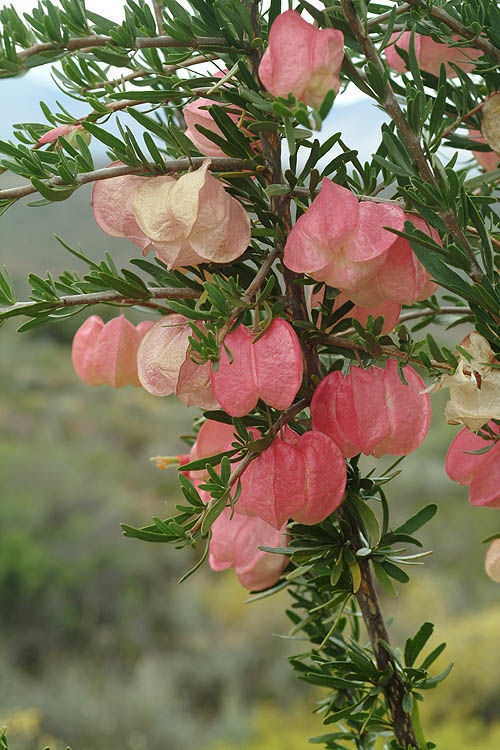
Sign in to savethumb|left|Nymania capensis sprig, showing flowers, fascicled leaves and an unripe fruit capsule, still red left|thumb|Nymania capensis in fruit
Species
GENUS
- KingdomPlantae
- PhylumTracheophyta
- ClassMagnoliopsida
- OrderSapindales
- FamilyMeliaceae
via GBIF · Kew POWO
Wikidata facts
Show 6 more facts
Sources (1)
via Wikidata · CC0
~3 min read
Encyclopedic overview
2 sectionsContents
- References
- External links
thumb|left|Nymania capensis sprig, showing flowers, fascicled leaves and an unripe fruit capsule, still red left|thumb|Nymania capensis in fruit
Nymania capensis is a species of plant known in English as "Chinese lantern" because of the shape of its bright, colourful fruit, and in Afrikaans as "klapper" (meaning "firecracker" because children sometimes pop the capsules for fun). It is the only species in the genus Nymania. It is a spare, scrubby, woody shrub or small tree, typically ) 0.5–3 m tall. It is endemic to South Africa and some closely bordering territories, especially inland regions in central, northern and eastern parts. It grows mainly in Karooid regions, among the scrub of gorges, but also in open veld and river banks in the Great and Little Karoo, Namaqualand and Kalahari. The leaves are alternate and fascicled. They are simple and more or less linear. The flowers are solitary, born on pedicels in axils. The corolla and calyx have four lobes each, with eight stamens inserted at the base of the disc, the filaments being connate at their base. The ovary is superior and sessile; it has four lobes and four locules, each containing two collateral ascending ovules. The stigma is simple and the style extends further than the stamens. The fruit is an inflated membranous capsule, 3–5 cm across, each locule forming a distinct lobe. The ripe seeds are hard and rounded, some 2–4 mm in diameter. A locule may contain less than two seeds, due to abortion.
Excerpted from Wikipedia’s “Nymania” article, available under the CC BY-SA 4.0 licence.